

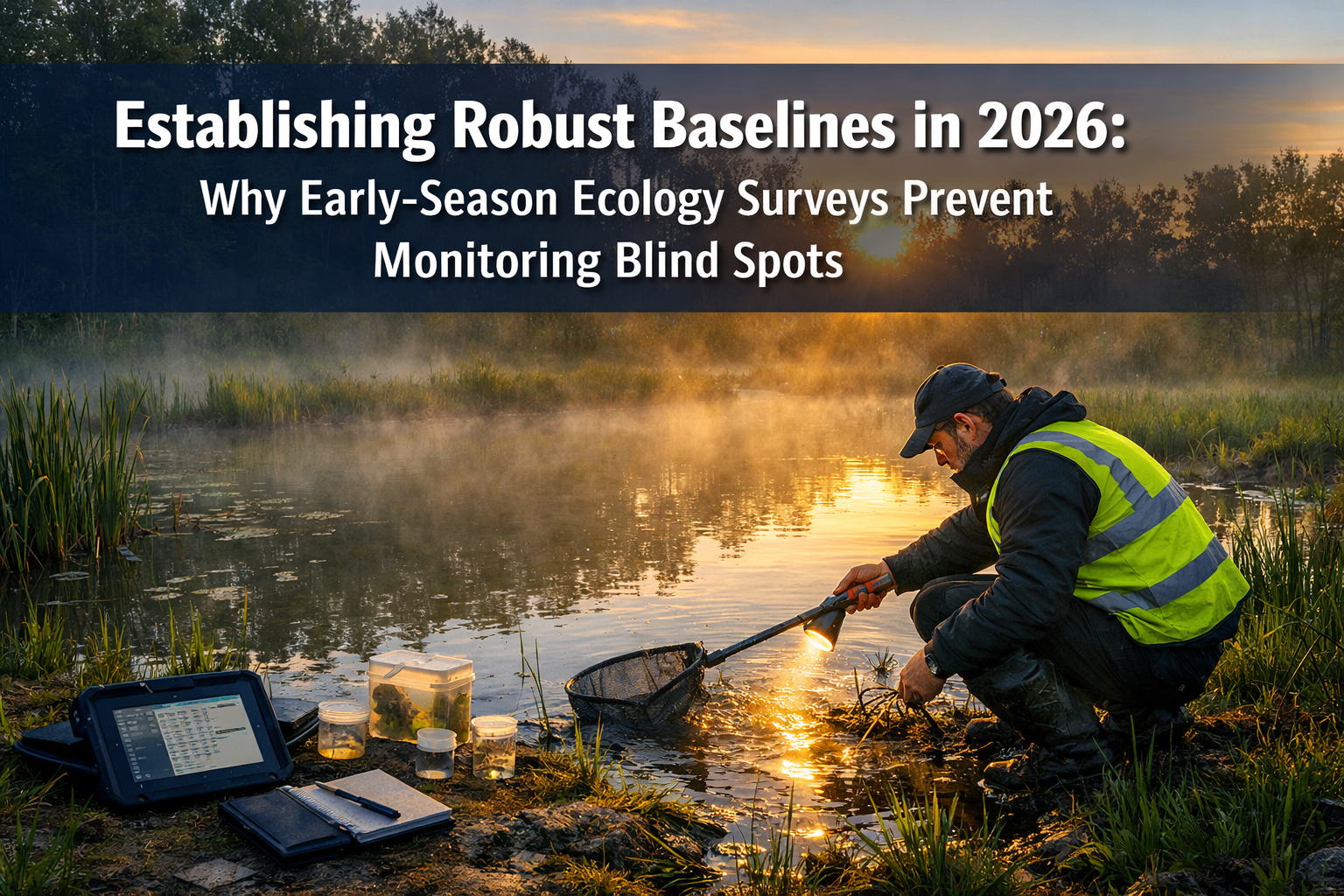
Starting biodiversity monitoring in 2026 before regulatory pressures intensify offers a critical advantage: the opportunity to define strong ecological baselines that capture full ecosystem rhythms. As development projects increasingly require biodiversity net gain assessments, ecologists and developers who establish comprehensive baseline data early in the season gain the strategic insight needed to avoid mistaking natural weather variations for genuine ecological decline in net gain metrics.
The difference between a robust baseline and a monitoring blind spot often comes down to timing. When surveys begin too late in the season, critical species activity periods pass unrecorded, leaving gaps that can undermine entire monitoring programs and jeopardize planning applications.
Key Takeaways
- Early-season surveys capture critical breeding and emergence periods for protected species like great crested newts, dormice, and water voles that determine presence/absence baselines
- Establishing robust baselines in 2026 requires species-specific timing windows, with some surveys needing to start as early as mid-March to meet regulatory standards
- Natural year-to-year variability in wildlife observations means single-season baselines can create monitoring blind spots that misrepresent long-term ecological trends
- Proactive baseline establishment before development pressure provides developers with clearer pathways to achieving 10% biodiversity net gain requirements
- Comprehensive early-season data prevents costly project delays by identifying ecological constraints and opportunities during initial planning stages
Understanding Why Establishing Robust Baselines in 2026 Requires Early-Season Planning 🌱
Ecological baselines serve as the foundation for all subsequent monitoring and impact assessment. Without accurate baseline data, determining whether a site's biodiversity is improving, declining, or remaining stable becomes impossible. This creates significant risks for development projects subject to biodiversity net gain requirements.
The Critical Survey Windows for Protected Species
Different species have specific activity periods when detection is most reliable. Missing these windows creates data gaps that cannot be filled until the following year, causing substantial project delays.
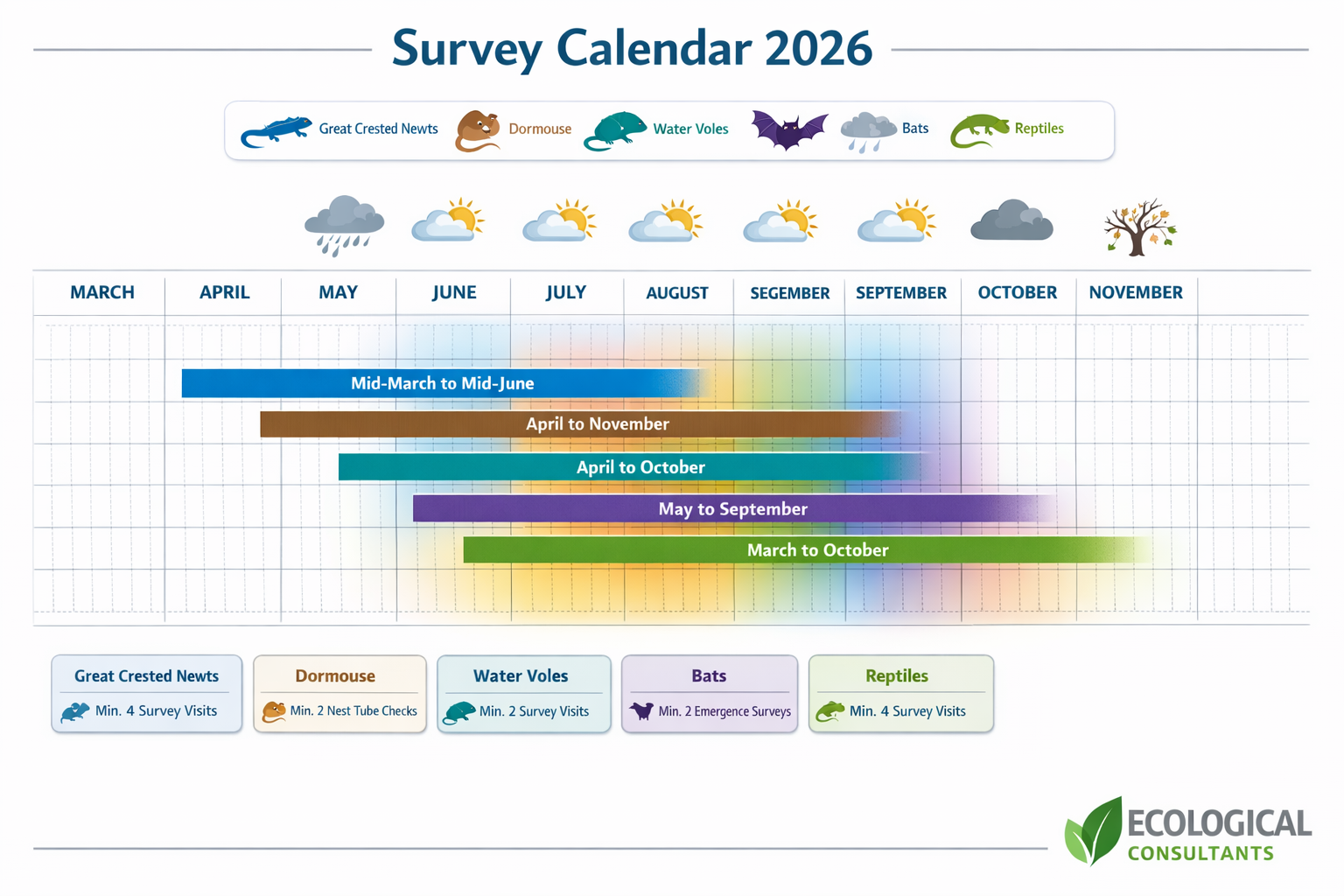
Great crested newts require surveys conducted between mid-March and mid-June, with at least half of surveys taking place during the peak activity period of mid-April to mid-May[2]. Standard survey protocols demand four separate survey visits using torches, nets, and egg searches, or alternatively, environmental DNA (eDNA) water sampling methods that can detect newt presence from genetic material in pond water.
Dormouse populations need baseline surveys spanning April through November, requiring a minimum of 50 dormouse tubes spaced at 20-meter intervals and checked monthly or bi-monthly to determine presence or absence[2]. Starting these surveys in April ensures the full active season is captured, including the critical spring breeding period.
Water vole surveys run from April to October, with best practice recommending two baseline surveys—one conducted in the first half of the season (April-June) and another in the second half (July-October)[2]. This dual-survey approach accounts for seasonal population fluctuations and ensures reliable detection.
Why Weather Patterns Complicate Baseline Establishment
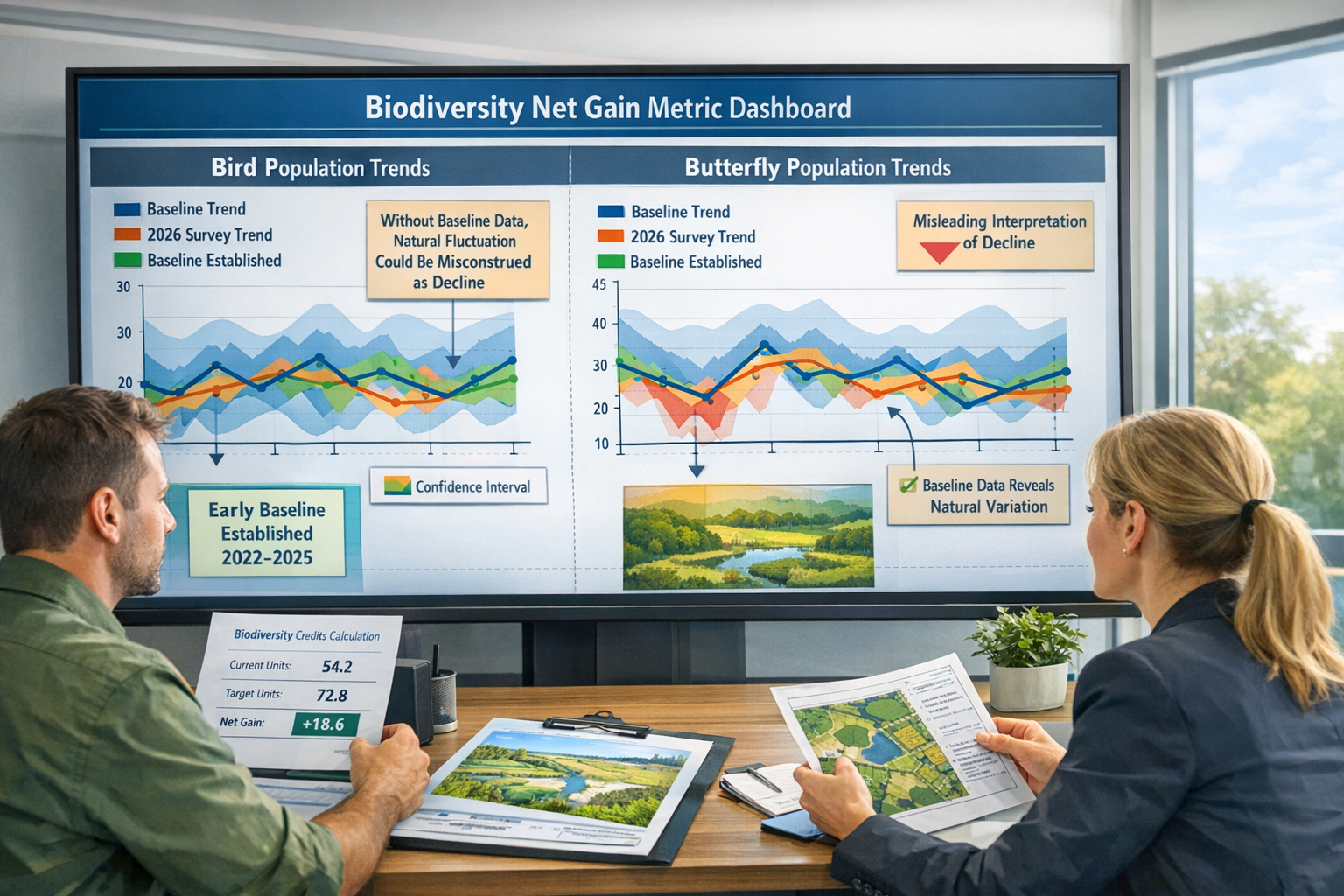
Recent monitoring data from botanical gardens tracking bird and butterfly observations between 2022 and 2025 revealed significant year-to-year variability, with 2022 and 2024 recording the highest averages at 39 observations each, while 2023 and 2025 showed notably lower counts[5]. This pattern demonstrates how weather conditions, food availability, and other environmental factors create natural population fluctuations that can be mistaken for genuine ecological decline without proper baseline context.
Establishing robust baselines in 2026 means accounting for this inherent variability by:
- Conducting surveys across multiple years when possible to distinguish weather-related fluctuations from genuine trends
- Recording detailed environmental conditions during each survey to contextualize observation data
- Using standardized methodologies that allow comparison across seasons and years
- Documenting survey effort to distinguish between true absence and failure to detect
Establishing Robust Baselines in 2026: Species-Specific Survey Calendars and Timing Requirements 📅
Professional ecology consultancies provide detailed survey calendars that outline month-by-month requirements for different species groups[1][2][4][6]. Understanding these calendars is essential for developers planning biodiversity assessments and avoiding monitoring blind spots.
Spring Survey Requirements (March-May)
Spring represents the most intensive survey period, with multiple species groups requiring simultaneous monitoring:
| Species Group | Survey Period | Minimum Visits | Optimal Months |
|---|---|---|---|
| Great Crested Newts | Mid-March to Mid-June | 4 surveys (or 1 eDNA) | Mid-April to Mid-May |
| Amphibians (General) | March to October | 7 visits | April, May, September |
| Reptiles | March to October | 7 visits | April, May, September |
| Breeding Birds | March to July | 3-4 visits | April to June |
| Bats (Emergence) | May to September | 3 visits | May to August |
| Dormice | April to November | 8-10 checks | April to October |
The overlapping nature of these survey windows means that March through May represents a critical baseline establishment period where delays can cascade into multiple missed opportunities[2].
Summer and Autumn Survey Extensions
While spring surveys capture breeding activity, summer and autumn surveys provide essential data on population success and habitat use:
Water voles require surveys extending into October to capture the second breeding season and assess population expansion[2]. Bat activity surveys need spacing throughout the active season to establish baseline population data and understand seasonal roosting patterns.
Reptile surveys continue through September and October when reptiles are most active and visible before hibernation[2]. These late-season surveys often reveal species presence that spring surveys alone might miss.
Planning Survey Programs for 2026
To establish robust baselines in 2026, ecology survey programs should be planned and commissioned during winter months (January-February) to ensure field teams are mobilized before critical March deadlines. Many ecological consultancies offer free survey planning resources that help developers and landowners map out year-long monitoring programs[1][6].
Key planning considerations include:
- ✅ Identifying all potentially present protected species through desk studies and habitat assessments
- ✅ Coordinating survey schedules to maximize efficiency when species windows overlap
- ✅ Budgeting for weather contingencies that may require additional survey visits
- ✅ Establishing data management protocols to ensure consistent recording and analysis
- ✅ Engaging qualified ecologists with appropriate survey licenses for protected species
How Early Baseline Data Prevents Monitoring Blind Spots in Biodiversity Net Gain Calculations 📊
The connection between early-season surveys and successful biodiversity net gain delivery is direct and consequential. Biodiversity net gain calculations rely on accurate habitat condition assessments and species presence data to establish pre-development baseline scores using the statutory biodiversity metric.
The Biodiversity Metric Baseline Challenge
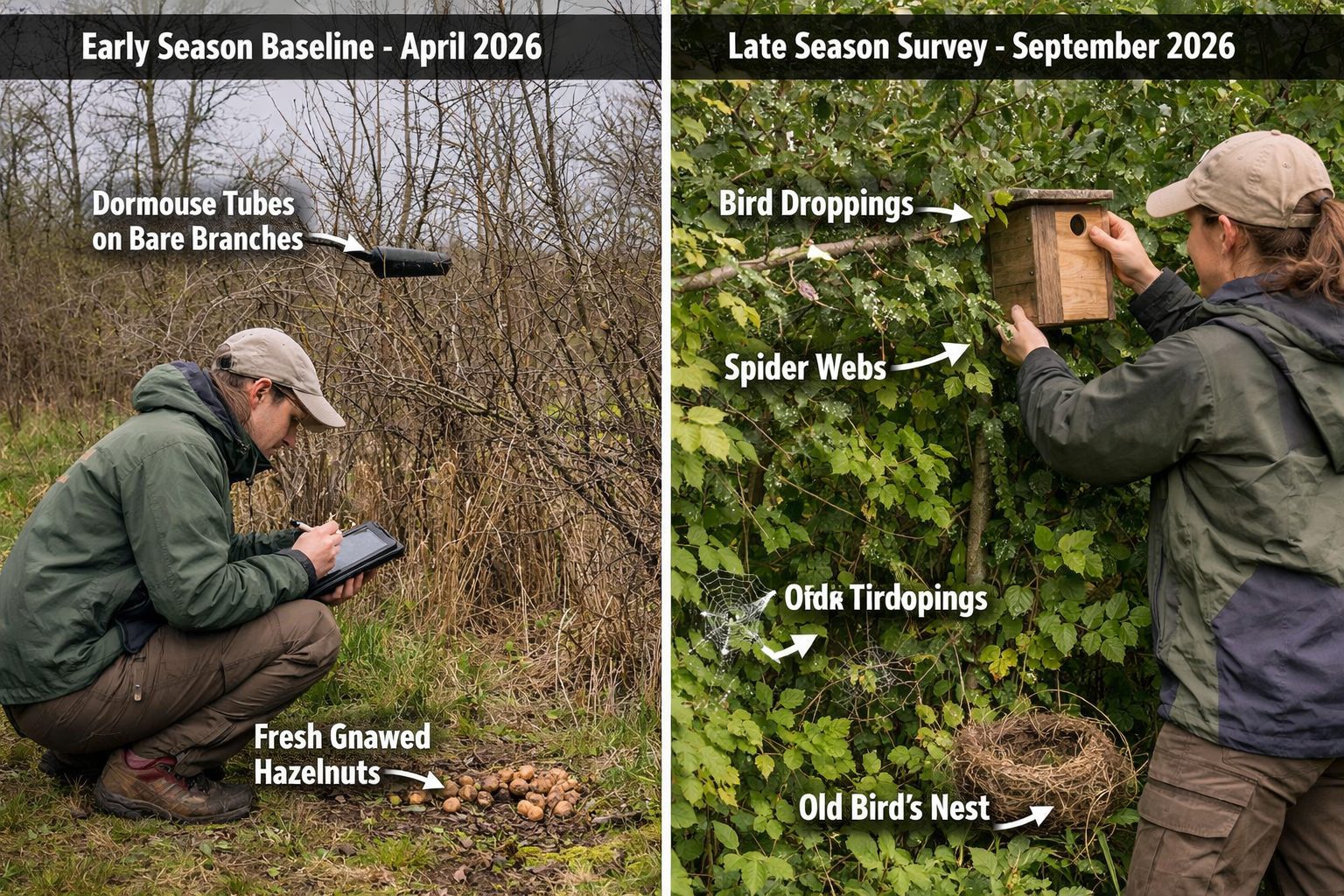
The UK biodiversity metric assesses habitat distinctiveness, condition, and strategic significance to calculate biodiversity units. Habitat condition assessments require specific botanical and faunal indicators that are only visible during certain seasons. Conducting baseline surveys outside optimal windows can lead to:
- Underestimating habitat quality by missing spring flowering plants or breeding bird territories
- Failing to detect protected species that trigger additional survey and mitigation requirements
- Miscalculating baseline biodiversity units that affect the magnitude of required net gain
- Creating compliance risks when post-development monitoring reveals species not accounted for in planning
For developers, these blind spots translate into project delays, additional survey costs, and potential planning application rejections. Understanding what's included in a biodiversity net gain assessment helps avoid these pitfalls through proper baseline establishment.
Distinguishing Natural Variation from Genuine Decline
One of the most sophisticated challenges in establishing robust baselines in 2026 involves distinguishing between natural population fluctuations and genuine ecological decline. Recent research demonstrates that climate variability and extreme weather events can create significant year-to-year differences in species observations[5][7].
Without comprehensive baseline data that accounts for this variability, monitoring programs risk:
- False negatives where species are present but not detected due to poor weather during survey visits
- False positives where unusual abundance in baseline year creates unrealistic expectations for post-development populations
- Misinterpreted trends where natural fluctuations are mistaken for development impacts
Best practice baseline establishment includes:
- Multi-year baseline data when project timelines allow, providing context for natural variability
- Detailed weather and phenology recording during each survey visit
- Comparison with regional population trends to contextualize site-specific observations
- Conservative presence/absence determinations that account for detection probability
Integration with Biodiversity Credit Markets
As biodiversity credit markets mature, the quality of baseline data becomes increasingly important for both buyers and sellers of biodiversity units. Landowners seeking to sell biodiversity units must demonstrate robust baseline conditions and credible enhancement plans.
Similarly, developers looking to buy biodiversity units need assurance that off-site habitat creation is based on sound ecological baselines that will deliver genuine net gain. Understanding the cost of biodiversity units and statutory credits requires appreciating how baseline quality affects unit value and risk.
Practical Strategies for Establishing Robust Baselines in 2026 Without Creating Monitoring Blind Spots 🎯
Moving from understanding to action requires practical strategies that ecology professionals, developers, and landowners can implement immediately.
Strategy 1: Commission Preliminary Ecological Appraisals Early
Preliminary Ecological Appraisals (PEAs) conducted in winter or early spring identify which protected species surveys will be necessary, allowing proper scheduling before critical survey windows open. These desk-based and walkover assessments evaluate habitat suitability and identify ecological constraints that inform survey scope.
For architects solving biodiversity net gain challenges, early PEAs enable design modifications that avoid high-value habitats before detailed designs are finalized.
Strategy 2: Utilize eDNA and Rapid Assessment Methods Where Appropriate
Environmental DNA sampling provides a time-efficient alternative to traditional great crested newt surveys, requiring only a single site visit during the survey window rather than four separate nocturnal surveys[2]. While eDNA cannot determine population size or breeding status, it reliably establishes presence/absence for baseline purposes.
Other rapid assessment methods include:
- Remote camera traps for mammal baseline surveys
- Acoustic monitoring for bat and bird population assessments
- Drone-based habitat mapping for vegetation community baselines
Strategy 3: Establish Standardized Data Collection Protocols
Consistency in data collection methods ensures that baseline surveys can be meaningfully compared with subsequent monitoring data. Standardized protocols should specify:
- Survey routes and timing that can be replicated exactly in future years
- Weather thresholds for conducting surveys (temperature, wind speed, precipitation)
- Recording formats that capture all relevant variables
- Quality assurance procedures including data validation and verification
Strategy 4: Engage with Local Ecological Networks
Local biological records centers, wildlife trusts, and naturalist groups often hold historical data that provides valuable context for baseline establishment. These organizations can identify:
- Long-term population trends for key species in the local area
- Historical habitat conditions that inform restoration potential
- Rare or notable species that may require targeted surveys
- Seasonal phenology patterns specific to the local climate
Strategy 5: Plan for Adaptive Baseline Refinement
Initial baseline surveys may reveal unexpected ecological features that require additional investigation. Building flexibility into survey programs allows adaptive refinement:
- Contingency budgets for additional survey visits if protected species are detected
- Extended survey windows that can capture late-emerging species
- Specialist input when rare or unusual species are encountered
- Integration of citizen science data to supplement formal surveys
The Regulatory Context: Why 2026 Baseline Establishment Matters More Than Ever ⚖️
The regulatory landscape surrounding biodiversity monitoring has intensified significantly, making robust baseline establishment essential for compliance and project success.
Mandatory Biodiversity Net Gain Requirements
Since February 2024, biodiversity net gain has been mandatory for most development projects in England, requiring a minimum 10% increase in biodiversity value compared to pre-development baselines. This regulatory shift means that baseline quality directly affects:
- Planning application approval likelihood and timeline
- Development costs through required habitat creation or unit purchases
- Long-term monitoring obligations extending 30 years post-development
- Legal compliance with environmental protection regulations
Understanding the five key reasons why biodiversity net gain is important to the UK provides broader context for these requirements.
Exemptions and Special Cases
While most developments require biodiversity net gain, certain exempt projects exist, including small sites under specific thresholds and permitted development rights. However, even exempt developments may require ecological surveys if protected species are present.
BNG for small development projects presents unique challenges where proportionate baseline establishment must balance regulatory compliance with project viability.
The Role of Local Planning Authorities
Local planning authorities increasingly scrutinize baseline survey quality, with planners asking detailed questions about biodiversity net gain methodologies. Robust baselines established through early-season surveys demonstrate professional competence and reduce planning risk.
Integration with Broader Environmental Policy
Establishing robust baselines in 2026 aligns with broader environmental policy objectives including:
- Nature recovery networks that require landscape-scale habitat connectivity
- Climate adaptation strategies that depend on resilient ecosystems
- Sustainable land management approaches like the Sustainable Farming Incentive
- International biodiversity commitments made at forums like COP27
Conclusion: Taking Action on Baseline Establishment in 2026
Establishing robust baselines in 2026 through early-season ecology surveys represents a strategic investment that prevents monitoring blind spots, reduces project risk, and delivers genuine environmental benefits. The evidence is clear: comprehensive baseline data collected during optimal survey windows provides the foundation for successful biodiversity net gain delivery and long-term ecological monitoring.
Actionable Next Steps
For developers, landowners, and ecology professionals looking to establish robust baselines in 2026, the following actions should be prioritized:
-
Commission Preliminary Ecological Appraisals immediately if not already completed, identifying survey requirements before March survey windows open
-
Review project timelines against species-specific survey calendars, ensuring adequate time for multi-visit surveys across the full active season
-
Engage qualified ecological consultancies with appropriate protected species licenses and local knowledge
-
Establish data management systems that will support 30-year monitoring requirements and enable trend analysis
-
Budget appropriately for comprehensive baseline surveys, recognizing that robust early data prevents costly delays and compliance failures
-
Consider multi-year baseline establishment for high-value or complex sites where natural variability may affect biodiversity metric calculations
-
Integrate baseline findings into design processes early, allowing habitat retention and enhancement to inform site layouts
The Strategic Advantage of Early Action
Projects that establish robust baselines in 2026 before regulatory pressure intensifies gain significant competitive advantages. Early baseline data enables proactive habitat management, informed design decisions, and credible biodiversity net gain strategies that satisfy planning requirements while delivering genuine ecological improvements.
The difference between a monitoring blind spot and a comprehensive baseline often comes down to starting surveys a few weeks earlier. In 2026, that difference could determine project success or failure.
For professional guidance on establishing robust baselines and navigating biodiversity net gain requirements, contact experienced ecology specialists who can develop tailored survey programs that capture full ecosystem rhythms and prevent monitoring blind spots.
References
[1] Plan Your 2026 Ecology Survey Now – https://landstudio-uk.com/news/plan-your-2026-ecology-survey-now
[2] Survey Calendar – https://aspect-ecology.com/survey-calendar/
[3] Econews Winter 2026 – https://www.usgs.gov/usgs-econews/econews-winter-2026
[4] Species Survey Mitigation Planner – https://www.thomsonec.com/services/ecology-surveys/species-survey-mitigation-planner/
[5] Watch – https://www.youtube.com/watch?v=IARanVSXEFY
[6] Ecology Calendar Download – https://www.sweco.co.uk/services/water-energy-industry/environmental-consultancy/ecology-biodiversity/ecology-calendar-download/
[7] Science – https://www.science.org/doi/10.1126/science.ads0871