

The landscape of forest conservation funding is undergoing a dramatic transformation in 2026. As ecologists and biodiversity surveyors navigate this new terrain, understanding Forest Finance Shifts Impacting Biodiversity Surveys: Ecologist Strategies for 2026 Carbon-Biodiversity Alignment has become essential for securing project funding and delivering meaningful conservation outcomes. With forest carbon credits now accounting for 37% of all voluntary carbon market retirements and investment in sustainable forest management nearly doubling to $23.5 billion in 2026, the stakes have never been higher.[6]
The convergence of carbon markets and biodiversity protection represents both an opportunity and a challenge. Traditional biodiversity surveys must now integrate carbon accounting methodologies, while carbon-focused projects increasingly require robust biodiversity co-benefits documentation. This shift reflects a fundamental recognition that forests provide far more than carbon storage—they deliver vital ecosystem services including rainfall regulation, habitat provision, and species protection.
Key Takeaways
- 🌳 Forest finance is experiencing unprecedented growth, with $23.5 billion invested in sustainable forest management in 2026, creating new funding opportunities for biodiversity surveys that demonstrate carbon-biodiversity co-benefits
- 📊 Five verified forest carbon credit types (Blue Carbon, Afforestation/Reforestation, Improved Forest Management, Agroforestry, and REDD+) now require integrated biodiversity metrics to meet quality standards and avoid greenwashing risks
- 🤝 Jurisdictional REDD+ markets could deliver $3-6 billion annually to tropical forest countries, prioritizing projects with transparent governance, community inclusion, and documented biodiversity outcomes
- 💰 The $66-80 billion annual funding gap for tropical forests is being addressed through the Forest Finance Roadmap, providing clear signals for surveyors to align methodologies with emerging finance mechanisms
- 🔄 Ecologist strategies must integrate carbon stock assessments with traditional biodiversity metrics to position surveys competitively for funding under new finance frameworks launching throughout 2026
Understanding Forest Finance Shifts Impacting Biodiversity Surveys in 2026
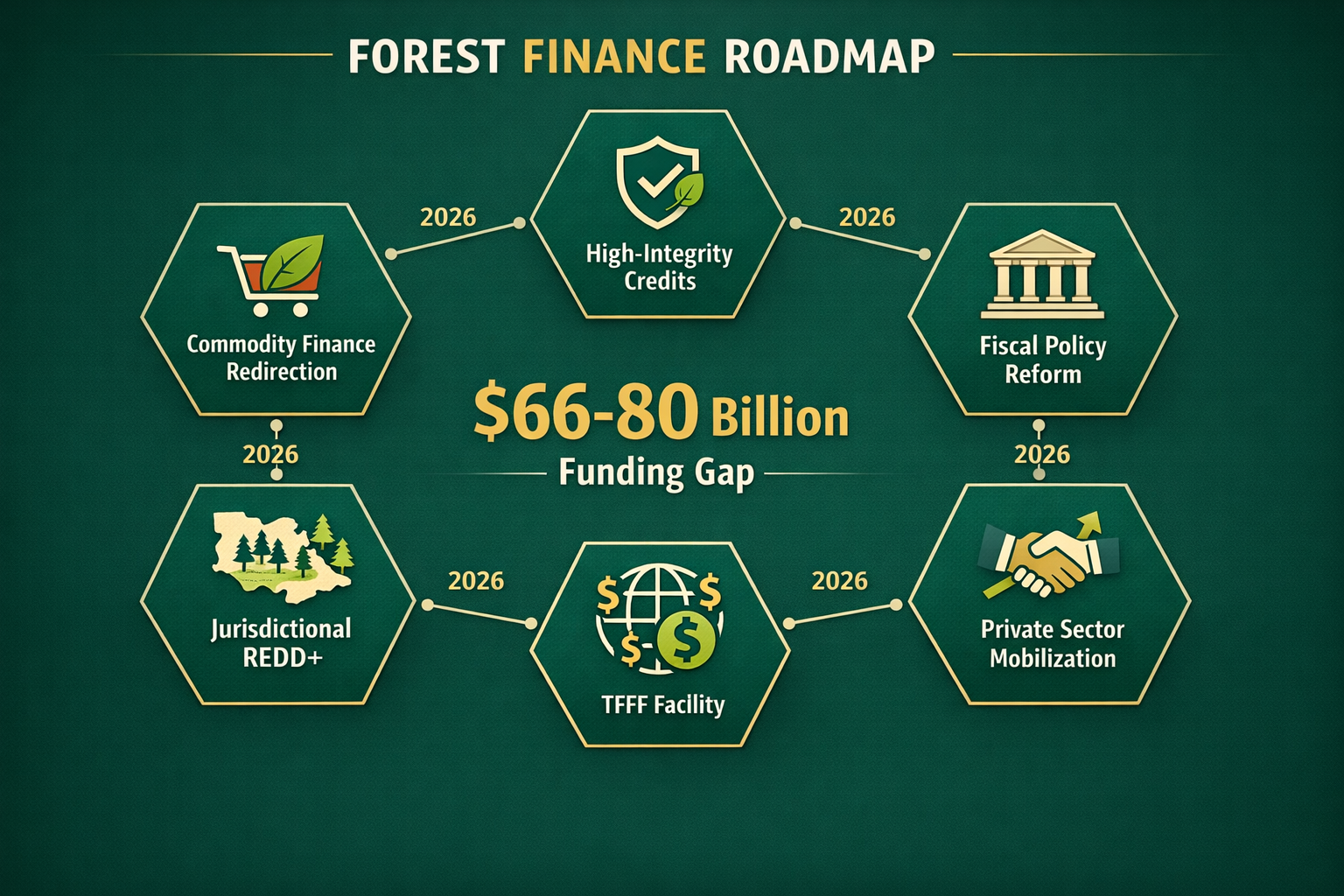
The forest finance landscape has transformed dramatically as we move through 2026. The Forest Finance Roadmap, launched at Climate Week NYC in September 2025, outlines a comprehensive six-point plan to address the massive $66-80 billion annual funding gap for tropical forests.[5] This roadmap targets early progress on all fronts in 2026, providing clear signals to the private sector about where capital should flow.
The New Financial Architecture for Forest Conservation
Several groundbreaking initiatives are reshaping how forest conservation receives funding:
Jurisdictional REDD+ (J-REDD+) Markets: These markets could deliver $3-6 billion annually to tropical forest countries, representing a significant shift from project-based to landscape-scale conservation approaches.[1] For biodiversity surveyors, this means expanding survey scopes from individual project sites to entire jurisdictions, requiring new methodologies and partnerships.
Tropical Forests Forever Facility (TFFF): Launched by Brazil at COP30 in November 2025, the TFFF uses investment returns to value the global public services provided by tropical forests.[2] Operationalization is accelerating in 2026 as a UN-supported financing initiative, creating demand for standardized biodiversity baseline assessments across participating countries.
Forest-Positive Procurement: Companies are moving beyond pilot projects to portfolio-level strategies that integrate supply-chain alignment with deforestation-free commitments.[3] This shift creates opportunities for surveyors who can document biodiversity outcomes within corporate supply chains.
Quality Over Quantity in Carbon Markets
Forest carbon credits account for 37% of all voluntary carbon market retirements in 2026, making them the largest category.[6] However, quality and project selection now matter more than ever due to greenwashing risks and tighter Corporate Sustainability Reporting Directive (CSRD) disclosure requirements.
The five credible forest carbon credit types verified for 2026 include:
| Credit Type | Primary Focus | Biodiversity Co-Benefits | Verification Standards |
|---|---|---|---|
| Blue Carbon | Mangrove conservation | High – critical coastal habitat | Verra VCS, Plan Vivo |
| Afforestation/Reforestation | Tree planting on degraded land | Medium to High – habitat creation | Verra VCS, Gold Standard |
| Improved Forest Management | Enhanced forestry practices | Medium – habitat quality improvement | Verra VCS |
| Agroforestry | Agricultural integration | High – landscape connectivity | Plan Vivo, Gold Standard |
| REDD+ | Deforestation prevention | Very High – intact ecosystem protection | Verra VCS, Gold Standard |
This emphasis on credit quality means biodiversity surveyors must provide rigorous documentation of co-benefits beyond carbon sequestration. Projects lacking credible biodiversity metrics face increasing scrutiny from buyers and may struggle to secure premium pricing.
The Community-Centered Approach
Forest finance in 2026 emphasizes establishing jurisdictional credibility, transparent governance, and inclusion of local communities—not just carbon accounting.[3] This represents a strategic shift toward reducing investment risk while ensuring co-benefits for biodiversity and human wellbeing.
For ecologists, this means survey methodologies must incorporate:
- Community knowledge integration: Traditional ecological knowledge can enhance biodiversity baseline assessments
- Benefit-sharing documentation: Clear tracking of how conservation finance reaches local stakeholders
- Participatory monitoring: Training community members in biodiversity monitoring techniques
- Cultural site protection: Identifying and safeguarding areas of cultural significance alongside biodiversity hotspots
Understanding how to conduct a biodiversity impact assessment provides foundational knowledge that can be adapted for these community-centered approaches.
Ecologist Strategies for Carbon-Biodiversity Alignment in 2026
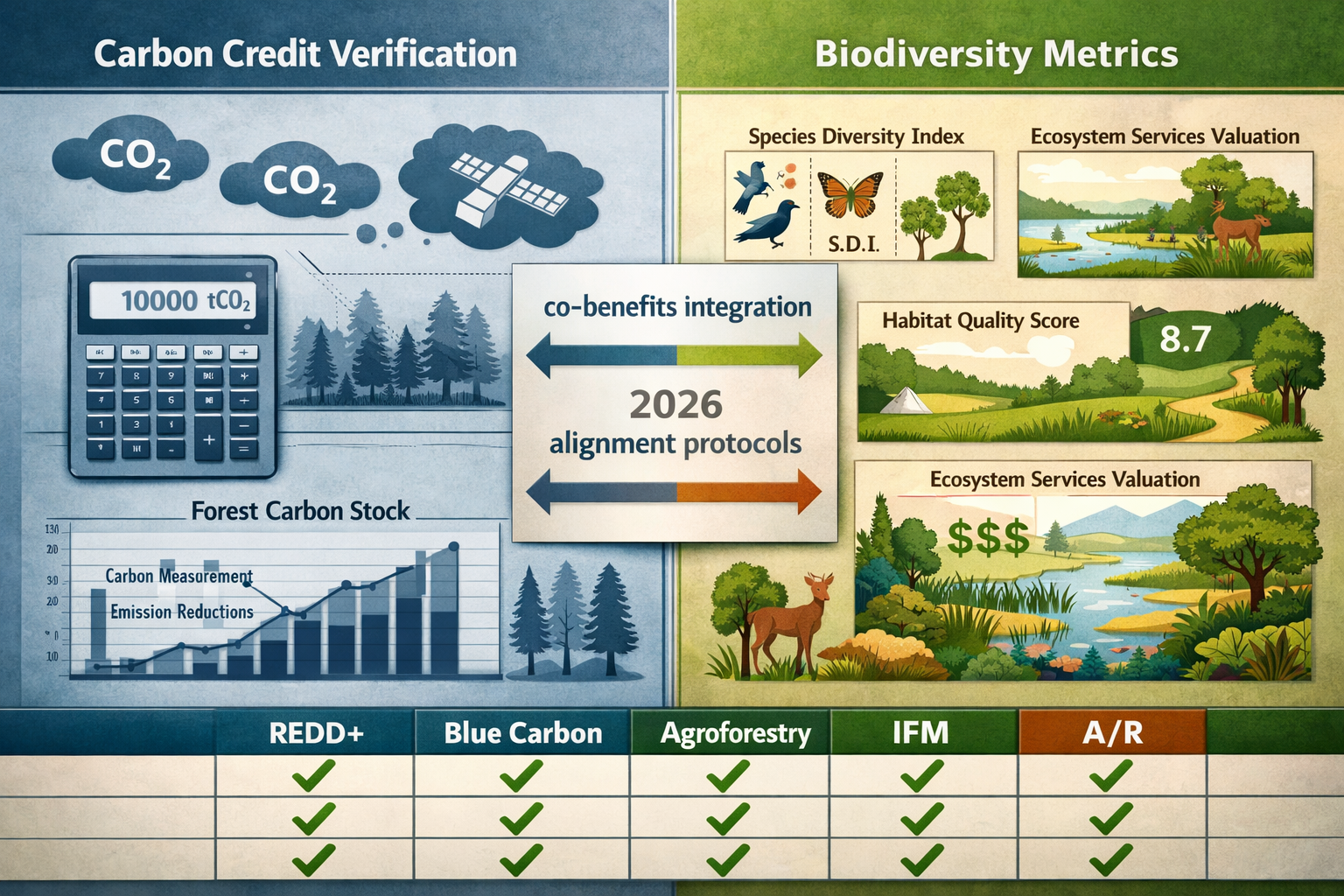
As forest finance mechanisms mature, ecologists must develop practical strategies to align biodiversity survey methodologies with carbon accounting requirements. This integration is essential for accessing the growing pool of forest conservation capital.
Integrated Survey Protocols: Bridging Two Worlds
Traditional biodiversity surveys and carbon stock assessments have operated largely independently. In 2026, successful ecologists are merging these methodologies into integrated protocols that satisfy both carbon credit verification standards and biodiversity documentation requirements.
Key elements of integrated survey protocols include:
- Stratified sampling designs that capture both carbon density variation and habitat heterogeneity
- Multi-scale assessments covering plot-level measurements, landscape connectivity, and ecosystem service flows
- Temporal monitoring frameworks that track both carbon stock changes and biodiversity trends over credit permanence periods
- Technology integration using remote sensing, camera traps, and acoustic monitoring alongside traditional field surveys
The concept of Biodiversity Net Gain (BNG) provides a useful framework that can be adapted for forest carbon projects. While BNG originated in development contexts, its metric-based approach to quantifying biodiversity outcomes aligns well with carbon credit verification requirements.
Selecting the Right Forest Finance Mechanism
Not all forest finance mechanisms are created equal from a biodiversity perspective. Ecologists must understand which funding sources best align with their project's biodiversity objectives:
For High-Biodiversity Intact Forests:
- REDD+ credits offer the strongest alignment, as they prevent deforestation of existing high-value ecosystems
- Blue Carbon projects in mangrove systems provide exceptional biodiversity co-benefits for coastal ecosystems
- Focus survey efforts on baseline documentation, threat assessment, and monitoring protocol establishment
For Degraded Landscape Restoration:
- Afforestation/Reforestation credits support habitat creation but require careful species selection
- Agroforestry credits can enhance landscape connectivity between forest fragments
- Survey protocols should track successional trajectories and colonization by native species
For Working Forests:
- Improved Forest Management credits can enhance biodiversity in production landscapes
- Requires demonstrating biodiversity improvements relative to conventional management baselines
- Focus on structural diversity, retention of key habitat features, and reduced-impact practices
Understanding the cost of biodiversity units and statutory credits helps ecologists develop realistic budgets for integrated survey work.
Co-Benefits Quantification: Beyond Carbon Tonnes
Nature-based credits are being prioritized to protect vital ecosystem services such as rainfall regulation while allowing engineered solutions to scale.[1] This shift from viewing forests solely as carbon repositories to recognizing their broader biodiversity value creates opportunities for ecologists who can quantify multiple benefits.
Effective co-benefits quantification includes:
🦜 Species Diversity Metrics:
- Species richness and abundance across taxonomic groups
- Presence of threatened, endemic, or flagship species
- Functional diversity indicators (pollinator abundance, seed disperser populations)
🌲 Habitat Quality Indicators:
- Forest structure complexity (canopy layers, dead wood volume)
- Connectivity to other natural habitats
- Disturbance levels and edge effects
💧 Ecosystem Service Valuations:
- Water regulation and quality maintenance
- Soil conservation and fertility
- Pollination services for adjacent agricultural areas
👥 Social Co-Benefits:
- Local employment in monitoring and management
- Protection of traditional resource access
- Educational and research opportunities
The methodologies used in creating a biodiversity plan for developers can be adapted to document these co-benefits in forest carbon projects.
Addressing Durability and Permanence
Durability is becoming the standard for permanence in forest carbon credits in 2026, reflecting increased sophistication in how the market evaluates credit quality.[3] For biodiversity surveyors, this means demonstrating that conservation outcomes are sustainable over decades, not just years.
Strategies for addressing durability include:
- Threat analysis and mitigation planning: Document current and future threats to both carbon stocks and biodiversity, with clear mitigation strategies
- Adaptive management frameworks: Establish protocols for responding to disturbances (fire, disease, climate impacts) that protect both carbon and biodiversity values
- Long-term monitoring commitments: Design cost-effective monitoring programs that track key indicators over 30+ year timeframes
- Buffer pool contributions: Understand how carbon credit buffer mechanisms can also support biodiversity resilience
Leveraging Technology for Efficiency
The scale of forest finance opportunities in 2026 requires ecologists to work more efficiently without sacrificing rigor. Technology integration is essential:
Remote Sensing Applications:
- LiDAR for forest structure and carbon stock estimation
- Multispectral imagery for habitat classification and change detection
- Synthetic aperture radar for monitoring in cloudy tropical regions
Automated Monitoring:
- Camera trap networks with AI-powered species identification
- Acoustic sensors for bird and bat community assessment
- Environmental DNA (eDNA) sampling for aquatic and soil biodiversity
Data Management Platforms:
- Blockchain-based verification systems for transparent reporting
- Cloud-based databases linking carbon and biodiversity metrics
- Real-time dashboards for stakeholder engagement
These technologies reduce field time requirements while improving data quality and transparency—critical factors for securing forest finance.
Practical Implementation: Positioning Surveys for Forest Finance Success
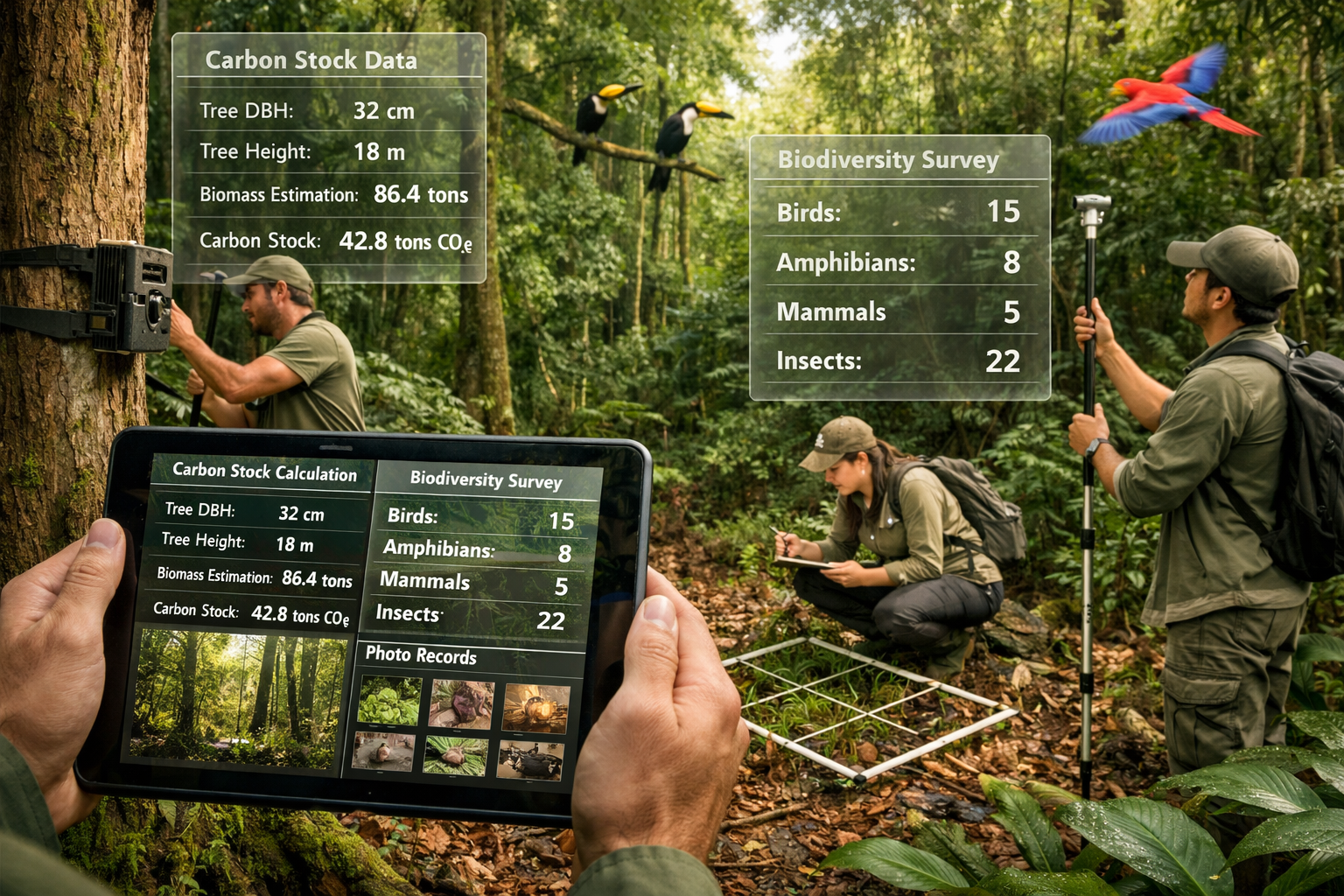
Understanding forest finance shifts and alignment strategies is only valuable if ecologists can implement them effectively. This section provides actionable guidance for positioning biodiversity surveys to capture emerging funding opportunities in 2026.
Building Partnerships Across Disciplines
Successful Forest Finance Shifts Impacting Biodiversity Surveys: Ecologist Strategies for 2026 Carbon-Biodiversity Alignment requires collaboration between traditionally separate disciplines:
Carbon Technical Specialists:
- Partner with carbon project developers who understand VCS, Gold Standard, and Plan Vivo methodologies
- Learn to speak the language of additionality, leakage, and permanence
- Understand how biodiversity data can strengthen carbon credit verification
Financial Analysts:
- Work with professionals who can model the economic value of biodiversity co-benefits
- Understand how biodiversity metrics affect credit pricing and buyer preferences
- Develop business cases that demonstrate return on investment for integrated surveys
Community Organizations:
- Engage local stakeholders early in survey design
- Incorporate traditional knowledge and community monitoring capacity
- Ensure benefit-sharing arrangements are documented and transparent
Legal and Policy Experts:
- Navigate jurisdictional REDD+ frameworks and national regulations
- Understand land tenure issues affecting project permanence
- Ensure compliance with emerging disclosure requirements like CSRD
The collaborative approach used in achieving Biodiversity Net Gain without risk provides useful lessons for forest finance partnerships.
Developing Competitive Proposals
With investment in sustainable forest management reaching $23.5 billion in 2026,[6] competition for funding is intensifying. Ecologists must develop proposals that clearly demonstrate:
✅ Alignment with Finance Mechanisms:
- Specify which forest finance pathway the project targets (REDD+, A/R, IFM, etc.)
- Demonstrate understanding of verification standards and requirements
- Show how biodiversity metrics support carbon credit quality claims
✅ Credible Baseline Documentation:
- Provide robust pre-project carbon stock and biodiversity assessments
- Use appropriate reference scenarios for additionality demonstration
- Document threats and business-as-usual trajectories
✅ Measurable Outcomes:
- Define clear, quantifiable targets for both carbon and biodiversity
- Establish realistic timelines aligned with credit issuance schedules
- Propose cost-effective monitoring protocols for long-term verification
✅ Risk Mitigation:
- Address permanence risks (fire, illegal logging, climate change impacts)
- Demonstrate governance structures that reduce implementation risk
- Show community support and benefit-sharing arrangements
✅ Co-Benefits Documentation:
- Quantify ecosystem services beyond carbon and biodiversity
- Demonstrate alignment with Sustainable Development Goals
- Provide evidence of social and economic benefits to local communities
Navigating Verification Standards
The five credible forest carbon credit types in 2026—Blue Carbon, Afforestation/Reforestation, Improved Forest Management, Agroforestry, and REDD+—are verified under standards including Verra VCS, Gold Standard, or Plan Vivo.[6] Each has specific requirements for biodiversity co-benefits:
Verra VCS (Verified Carbon Standard):
- Requires Climate, Community & Biodiversity (CCB) Standards for projects claiming biodiversity benefits
- Demands rigorous monitoring of High Conservation Value (HCV) areas
- Increasingly scrutinizes additionality claims and leakage risks
Gold Standard:
- Emphasizes sustainable development outcomes alongside carbon
- Requires stakeholder consultation and safeguards documentation
- Favors projects with clear community benefits
Plan Vivo:
- Focuses on smallholder and community-based projects
- Emphasizes livelihood benefits and participatory approaches
- Well-suited for agroforestry and community forest management
Understanding these standards helps ecologists design surveys that meet verification requirements from the outset, avoiding costly revisions later in the project cycle.
Positioning for Jurisdictional REDD+
Jurisdictional REDD+ represents one of the most significant opportunities in forest finance, with potential to deliver $3-6 billion annually.[1] However, it requires a different approach than project-based carbon credits:
Landscape-Scale Thinking:
- Surveys must cover entire jurisdictions (states, provinces, districts) rather than individual sites
- Stratified sampling designs balance statistical rigor with practical constraints
- Remote sensing becomes essential for comprehensive coverage
Government Partnerships:
- Jurisdictional REDD+ requires national or sub-national government leadership
- Ecologists must work within government frameworks and priorities
- Data sharing and capacity building become critical components
Nested Approaches:
- Understand how project-level activities nest within jurisdictional programs
- Design surveys that feed into both project verification and jurisdictional accounting
- Avoid double-counting while ensuring local projects receive appropriate credit
The lessons from how architects can solve Biodiversity Net Gain regarding integration with existing frameworks apply equally to jurisdictional REDD+ contexts.
Addressing the Urgency: 2030 Deadlines
Primary tropical forest loss reached a record 6.7 million hectares in 2024, generating 3.1 billion metric tonnes of greenhouse gas emissions—roughly equivalent to the entire fossil fuel emissions from the European Union.[1] With the Paris Agreement timeline requiring halting and reversing forest loss by 2030, the window for action is narrow.
This urgency creates both pressure and opportunity:
⏰ Fast-Track Opportunities:
- Streamlined approval processes for high-quality projects
- Premium pricing for credits from projects that can scale quickly
- Priority access to blended finance mechanisms
📈 Scaling Requirements:
- Methodologies must be replicable across multiple sites
- Training programs to build local survey capacity
- Standardized protocols that maintain quality while reducing costs
🎯 Impact Focus:
- Prioritize projects in high-threat, high-biodiversity areas
- Target landscapes where intervention can prevent imminent loss
- Demonstrate measurable progress toward 2030 targets
Conclusion
The convergence of forest finance and biodiversity conservation in 2026 represents a transformative opportunity for ecologists and biodiversity surveyors. As investment in sustainable forest management reaches unprecedented levels and new mechanisms like jurisdictional REDD+ and the Tropical Forests Forever Facility operationalize, the demand for integrated carbon-biodiversity assessments is surging.
Forest Finance Shifts Impacting Biodiversity Surveys: Ecologist Strategies for 2026 Carbon-Biodiversity Alignment is not merely a technical challenge—it's a strategic imperative for conservation professionals seeking to secure funding and deliver meaningful outcomes. The shift from viewing forests solely as carbon repositories to recognizing their full ecosystem service value creates space for biodiversity expertise to influence conservation finance at scale.
Success requires ecologists to:
- Master integrated methodologies that satisfy both carbon verification standards and biodiversity documentation requirements
- Build strategic partnerships across carbon technical, financial, community, and policy domains
- Understand forest finance mechanisms including REDD+, A/R, IFM, agroforestry, and blue carbon pathways
- Quantify co-benefits beyond carbon tonnes, demonstrating ecosystem service values and social outcomes
- Address permanence and durability through robust threat analysis and adaptive management frameworks
- Leverage technology for efficient, transparent, and scalable monitoring
The $66-80 billion annual funding gap for tropical forests is being addressed through coordinated global efforts, with early progress expected throughout 2026. Ecologists who position themselves at the intersection of carbon markets and biodiversity conservation will find unprecedented opportunities to advance both their careers and conservation outcomes.
Next Steps for Ecologists and Biodiversity Surveyors
Immediate Actions (Next 30 Days):
- Review the Forest Finance Roadmap and identify which pathways align with your expertise
- Assess current survey methodologies for gaps in carbon-biodiversity integration
- Explore guidance for landowners and developers to understand complementary frameworks
- Connect with carbon project developers to explore partnership opportunities
Short-Term Development (3-6 Months):
- Pursue training in carbon accounting methodologies and verification standards
- Develop integrated survey protocols combining carbon and biodiversity metrics
- Build relationships with community organizations in target landscapes
- Pilot technology solutions for remote sensing and automated monitoring
Strategic Positioning (6-12 Months):
- Develop competitive proposals targeting specific forest finance mechanisms
- Establish partnerships with financial, technical, and community stakeholders
- Position services for jurisdictional REDD+ opportunities in target countries
- Contribute to policy discussions shaping forest finance frameworks
The window for meaningful action is closing rapidly, with Paris Agreement deadlines requiring forest loss reversal by 2030. By aligning biodiversity survey expertise with emerging forest finance mechanisms, ecologists can secure the resources needed to protect the world's most critical ecosystems while advancing their professional impact.
For additional resources on biodiversity assessment methodologies and market opportunities, explore our comprehensive biodiversity surveyors guidance and learn about selling biodiversity units in emerging markets.
References
[1] Financing Forests Carbon Markets – https://www.weforum.org/stories/2026/03/financing-forests-carbon-markets/
[2] Action On Nature What Can Financial Institutions Expect In 2026 – https://www.unepfi.org/themes/ecosystems/action-on-nature-what-can-financial-institutions-expect-in-2026/
[3] Nature Based Solutions 4 Predictions For 2026 – https://trellis.net/article/nature-based-solutions-4-predictions-for-2026/
[5] Financing The Future Forest Private Sector Pathways For Change – https://www.wemeanbusinesscoalition.org/blog/financing-the-future-forest-private-sector-pathways-for-change/
[6] The 5 Best Forest Carbon Credit Types Of 2026 – https://www.regreener.earth/blog/the-5-best-forest-carbon-credit-types-of-2026