

Beneath every footstep lies a hidden universe teeming with life. More than 50% of Earth's biodiversity exists in soils, yet until recently, this underground world remained largely invisible in ecosystem assessments [1]. As Soil Inoculation Effectiveness in Biodiversity Surveys: Measuring Ecosystem Recovery and Function in 2026 becomes a critical focus for restoration practitioners, scientists are developing revolutionary methods to measure whether microbial interventions truly deliver on their promises.
Soil inoculation—the deliberate introduction of beneficial microorganisms into degraded soils—has emerged as a potential game-changer for ecosystem restoration. But does it actually work? In 2026, researchers are finally equipped with the tools and protocols needed to answer this question with scientific rigor.
Key Takeaways
- 🔬 New assessment frameworks integrate soil animal and microbial biodiversity into health evaluations, addressing a critical gap in current monitoring protocols
- 📊 Quantifiable metrics now measure ecosystem function changes through nutrient cycling, microbial biomass, and soil respiration rates
- 🌍 Large-scale mapping initiatives like BioDIGS are creating baseline data for soil microbiomes across entire continents
- 🧪 Hybrid sequencing technologies enable precise identification of soil organisms and tracking of inoculation success
- ✅ Standardized survey protocols help developers and landowners demonstrate measurable biodiversity gains for regulatory compliance
Understanding Soil Inoculation as a Restoration Strategy
Soil inoculation represents a biological approach to ecosystem recovery. Rather than relying solely on mechanical interventions or chemical amendments, this technique harnesses the power of living organisms to rebuild degraded soil ecosystems from the ground up.
What Is Soil Inoculation?
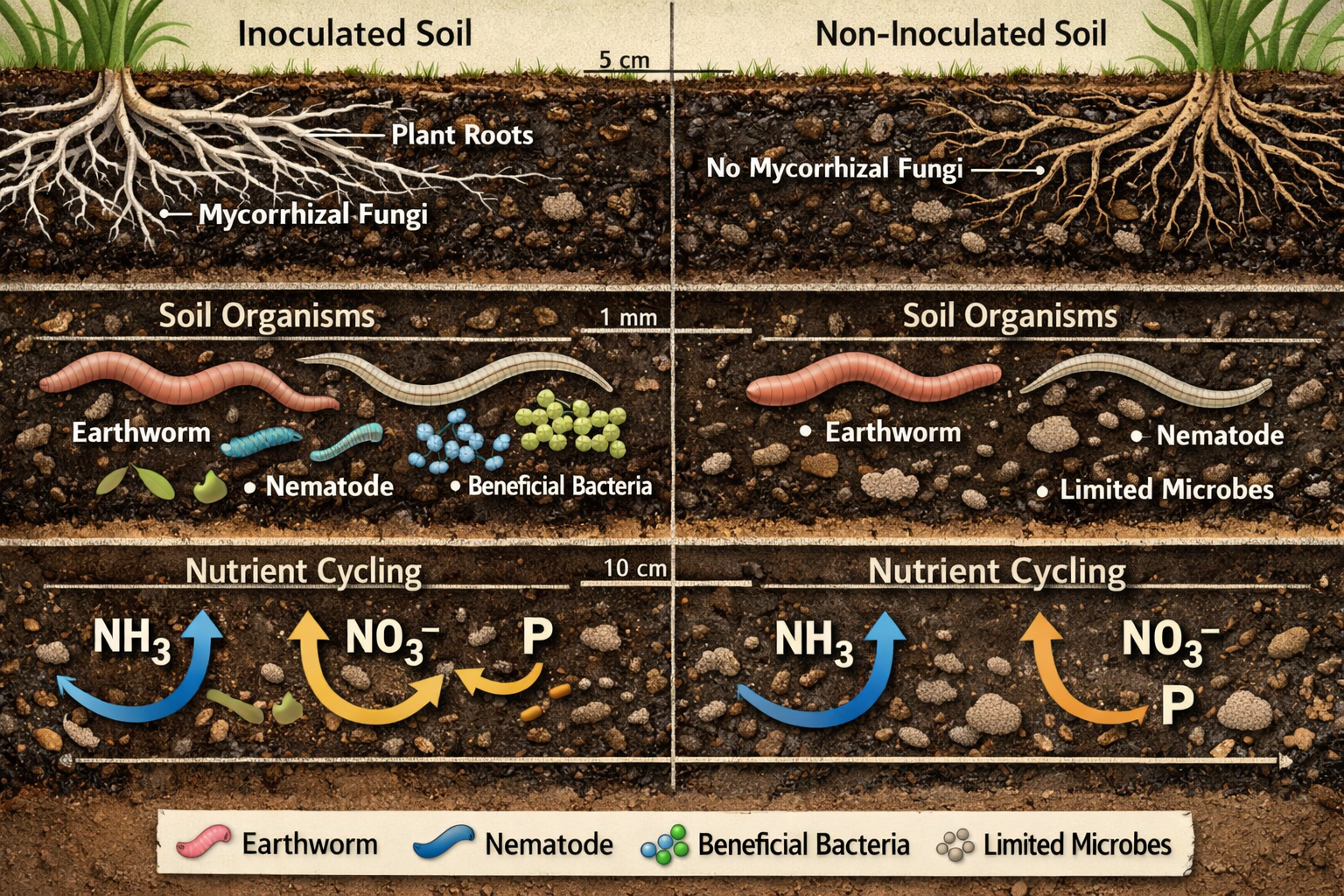
Soil inoculation involves introducing beneficial microorganisms—including bacteria, fungi, protozoa, and nematodes—into soil that has lost its biological diversity. These organisms perform essential ecosystem functions:
- Nutrient cycling: Converting organic matter into plant-available nutrients
- Disease suppression: Outcompeting harmful pathogens
- Soil structure formation: Creating aggregates that improve water retention
- Carbon sequestration: Storing atmospheric carbon in stable soil organic matter
The practice has gained momentum in 2026 as part of broader biodiversity net gain strategies that require developers to demonstrate measurable improvements in ecosystem health.
Why Measure Effectiveness?
Not all inoculation efforts succeed. Soil is a complex environment where introduced organisms must compete with existing communities, adapt to local conditions, and establish functional relationships with plants and other soil dwellers. Without proper measurement protocols, restoration practitioners cannot determine whether their interventions are working.
Assistant Professor André Franco at Indiana University received a substantial $737,000 USDA grant in February 2026 specifically to address this challenge. His project recognizes that "current assessment methods are missing this vital component" of soil biodiversity [1]. The research will develop practical indicators that restoration professionals can use to evaluate soil life across different management strategies.
Soil Inoculation Effectiveness in Biodiversity Surveys: Current Assessment Methods in 2026
The landscape of soil biodiversity assessment has transformed dramatically in 2026. Multiple initiatives are converging to create comprehensive frameworks for measuring ecosystem recovery.
The BioDIGS Nationwide Mapping Initiative
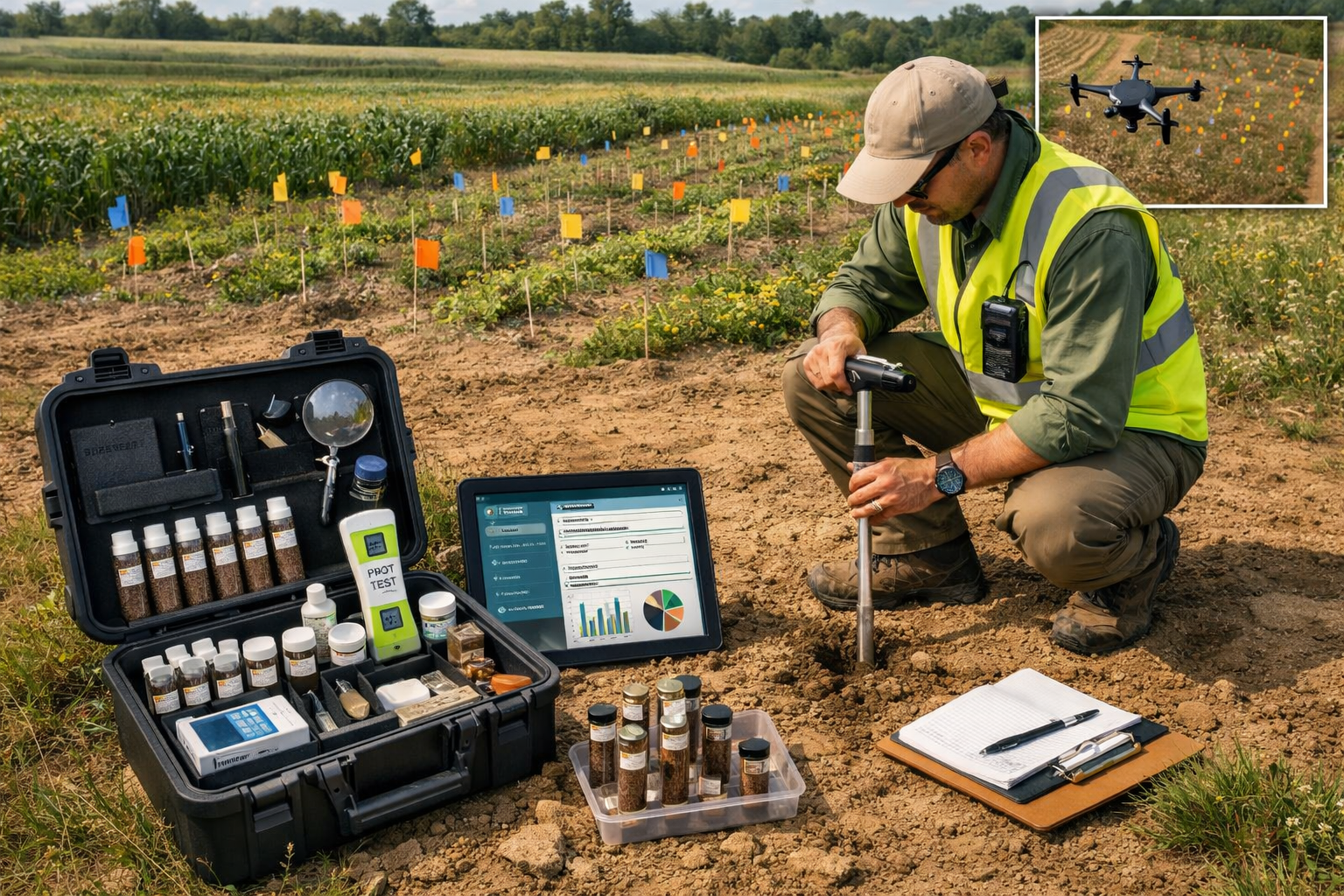
The BioDiversity and Informatics for Genomics Scholars (BioDIGS) Consortium represents one of the most ambitious soil biodiversity projects ever undertaken. This collaborative effort involves over 40 research and teaching institutions with more than 100 student researchers contributing to understanding soil microbial communities [4].
BioDIGS employs hybrid sequencing technology that combines:
- Short-read sequencing (Illumina, Element): Provides broad taxonomic surveys
- Long-read sequencing (Oxford Nanopore, PacBio): Enables high-quality genome assembly
This dual approach allows researchers to both detect microbial taxa and catalog soil biodiversity with unprecedented precision [2]. The data creates baseline measurements against which inoculation effectiveness can be evaluated.
Field Research Protocols Across Agricultural Systems
Franco's USDA-funded project will conduct field research across four Midwest states at Long-Term Agroecosystem Research (LTAR) sites in North Dakota, Nebraska, Michigan, and Ohio [1]. These locations provide diverse conditions for comparing crop and rangeland management strategies.
The research focuses on developing practical soil life indicators that can be implemented by:
- Conservation practitioners
- Agricultural extension services
- Land management agencies
- Private developers conducting biodiversity impact assessments
European Pesticide Impact Studies
A groundbreaking Europe-wide study published in Nature examined 373 soil samples from 26 countries, demonstrating that pesticide residues significantly impair beneficial soil organisms like mycorrhizal fungi and nematodes [6]. This research established measurable impacts on soil ecosystem function by testing genes responsible for nutrient recovery and release of phosphorus and nitrogen.
The methodology provides a template for assessing whether soil inoculation can reverse these functional impairments—a critical question for restoration projects on former agricultural land.
Key Biodiversity Indicators Being Measured
Modern soil surveys in 2026 evaluate multiple dimensions of biodiversity and function:
| Indicator Category | Specific Metrics | Measurement Method |
|---|---|---|
| Microbial Diversity | Species richness, evenness | DNA sequencing |
| Functional Genes | Nutrient cycling capacity | Metagenomics |
| Soil Fauna | Nematode communities, earthworm density | Physical extraction, microscopy |
| Mycorrhizal Networks | Fungal colonization rates | Root examination, molecular markers |
| Ecosystem Processes | Respiration, decomposition rates | Gas flux measurements |
| Nutrient Availability | Nitrogen, phosphorus cycling | Chemical analysis, isotope tracing |
These comprehensive assessments allow practitioners to determine whether inoculation treatments are establishing functional ecosystems rather than simply introducing organisms that fail to persist.
Measuring Ecosystem Recovery and Function Following Inoculation
The ultimate test of soil inoculation effectiveness lies in demonstrating measurable improvements in ecosystem function—not just the presence of introduced organisms, but their active contribution to soil health and productivity.
Quantifying Functional Recovery
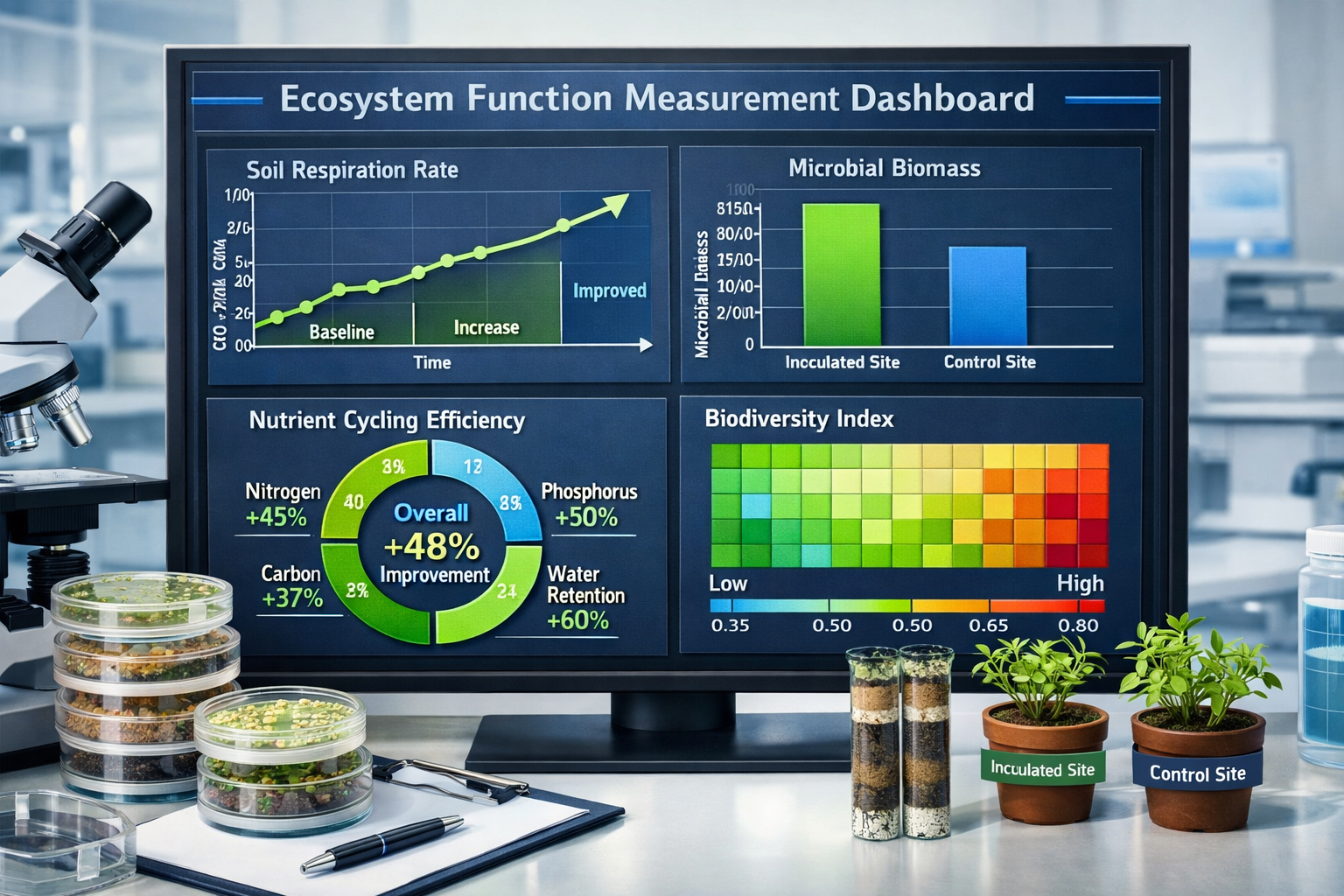
Ecosystem function encompasses the biological, chemical, and physical processes that maintain soil health. In 2026, researchers employ several key metrics to quantify functional recovery:
1. Soil Respiration Rates
Soil respiration—the release of CO₂ from soil organisms—indicates overall biological activity. Higher respiration rates in inoculated soils suggest thriving microbial communities actively decomposing organic matter and cycling nutrients.
2. Nutrient Cycling Efficiency
Researchers track how quickly nutrients move through soil systems by measuring:
- Nitrogen mineralization: Conversion of organic nitrogen to plant-available forms
- Phosphorus solubilization: Release of phosphorus from mineral compounds
- Carbon turnover: Rate of organic matter decomposition and stabilization
The European pesticide study demonstrated that these functional genes could be quantified to show measurable ecosystem changes [6], providing a model for inoculation assessment.
3. Microbial Biomass
Total microbial biomass—the weight of all living microorganisms in a soil sample—serves as a fundamental indicator of ecosystem recovery. Successful inoculation should increase biomass over time as introduced organisms establish and reproduce.
4. Biodiversity Indices
Statistical measures like Shannon diversity index and species evenness quantify the complexity of soil communities. Higher diversity typically correlates with greater ecosystem resilience and stability.
Long-Term Monitoring Strategies
The BioDIGS project is developing methods to characterize antimicrobial resistance genes in soil, providing long-term monitoring strategies to track microbial populations across space and time [2]. This approach allows practitioners to assess whether inoculated organisms persist or whether native communities eventually dominate.
For developers working on biodiversity net gain projects, establishing baseline measurements before inoculation and conducting follow-up surveys at regular intervals (typically 1, 3, 5, and 10 years) demonstrates compliance with regulatory requirements.
Conservation Agriculture as a Model
Research on conservation agriculture shows that species diversification enriches soil biota diversity, enhancing pest control and nutrient recycling through biological processes driven by roots and earthworms rather than mechanical soil disturbance [3]. This provides evidence that management practices supporting soil biodiversity can deliver measurable functional benefits.
Practitioners can apply these principles when designing inoculation protocols:
- Minimize soil disturbance to protect fungal networks
- Maintain plant cover to provide carbon sources for microbes
- Diversify plant species to support varied microbial communities
- Reduce chemical inputs that may harm introduced organisms
Integrating Soil Biodiversity into Regulatory Frameworks
As Soil Inoculation Effectiveness in Biodiversity Surveys: Measuring Ecosystem Recovery and Function in 2026 becomes standard practice, regulatory frameworks are evolving to incorporate soil biodiversity metrics.
Biodiversity Net Gain Requirements
In the UK, developers must demonstrate at least 10% biodiversity net gain on development projects. While initial frameworks focused primarily on above-ground biodiversity, 2026 has seen growing recognition that soil biodiversity must be included in these calculations.
Soil inoculation offers developers a practical tool for achieving net gain targets, particularly on off-site delivery locations where degraded agricultural land is being converted to biodiverse habitat.
Standardized Assessment Protocols
The Novo Nordisk Foundation launched a 2026 Challenge Programme focused on "Harnessing Biology for Climate-Resilient and Healthy Soils," supporting research on biological processes that enhance soil health, functional biodiversity impacts, and soil-microbe-plant interactions [5]. This initiative will help standardize assessment protocols across different regions and soil types.
The 4th Global Soil Biodiversity Conference scheduled for April 12-25, 2026, in Victoria, British Columbia, brings together experts to discuss soil biodiversity assessment and protection [9], further advancing international coordination on measurement standards.
Practical Implementation for Developers
For developers and landowners seeking to implement soil inoculation as part of their biodiversity plans, the following steps ensure effective measurement:
Phase 1: Baseline Assessment
- Conduct comprehensive soil biodiversity survey before inoculation
- Document existing microbial communities, fauna, and functional capacity
- Establish reference sites with similar soil conditions for comparison
Phase 2: Inoculation Implementation
- Select inoculum sources appropriate to target ecosystem type
- Apply organisms during optimal conditions (temperature, moisture)
- Document inoculation methods, quantities, and timing
Phase 3: Monitoring and Verification
- Conduct follow-up surveys at 6 months, 1 year, 3 years, and 5 years
- Compare biodiversity metrics to baseline and reference sites
- Measure ecosystem function indicators (respiration, nutrient cycling)
- Document plant community establishment and health
Phase 4: Reporting and Compliance
- Prepare biodiversity net gain reports showing measurable improvements
- Demonstrate functional ecosystem recovery through quantitative data
- Calculate biodiversity units generated through restoration efforts
Challenges and Limitations in Measuring Soil Inoculation Success
Despite significant advances in 2026, measuring soil inoculation effectiveness presents ongoing challenges that practitioners must acknowledge.
Environmental Variability
Soil ecosystems respond differently to inoculation based on:
- Climate conditions: Temperature and moisture affect organism survival
- Soil chemistry: pH, nutrient levels, and contaminants influence establishment
- Existing communities: Native organisms may resist or facilitate colonization
- Land use history: Previous management affects soil structure and function
This variability means that inoculation protocols successful in one location may fail in another, requiring site-specific assessment and adaptation.
Temporal Dynamics
Soil communities change over time through natural succession. Distinguishing between recovery driven by inoculation versus natural colonization from surrounding areas requires careful experimental design with appropriate control sites.
Short-term surveys may show initial establishment of introduced organisms, but long-term persistence remains uncertain without extended monitoring programs.
Cost and Technical Barriers
Comprehensive soil biodiversity assessments using DNA sequencing and functional gene analysis remain expensive. While costs are decreasing, budget constraints may limit the frequency and depth of monitoring for smaller projects.
However, developers can balance costs against benefits by focusing on key indicator species and functional measurements rather than attempting complete community characterization. Working with experienced biodiversity surveyors ensures efficient allocation of assessment resources.
Knowledge Gaps
Despite growing research, significant knowledge gaps remain:
- Which microbial consortia provide optimal functional benefits for different soil types?
- How long must inoculated organisms persist to establish self-sustaining communities?
- What management practices best support inoculated communities?
- How do inoculation benefits compare to natural recovery timelines?
Ongoing research initiatives like Franco's USDA project and the BioDIGS consortium are actively addressing these questions, with results expected to refine best practices throughout 2026 and beyond.
Future Directions: Advancing Soil Inoculation Assessment
The field of Soil Inoculation Effectiveness in Biodiversity Surveys: Measuring Ecosystem Recovery and Function in 2026 continues to evolve rapidly. Several emerging trends will shape future practice:
Artificial Intelligence and Machine Learning
Advanced algorithms can analyze complex soil biodiversity datasets to:
- Predict inoculation success based on site characteristics
- Identify optimal organism combinations for specific restoration goals
- Detect early warning signs of inoculation failure
- Automate species identification from sequencing data
Portable Field Assessment Tools
Development of field-deployable DNA sequencing devices and rapid functional assays will enable real-time assessment of soil biodiversity, reducing the time between sampling and results from weeks to hours.
Integration with Remote Sensing
Satellite and drone-based remote sensing can monitor above-ground vegetation responses to soil inoculation, providing indirect indicators of below-ground ecosystem recovery at landscape scales.
Standardized Inoculum Products
As understanding of soil biodiversity improves, commercial inoculum products will become more standardized and targeted, with clear documentation of organism composition and expected functional benefits. This will facilitate more rigorous assessment of product effectiveness.
Expanded Regulatory Recognition
Growing scientific evidence for soil biodiversity's importance will likely lead to explicit inclusion in biodiversity net gain calculations, potentially requiring soil assessments for all development projects.
Conclusion
Soil Inoculation Effectiveness in Biodiversity Surveys: Measuring Ecosystem Recovery and Function in 2026 represents a pivotal advancement in restoration ecology. For the first time, practitioners have access to comprehensive tools and protocols for determining whether microbial interventions deliver genuine ecosystem benefits.
The convergence of large-scale mapping initiatives like BioDIGS, targeted research programs funded by agencies like the USDA, and international coordination through conferences and funding programs has created an unprecedented opportunity to integrate soil biodiversity into mainstream conservation practice.
Key Success Factors
Effective measurement of soil inoculation success requires:
✅ Comprehensive baseline assessment before intervention
✅ Multiple biodiversity and functional indicators tracked over time
✅ Appropriate control and reference sites for comparison
✅ Long-term monitoring commitment extending 5-10 years
✅ Integration with above-ground biodiversity goals
✅ Professional expertise in soil ecology and assessment methods
Actionable Next Steps
For developers, landowners, and restoration practitioners looking to implement soil inoculation:
-
Engage qualified biodiversity surveyors early in project planning to establish baseline conditions and design appropriate assessment protocols
-
Review current research from initiatives like BioDIGS and Franco's USDA project to understand emerging best practices
-
Develop site-specific inoculation plans based on soil conditions, restoration goals, and regulatory requirements
-
Allocate sufficient budget for comprehensive monitoring programs that demonstrate measurable ecosystem recovery
-
Document and share results to contribute to the growing evidence base for soil inoculation effectiveness
-
Consider soil biodiversity as a core component of biodiversity impact assessments and net gain strategies
As 2026 progresses, the integration of soil biodiversity into ecosystem assessment will transition from cutting-edge research to standard practice. Projects that embrace comprehensive soil inoculation assessment today will be well-positioned to demonstrate genuine environmental stewardship and regulatory compliance.
The hidden universe beneath our feet is finally receiving the attention it deserves. By measuring soil inoculation effectiveness through rigorous biodiversity surveys, we can ensure that restoration efforts deliver lasting ecosystem recovery—one microbe at a time. 🌱
References
[1] 2026 0220 Franco Grant – https://oneill.indiana.edu/news/2026-0220-franco-grant.html
[2] Pmc12799090 – https://pmc.ncbi.nlm.nih.gov/articles/PMC12799090/
[3] Soil 12 79 2026 – https://soil.copernicus.org/articles/12/79/2026/soil-12-79-2026.pdf
[4] Researchers Map Us Soil Microbiome – https://hub.jhu.edu/2026/01/06/researchers-map-us-soil-microbiome/
[5] Challenge Programme 2026 Harnessing Biology For Climate Resilient And Healthy Soils – https://novonordiskfonden.dk/grant/challenge-programme-2026-harnessing-biology-for-climate-resilient-and-healthy-soils/
[6] 2026 01 Pesticides Significantly Affect Soil Life – https://phys.org/news/2026-01-pesticides-significantly-affect-soil-life.html
[9] The 4th Global Soil Biodiversity Conference April 12 25 2026 Victora British Columbia – https://csss.ca/the-4th-global-soil-biodiversity-conference-april-12-25-2026-victora-british-columbia/