

A staggering $700 billion funding gap threatens to derail global nature-based solutions despite $220 billion flowing annually into conservation efforts [1]. This financial chasm arrives precisely as 2025's most groundbreaking ecology research—curated through Springer Nature's Top 100 most-read papers—reveals transformative methodologies that surveyors and developers must integrate into 2026 biodiversity assessments. The convergence of academic breakthroughs and practical field protocols has never been more critical, especially as the UK's Biodiversity Net Gain (BNG) framework enters its second year with new exemptions reshaping the policy landscape [3].
Understanding how Top 2025 Ecology Breakthroughs Applied to 2026 Surveys: Biodiversity Net Gain Lessons from Springer Nature's Most-Read Papers translates into actionable surveyor protocols represents the difference between compliance and genuine nature-positive outcomes. With 60% of global GDP directly dependent on biodiversity [1], the stakes extend far beyond regulatory checkboxes.
Key Takeaways
- 🔬 Five-step BNG framework from 2025 research provides structured methodology for surveyors conducting 2026 assessments with prioritization, metrics, baselines, monitoring, and reporting
- 📉 New 0.2-hectare exemption announced late 2025 fundamentally changes UK BNG compliance landscape, creating potential loopholes that surveyors must navigate carefully
- 💰 Nature-dependent sectors risk losing 40%+ profits by 2030 due to biodiversity erosion, making accurate surveying and BNG delivery economically critical
- 🌊 Offshore renewables BNG roadmap released March 2026 demonstrates sector-specific applications of ecology breakthroughs with shellfish restoration and eco-friendly infrastructure
- 🤝 Multi-stakeholder collaboration emerges as essential requirement, connecting developers, regulators, NGOs, academia, and technology providers to prevent greenwashing
Understanding the 2025 Ecology Research Landscape and Its 2026 Survey Applications
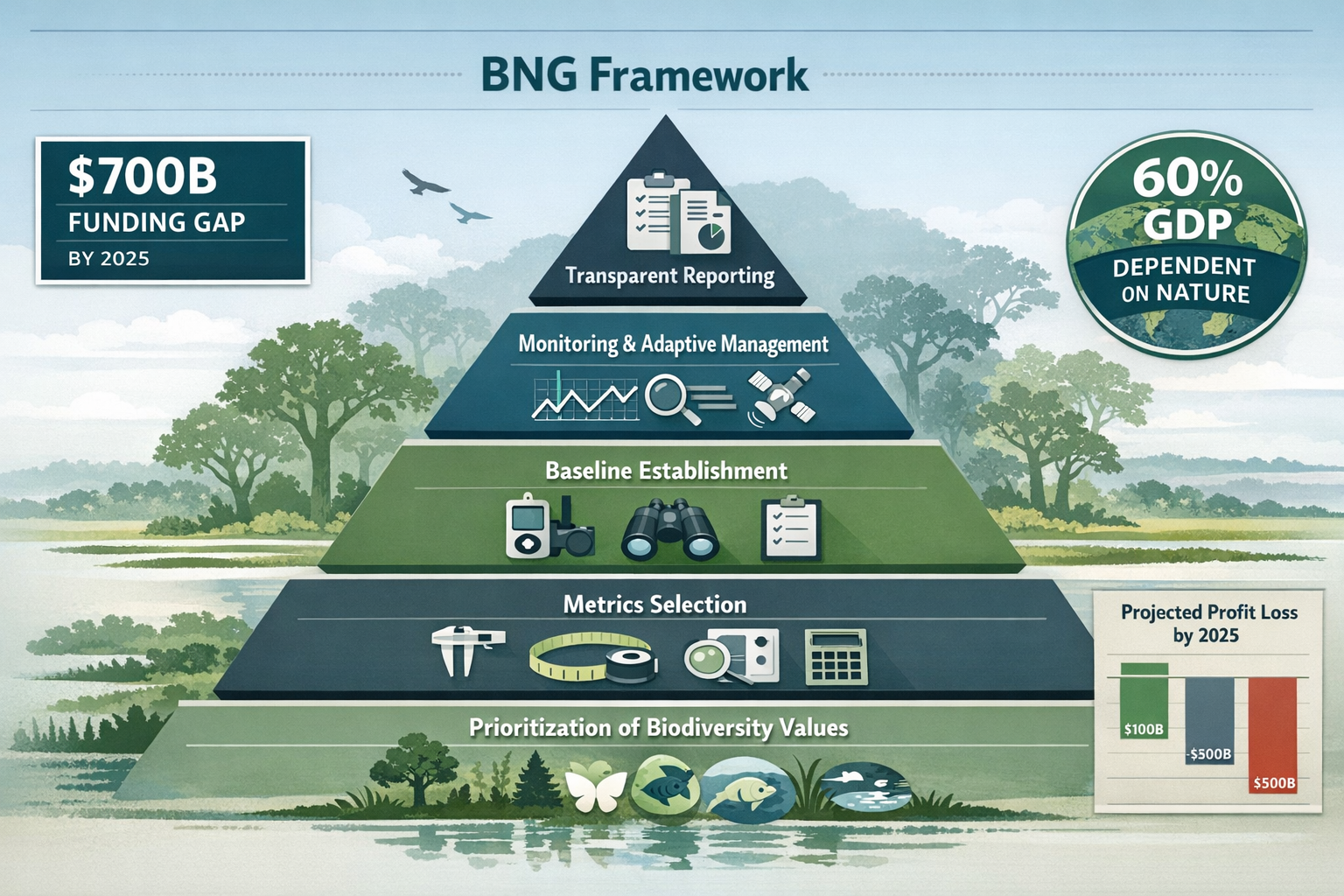
The ecology research published throughout 2025 and featured in Springer Nature's most-read papers collection reveals fundamental shifts in how scientists understand biodiversity measurement, ecosystem function, and nature-positive development. These breakthroughs directly inform the biodiversity net gain assessment protocols that surveyors deploy in 2026.
The Five-Step Framework Revolutionizing BNG Delivery
Research published in early 2025 and refined through the offshore renewables sector's March 2026 whitepaper establishes a comprehensive five-step framework that bridges theoretical ecology with practical surveying [2]:
- Prioritization of Biodiversity Values: Identifying which habitats, species, and ecosystem functions matter most within the development context
- Appropriate Metrics Selection: Choosing measurement tools aligned with the Kunming-Montreal Global Biodiversity Framework
- Baseline Establishment: Conducting rigorous pre-development surveys that capture habitat condition and species assemblages
- Monitoring with Adaptive Management: Implementing long-term tracking systems that allow course corrections
- Transparent Reporting: Documenting outcomes in formats accessible to regulators, stakeholders, and the public
This structured approach addresses a critical gap identified in first-year BNG compliance data, where inconsistent methodologies created confusion and potential greenwashing risks [3].
Economic Imperatives Driving Survey Accuracy
The financial stakes underlying accurate biodiversity surveying have escalated dramatically. Research quantifying nature-risk exposure reveals that extractives, food and beverage, and apparel sectors face profit losses exceeding 40% by 2030 if biodiversity continues eroding at current rates [1]. Even sectors with moderate nature dependency—utilities, agriculture, chemicals—confront losses above 10%.
For surveyors conducting 2026 assessments, these projections underscore why developers increasingly demand precision. A biodiversity net gain report that underestimates baseline habitat value or overestimates post-development biodiversity could expose clients to substantial financial liability.
The Climate-Biodiversity Feedback Loop
Among 2025's most significant ecology breakthroughs is the quantification of feedback mechanisms between biodiversity loss and climate change acceleration. The 10 New Insights in Climate Science report demonstrates how biodiversity loss undermines ecosystem carbon uptake and storage functions, creating a self-reinforcing cycle of environmental degradation [4].
This finding transforms how surveyors evaluate habitat types. Carbon-rich ecosystems—peatlands, ancient woodlands, seagrass meadows—now carry dual value in both biodiversity and climate mitigation contexts. The practical steps to achieve 10% biodiversity net gain must account for these synergies.
Translating Top 2025 Ecology Breakthroughs into 2026 Field Protocols
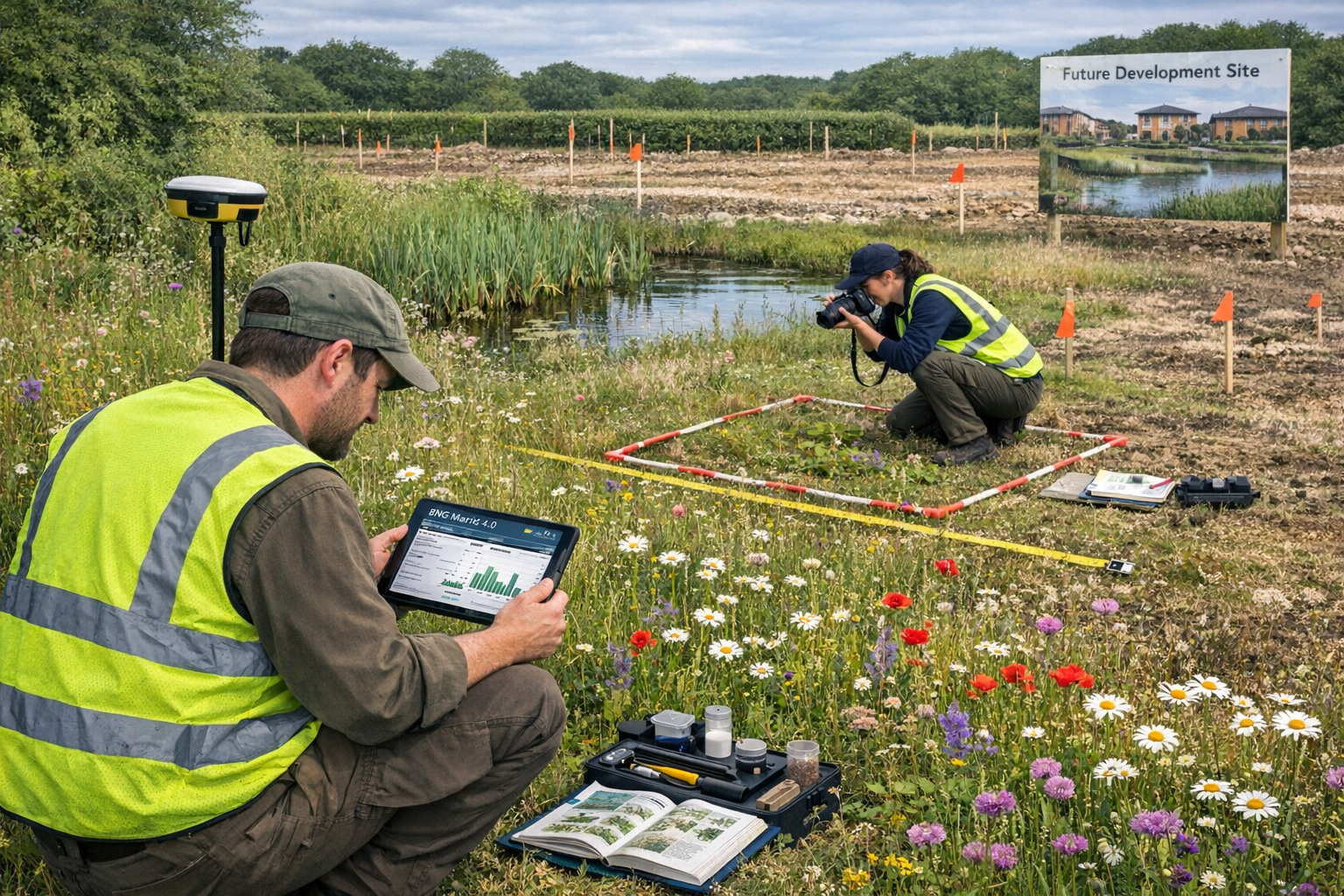
The journey from peer-reviewed ecology papers to boots-on-the-ground surveying requires deliberate translation. The Top 2025 Ecology Breakthroughs Applied to 2026 Surveys: Biodiversity Net Gain Lessons from Springer Nature's Most-Read Papers manifests in several concrete protocol adjustments that practitioners implement throughout 2026.
Enhanced Habitat Condition Assessment Methodologies
Research published in mid-2025 refined habitat condition scoring systems, incorporating new indicators of ecosystem resilience and functional connectivity. These improvements directly enhance the baseline assessments that underpin biodiversity impact calculations.
Key protocol updates for 2026 include:
- Soil health indicators: Microbial diversity metrics and organic matter content measurements
- Functional connectivity scores: Quantifying habitat linkages beyond simple proximity measures
- Climate resilience factors: Assessing habitat capacity to withstand temperature and precipitation changes
- Pollinator pathway mapping: Documenting floral resource availability across seasons
These refinements address limitations in earlier BNG metric versions that sometimes missed critical ecosystem functions. Surveyors working with planners on BNG requirements now provide richer baseline data.
Technology Integration Driven by Research Insights
Ecology breakthroughs in remote sensing, environmental DNA (eDNA) analysis, and artificial intelligence-powered species identification have matured sufficiently for field deployment in 2026. The offshore renewables BNG roadmap explicitly recommends these technologies for baseline establishment and monitoring phases [2].
Practical technology applications include:
| Technology | Survey Application | Breakthrough Source |
|---|---|---|
| Drone multispectral imaging | Rapid habitat mapping across large sites | 2025 remote sensing papers |
| eDNA water/soil sampling | Non-invasive species detection | 2025 molecular ecology research |
| AI species identification apps | Real-time field verification | 2025 machine learning studies |
| Acoustic monitoring arrays | Continuous bird and bat surveys | 2025 bioacoustics research |
| LiDAR vegetation structure | Three-dimensional habitat assessment | 2025 forestry ecology papers |
These tools don't replace experienced ecologists but amplify their capabilities, enabling more comprehensive surveys within typical project timelines and budgets.
Adaptive Management Protocols Informed by Long-Term Studies
Perhaps the most significant 2025 research contribution involves long-term ecological monitoring data that revealed common failure modes in habitat creation and restoration projects. These findings directly inform the adaptive management component of the five-step framework [2].
Critical lessons for 2026 monitoring programs:
- Early intervention triggers: Establishing clear thresholds that prompt management adjustments before failures become irreversible
- Reference ecosystem comparisons: Benchmarking created habitats against high-quality natural analogues
- Stakeholder feedback loops: Incorporating observations from land managers, local communities, and site users
- Climate adaptation flexibility: Building contingencies for shifting baselines due to climate change
Developers implementing on-site or off-site BNG delivery benefit from these evidence-based monitoring approaches that reduce long-term risk.
Navigating the 2026 Policy Landscape: Exemptions, Loopholes, and Opportunities
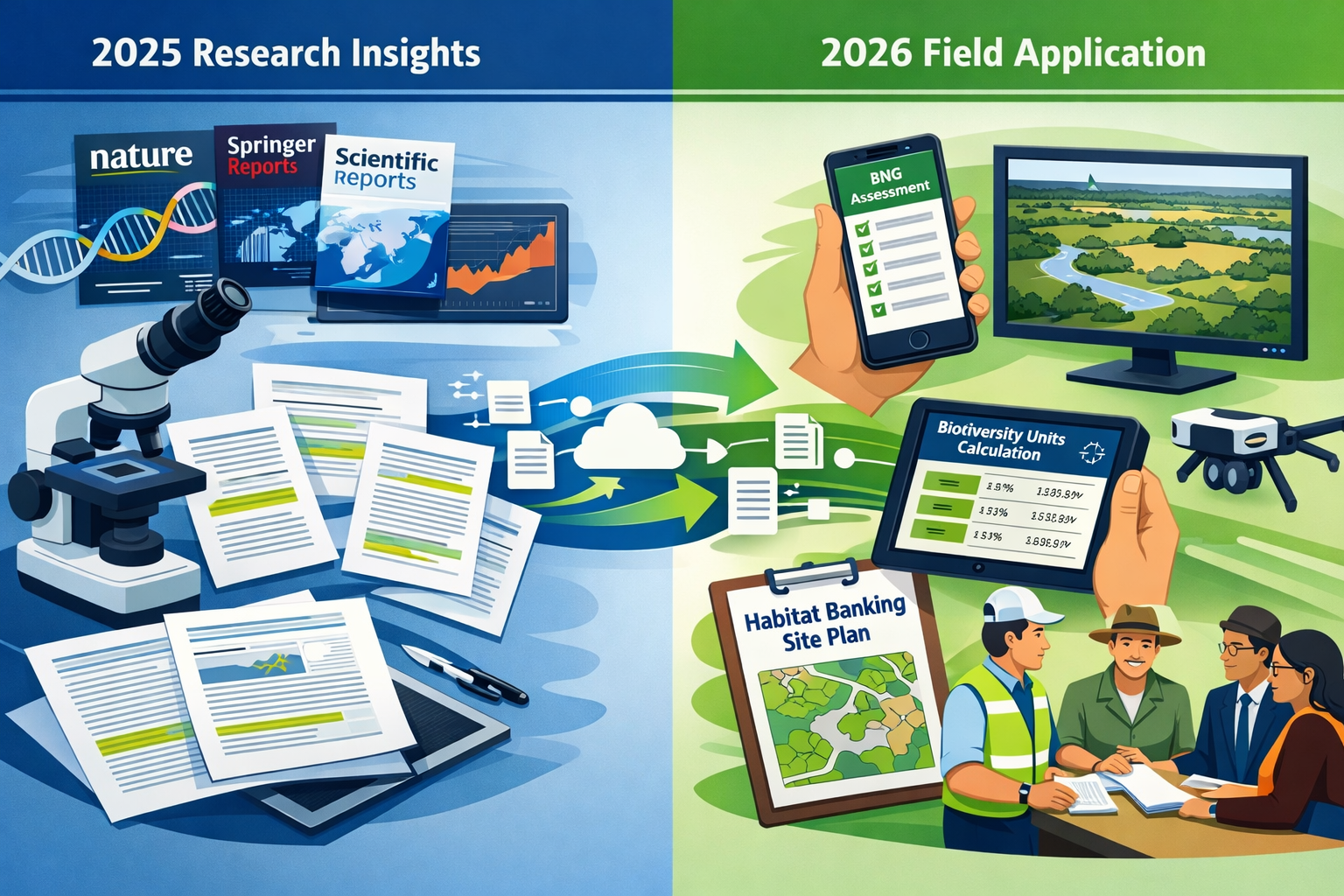
The regulatory environment surrounding Top 2025 Ecology Breakthroughs Applied to 2026 Surveys: Biodiversity Net Gain Lessons from Springer Nature's Most-Read Papers shifted substantially with the late-2025 announcement of new BNG exemptions. Understanding how research insights intersect with policy changes proves essential for surveyors and developers operating in 2026.
The 0.2-Hectare Exemption and Its Implications
The UK government's decision to exempt development sites under 0.2 hectares from BNG requirements fundamentally alters the compliance landscape [3]. Conservation organizations immediately raised concerns that this area-based exemption could create significant loopholes, potentially exempting thousands of small projects that cumulatively impact substantial habitat.
Surveyor considerations for 2026:
- Site boundary definitions: Careful assessment of whether adjacent developments under common ownership should be aggregated
- Voluntary BNG opportunities: Even exempt projects may pursue BNG for reputational or planning advantages
- Cumulative impact documentation: Recording small-site biodiversity losses to inform regional planning
- Local planning authority variations: Some councils may maintain BNG expectations despite national exemptions
The guidance for developers must address these exemption nuances, particularly for clients with multiple small sites.
Sector-Specific BNG Roadmaps Emerging from Research
The March 2026 offshore renewables BNG roadmap represents the first sector-specific translation of ecology breakthroughs into practical protocols [2]. This model demonstrates how different industries can adapt the five-step framework to their unique contexts.
Offshore renewables BNG actions include:
- 🐚 Shellfish restoration: Using turbine foundations as reef habitat for native oysters and mussels
- ⚓ Eco-friendly scour protection: Designing rock armoring with habitat complexity for marine invertebrates
- 🌊 Marine litter removal: Incorporating cleanup activities as biodiversity enhancement measures
- 📊 Underwater monitoring: Deploying autonomous vehicles for baseline and post-installation surveys
Other sectors are developing analogous roadmaps. Agriculture, transport infrastructure, and residential development each require tailored applications of the underlying ecology research. Surveyors must stay current with sector-specific BNG guidance as it emerges throughout 2026.
Multi-Stakeholder Collaboration Requirements
Research consistently demonstrates that successful BNG delivery requires coordination across diverse stakeholder groups [2]. The 2026 survey protocols increasingly embed collaboration mechanisms that connect:
- Developers and ecologists: Early engagement to identify biodiversity opportunities and constraints
- Regulators and consultants: Transparent communication about methodology choices and metric calculations
- NGOs and academia: Access to latest research findings and local ecological knowledge
- Investors and technology providers: Funding and tools for innovative monitoring approaches
- Local communities and land managers: On-ground observations and long-term stewardship
This collaborative approach addresses greenwashing concerns by ensuring independent verification and transparent reporting. Architects solving BNG challenges particularly benefit from early stakeholder engagement.
Practical Survey Protocols: Implementing Research Insights in 2026 Fieldwork
The translation of Top 2025 Ecology Breakthroughs Applied to 2026 Surveys: Biodiversity Net Gain Lessons from Springer Nature's Most-Read Papers into daily surveying practice requires specific protocol adjustments. Professional ecologists conducting assessments throughout 2026 implement these research-informed methodologies.
Pre-Survey Planning Enhanced by Research Findings
Before setting foot on site, 2026 survey protocols incorporate desk-based research steps informed by 2025 ecology breakthroughs:
Enhanced planning checklist:
✅ Climate trajectory analysis: Reviewing regional climate projections to assess habitat vulnerability
✅ Functional connectivity mapping: Using GIS tools to identify landscape-scale ecological networks
✅ Reference ecosystem identification: Locating high-quality habitat analogues for comparison
✅ Stakeholder consultation: Engaging local naturalist groups and land managers for historical context
✅ Technology deployment planning: Determining which advanced survey tools suit site conditions
This preparation phase ensures that field time focuses on data collection rather than orientation, improving efficiency and data quality.
Field Survey Execution with Advanced Methodologies
The actual on-site survey work in 2026 integrates multiple technology platforms and refined assessment techniques:
Typical 2026 survey day:
- Morning: Drone multispectral flight capturing habitat extent and condition indicators
- Mid-morning: Quadrat-based vegetation surveys with AI-assisted species identification
- Midday: eDNA sample collection from water bodies and soil cores
- Afternoon: Acoustic recorder deployment for continuous bird and bat monitoring
- Late afternoon: Habitat condition scoring using updated metrics incorporating soil health and connectivity
This integrated approach captures far more comprehensive baseline data than traditional methods, supporting robust biodiversity net gain assessments that withstand scrutiny.
Post-Survey Analysis and Reporting
The data processing and reporting phase benefits substantially from 2025 research insights, particularly regarding transparent communication of uncertainty and limitations:
Key reporting enhancements for 2026:
- Confidence intervals: Quantifying uncertainty in species richness estimates and habitat condition scores
- Climate scenario modeling: Projecting how baseline habitats may shift under different warming trajectories
- Alternative metric comparisons: Presenting results using multiple biodiversity metrics to demonstrate robustness
- Visual data presentation: Leveraging infographics and interactive maps for stakeholder accessibility
- Adaptive management triggers: Specifying measurable thresholds that would prompt intervention
These reporting improvements address first-year BNG implementation challenges where ambiguous documentation created compliance difficulties [3].
Biodiversity Unit Markets and Financial Mechanisms in 2026
The economic infrastructure supporting BNG has matured considerably by 2026, informed by ecology research quantifying nature's economic value. Understanding these financial mechanisms helps surveyors advise clients on biodiversity unit costs and delivery options.
Unit Pricing Dynamics Reflecting Research Insights
The $700 billion funding gap for nature-based solutions creates upward pressure on biodiversity unit prices as demand outstrips supply [1]. By 2026, unit pricing increasingly reflects:
- Habitat scarcity: Rare habitat types command premium prices due to limited creation opportunities
- Location factors: Units near development hotspots or within priority ecological networks cost more
- Delivery certainty: Established habitat banking sites with proven track records charge premiums over speculative projects
- Co-benefits: Units providing climate mitigation or water quality improvements attract higher valuations
Surveyors must stay current with market dynamics when advising clients on buying biodiversity units versus on-site delivery.
Habitat Banking Evolution Informed by Ecology Research
The distinction between land banking and habitat banking has sharpened considerably by 2026, with research-informed best practices emerging:
Characteristics of high-quality 2026 habitat banks:
- 🌱 Science-based restoration: Using species assemblages and soil treatments validated by peer-reviewed research
- 📈 Long-term monitoring commitments: Implementing the adaptive management protocols from the five-step framework
- 🔒 Legal protection mechanisms: Conservation covenants ensuring 30+ year habitat security
- 🤝 Stakeholder engagement: Involving local communities and conservation organizations in site management
- 💻 Transparent reporting: Public dashboards showing monitoring data and habitat development progress
Landowners considering selling biodiversity units benefit from understanding these quality standards that differentiate premium offerings.
Investment Flows and NatureTech Innovation
The intersection of ecology research and financial innovation has spawned a growing "NatureTech" sector attracting substantial investment [1]. By 2026, this includes:
- Monitoring technology providers: Companies offering eDNA analysis, AI species identification, and remote sensing services
- Habitat creation specialists: Firms applying research insights to accelerate ecosystem establishment
- Data platforms: Software connecting biodiversity unit buyers and sellers with transparent pricing
- Verification services: Independent auditors ensuring BNG claims match on-ground reality
This ecosystem supports more efficient BNG delivery while creating opportunities for surveyors to specialize in emerging niches.
Lessons from First-Year Implementation: Avoiding Common Pitfalls
The first year of mandatory BNG implementation (2024-2025) revealed numerous challenges that 2026 protocols specifically address. Understanding these lessons helps practitioners avoid repeating early mistakes.
Common Baseline Assessment Errors
Pitfalls identified in first-year reviews [3]:
❌ Seasonal bias: Conducting surveys during single seasons and missing key species or habitat conditions
❌ Boundary ambiguity: Unclear delineation of site extent leading to disputes about unit calculations
❌ Condition score inflation: Optimistic habitat condition assessments that don't withstand scrutiny
❌ Connectivity neglect: Failing to account for habitat isolation in fragmented landscapes
❌ Climate vulnerability omission: Ignoring how climate change may undermine created habitats
The enhanced 2026 protocols explicitly address each of these issues through the research-informed methodologies described above.
Monitoring and Adaptive Management Failures
Long-term monitoring represents a persistent weak point in BNG delivery. First-year data revealed:
- Insufficient monitoring frequency: Annual visits missing critical habitat changes
- Unclear intervention triggers: Ambiguous criteria for when adaptive management should occur
- Funding shortfalls: Inadequate financial provisions for 30-year monitoring commitments
- Stakeholder disengagement: Loss of institutional knowledge as personnel change
The 2026 best practices incorporate risk mitigation strategies addressing these challenges through escrow accounts, third-party monitoring services, and clear governance structures.
Communication and Transparency Issues
Greenwashing accusations emerged when BNG claims couldn't be verified or when reporting lacked transparency. The research-informed 2026 protocols emphasize:
- Public data repositories: Making monitoring data accessible to stakeholders
- Plain language summaries: Translating technical assessments for non-specialist audiences
- Visual documentation: Photo points and drone imagery showing habitat development over time
- Independent verification: Third-party audits of unit calculations and habitat condition
These transparency measures build public trust while protecting developers from unfounded criticism.
Future Directions: Emerging Research and 2027+ Implications
While this article focuses on Top 2025 Ecology Breakthroughs Applied to 2026 Surveys: Biodiversity Net Gain Lessons from Springer Nature's Most-Read Papers, ongoing research continues advancing the field. Surveyors should monitor several emerging areas:
Next-Generation Biodiversity Metrics
Research published throughout 2025 and early 2026 explores metrics beyond habitat area and condition, including:
- Functional diversity indices: Measuring ecosystem service provision capacity
- Genetic diversity proxies: Assessing population viability through molecular markers
- Ecosystem integrity scores: Holistic measures incorporating multiple ecological dimensions
- Dynamic baseline adjustments: Accounting for climate-driven habitat shifts
These advanced metrics may supplement or replace current BNG calculations in future policy iterations.
Global Biodiversity Framework Alignment
The Kunming-Montreal Global Biodiversity Framework establishes international targets that influence UK policy [2]. Key alignment areas include:
- 30×30 targets: Protecting 30% of land and sea by 2030
- Nature-positive commitments: Corporate pledges to deliver net biodiversity gains
- Indigenous knowledge integration: Incorporating traditional ecological knowledge into assessments
- Benefit-sharing mechanisms: Ensuring equitable distribution of nature-based solution benefits
Surveyors operating internationally must understand how different jurisdictions implement these global commitments.
Climate-Biodiversity Integration
The feedback loop between climate change and biodiversity loss will receive increasing research attention [4]. Practical implications include:
- Carbon-biodiversity co-benefits: Valuing habitats for both climate mitigation and species conservation
- Climate adaptation corridors: Designing habitat networks facilitating species range shifts
- Extreme weather resilience: Creating ecosystems that withstand floods, droughts, and heatwaves
- Blue carbon ecosystems: Prioritizing coastal and marine habitats with high carbon sequestration
These considerations will increasingly shape biodiversity planning for development projects.
Conclusion: Bridging Research and Practice for Nature-Positive Outcomes
The Top 2025 Ecology Breakthroughs Applied to 2026 Surveys: Biodiversity Net Gain Lessons from Springer Nature's Most-Read Papers represents more than academic interest—it defines the methodological foundation for delivering genuine nature-positive development. As 2026 progresses, the integration of research insights into daily surveying practice separates high-quality assessments from checkbox compliance.
The five-step framework—prioritization, metrics selection, baseline establishment, monitoring, and transparent reporting—provides structure for translating complex ecology research into actionable protocols. Enhanced by technology integration, refined habitat condition assessments, and robust adaptive management, these methodologies address first-year implementation challenges while positioning practitioners for future policy evolution.
The economic stakes could not be higher, with nature-dependent sectors facing profit losses exceeding 40% by 2030 if biodiversity erosion continues [1]. Simultaneously, the $700 billion funding gap for nature-based solutions creates both challenges and opportunities for innovative delivery mechanisms [1].
Actionable Next Steps for Surveyors and Developers
For ecological consultants:
- Review the five-step BNG framework and integrate into standard operating procedures
- Invest in training for advanced survey technologies (eDNA, AI identification, drones)
- Establish partnerships with academic institutions to access latest research findings
- Develop sector-specific protocol variations aligned with client needs
- Implement transparent reporting systems that build stakeholder trust
For developers and planners:
- Engage ecological consultants early in project design to identify biodiversity opportunities
- Understand exemption criteria and voluntary BNG benefits for exempt projects
- Evaluate on-site versus off-site delivery options using research-informed criteria
- Budget adequately for long-term monitoring and adaptive management
- Explore biodiversity credit markets for strategic unit procurement
For policymakers and regulators:
- Monitor exemption impacts to prevent unintended loophole creation [3]
- Support sector-specific BNG roadmap development following the offshore renewables model
- Fund research addressing knowledge gaps in habitat creation and restoration
- Establish quality standards for biodiversity unit markets
- Facilitate multi-stakeholder collaboration platforms
The convergence of rigorous ecology research with practical surveying protocols creates unprecedented opportunities for development that genuinely enhances rather than merely mitigates biodiversity impacts. By staying current with emerging research, embracing advanced methodologies, and maintaining transparent reporting, the surveying profession can lead the transition toward nature-positive development that benefits ecosystems, economies, and communities alike.
For additional guidance on implementing these approaches, explore our comprehensive resources on biodiversity net gain fundamentals and frequently asked questions about BNG compliance in 2026.
References
[1] Naturetech Backing Natures Balance – https://contrarianventures.substack.com/p/naturetech-backing-natures-balance
[2] Gingr Whitepaper 2026 – https://tethys.pnnl.gov/sites/default/files/publications/Gingr_whitepaper_2026.pdf
[3] Biodiversity Net Gain At A Crossroads Any Consultation Must Close Loopholes Not Create New Ones – https://www.wcl.org.uk/biodiversity-net-gain-at-a-crossroads-any-consultation-must-close-loopholes-not-create-new-ones.asp
[4] 10nics 2025 Report Digital V2 – https://10insightsclimate.science/wp-content/uploads/2026/01/10NICS-2025-Report_digital_v2.pdf