

Recent research from the Smithsonian Environmental Research Center (SERC) has revolutionized how ecologists measure ecosystem disturbances, providing surveyors with standardized protocols that directly address the most critical gap in Biodiversity Net Gain (BNG) compliance: quantifying how human activities affect ecosystem services over time. As BNG mandates expand to Nationally Significant Infrastructure Projects in May 2026, understanding Ecosystem Functioning Surveys for BNG Resilience: Ecologist Guide to Human Impact Assessments in 2026 has become essential for professionals navigating the intersection of development pressures and ecological accountability.
The traditional approach to biodiversity assessment—counting species and measuring habitat extent—tells only half the story. Ecosystem functioning surveys examine the underlying processes that sustain biodiversity: nutrient cycling, pollination networks, soil formation, water filtration, and carbon sequestration. These measurements provide the evidence base needed to project whether a proposed 10% biodiversity improvement will actually deliver resilient, self-sustaining ecosystems rather than fragile assemblages requiring perpetual intervention.
Key Takeaways
- 🌱 Ecosystem functioning surveys measure the processes (nutrient cycling, pollination, water filtration) that underpin biodiversity resilience, not just species counts
- 📊 SERC protocols provide standardized methods to quantify how human disturbances affect ecosystem services, strengthening BNG projections
- ⚖️ May 2026 NSIP mandate extends BNG requirements to major infrastructure projects, requiring more sophisticated impact assessments
- 🔄 Climate-driven reassembly means restoration targets must focus on future ecosystem states rather than historical baselines
- 📈 Developers must demonstrate 10% biodiversity improvement using DEFRA's Statutory Metric, with functioning surveys providing critical supporting evidence
Understanding Ecosystem Functioning Surveys in the BNG Context
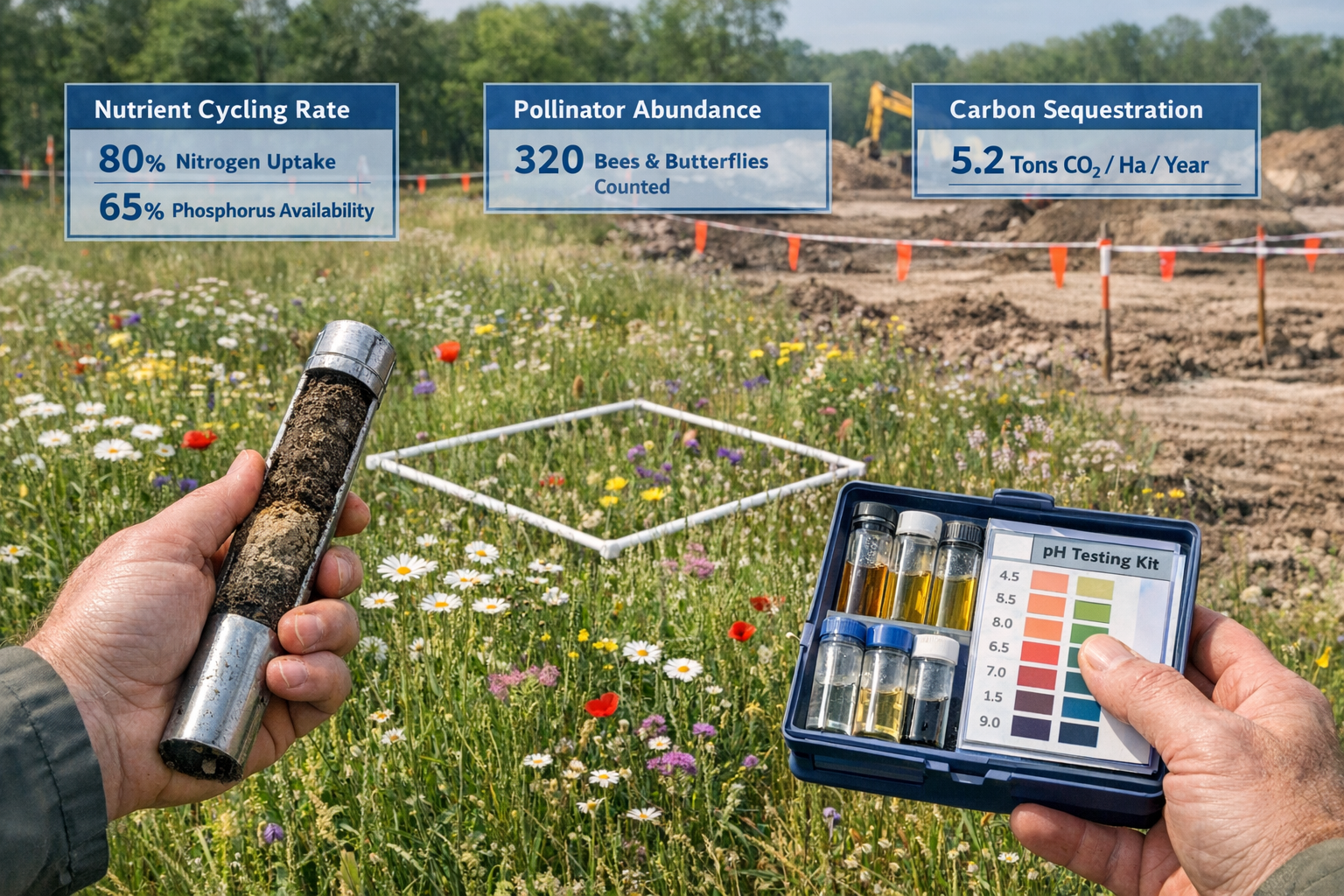
Ecosystem functioning surveys assess the biological, chemical, and physical processes that maintain habitat quality and support biodiversity over time. Unlike traditional biodiversity surveys that inventory species presence and abundance, functioning surveys measure the rates and efficiency of ecological processes.
Core Components of Functioning Surveys
Nutrient Cycling Assessment
- Soil respiration rates (CO₂ flux measurements)
- Nitrogen mineralization and nitrification rates
- Phosphorus availability and cycling
- Organic matter decomposition rates
- Microbial biomass and activity
Pollination Network Analysis
- Pollinator visitation frequency and diversity
- Plant-pollinator interaction networks
- Pollen transfer efficiency
- Temporal patterns in pollination services
- Vulnerability assessment for key relationships
Hydrological Function Evaluation
- Water infiltration rates
- Soil water holding capacity
- Surface runoff measurements
- Groundwater recharge potential
- Sediment retention capacity
Primary Productivity Metrics
- Aboveground biomass production
- Root biomass and depth distribution
- Photosynthetic efficiency
- Seasonal growth patterns
- Resource use efficiency
These measurements directly inform biodiversity impact assessments by quantifying the functional capacity of existing habitats and projected post-development conditions.
Why Functioning Surveys Matter for BNG Compliance
The 10% biodiversity improvement requirement mandated by UK legislation demands more than habitat creation—it requires demonstrable ecosystem resilience[3]. Functioning surveys provide evidence that:
- Created habitats will self-sustain beyond the 30-year management period
- Ecosystem services will match or exceed baseline conditions
- Proposed interventions address limiting factors (poor soil structure, hydrological disconnection, etc.)
- Climate adaptation capacity exists within the design
Traditional habitat condition assessments in BNG assessments rely heavily on structural indicators (vegetation height, species richness, invasive species presence). Functioning surveys add process-based evidence that these structural features actually deliver ecological outcomes.
Implementing Ecosystem Functioning Surveys for BNG Resilience: Ecologist Guide to Human Impact Assessments in 2026
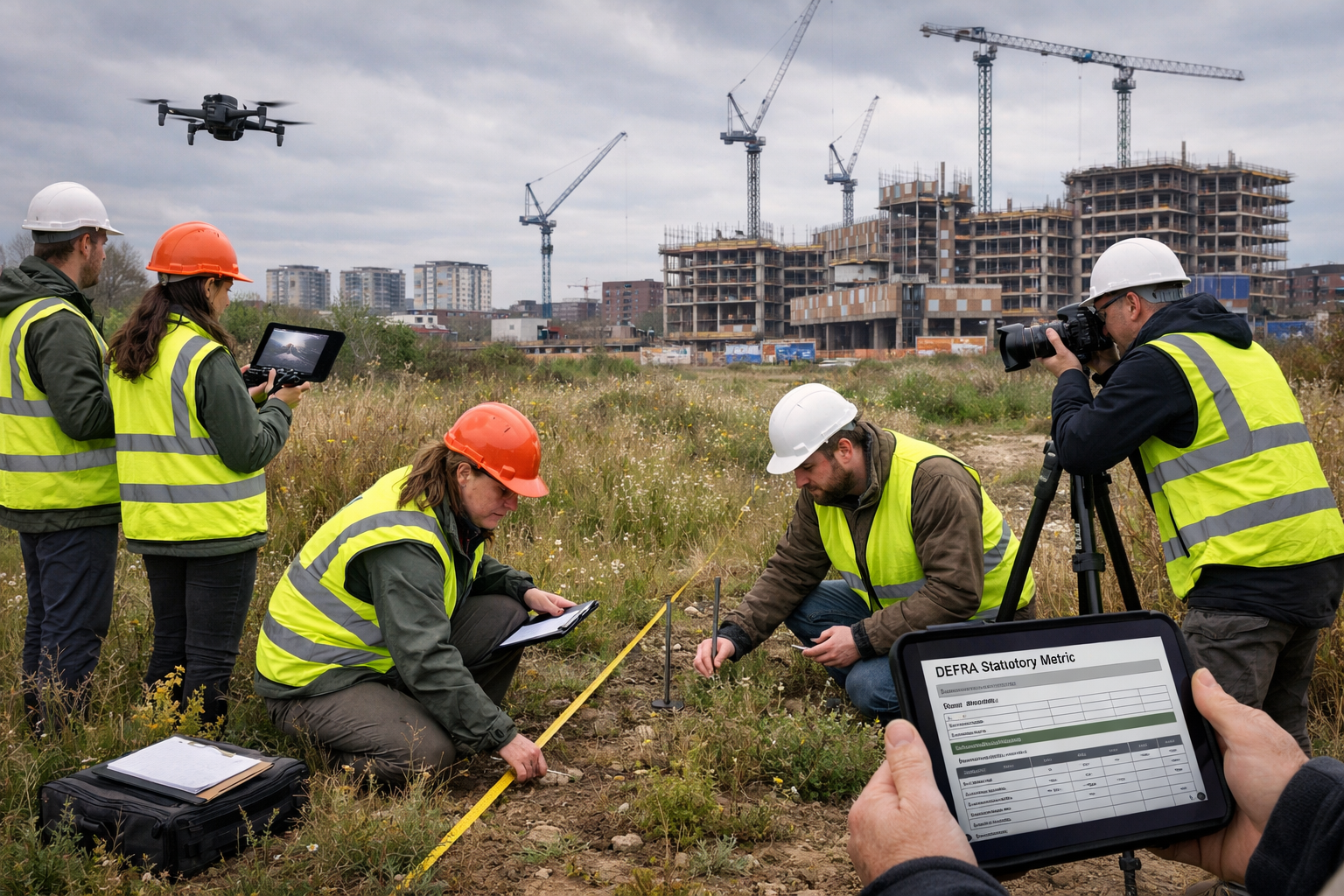
The practical implementation of functioning surveys requires strategic planning, appropriate timing, and integration with existing BNG workflows. Ecologists must balance scientific rigor with project timelines and budget constraints.
Survey Design and Timing Considerations
Baseline Assessment Phase
Functioning surveys should begin during initial site characterization, ideally covering a full growing season to capture temporal variability. Key timing considerations include:
- Spring surveys (March-May): Focus on soil nutrient availability, early pollinator activity, and spring ephemeral productivity
- Summer surveys (June-August): Peak pollination networks, maximum productivity measurements, water stress indicators
- Autumn surveys (September-November): Decomposition rates, nutrient resorption, seed production and dispersal
- Winter surveys (December-February): Soil structure stability, overwintering habitat quality, baseline hydrological function
For projects requiring rapid assessment, a minimum two-season survey (spring and summer) can capture critical functioning metrics, though this reduces confidence in year-round resilience projections.
Integration with DEFRA Statutory Metric
The DEFRA Statutory Metric calculates biodiversity units based on habitat type, condition, strategic significance, and area[3]. Functioning surveys enhance metric accuracy by:
Improving Condition Assessment
- Providing quantitative evidence for condition scores (poor, moderate, good)
- Identifying functional limitations not captured by visual assessment
- Supporting justification for condition score adjustments
Validating Enhancement Projections
- Demonstrating that proposed interventions address limiting factors
- Providing baseline data for monitoring actual vs. projected gains
- Supporting realistic timelines for habitat maturation
Informing Strategic Significance
- Quantifying connectivity through pollinator movement and seed dispersal data
- Measuring ecosystem service provision to surrounding areas
- Identifying irreplaceable functional roles
Standardized Protocols for Human Impact Assessment
SERC functioning research provides validated protocols specifically designed to measure disturbance effects. These protocols enable consistent assessment across projects and facilitate comparison with reference conditions.
Disturbance Gradient Analysis
Establish sampling points along gradients of human impact intensity:
- High disturbance: Active construction zones, heavily trafficked areas
- Moderate disturbance: Buffer zones, managed landscapes
- Low disturbance: Protected areas, reference habitats
Measure functioning metrics at each point to quantify impact magnitude and recovery trajectories.
Recovery Timeline Projection
Use chronosequence approaches where possible:
- Sample habitats of different ages since disturbance
- Model functional recovery rates
- Project time required to achieve target functioning levels
- Inform realistic enhancement timelines for BNG calculations
Cumulative Impact Assessment
Functioning surveys reveal synergistic effects missed by species-level assessments:
- Combined effects of soil compaction + altered hydrology
- Nutrient enrichment + invasive species establishment
- Fragmentation + pollution stress
This comprehensive view supports more accurate impact predictions and appropriate mitigation design.
Addressing Climate Adaptation in Ecosystem Functioning Surveys for BNG Resilience: Ecologist Guide to Human Impact Assessments in 2026
The March 2026 USGS guidance marks a paradigm shift in ecosystem management: acknowledging that ecosystem reassembly is becoming the realistic outcome of climatic change rather than restoration to historical conditions[4]. This fundamentally alters how functioning surveys should be designed and interpreted for BNG purposes.
Planning for Novel Ecosystems
Traditional restoration ecology aims to recreate reference conditions from the past. Climate-driven change means future ecosystems will differ from historical baselines in composition, structure, and functioning. Ecologists conducting functioning surveys must now assess:
Climate Resilience Indicators
- Functional redundancy (multiple species performing similar roles)
- Response diversity (varied responses to climate stressors)
- Adaptive capacity (genetic diversity, dispersal ability)
- Stress tolerance thresholds
Future-Focused Functioning Metrics
- Water use efficiency under projected drought conditions
- Heat stress tolerance in key functional groups
- Phenological flexibility (timing of life cycle events)
- Resistance to novel pest and disease pressures
Mitigation Hierarchy Enforcement
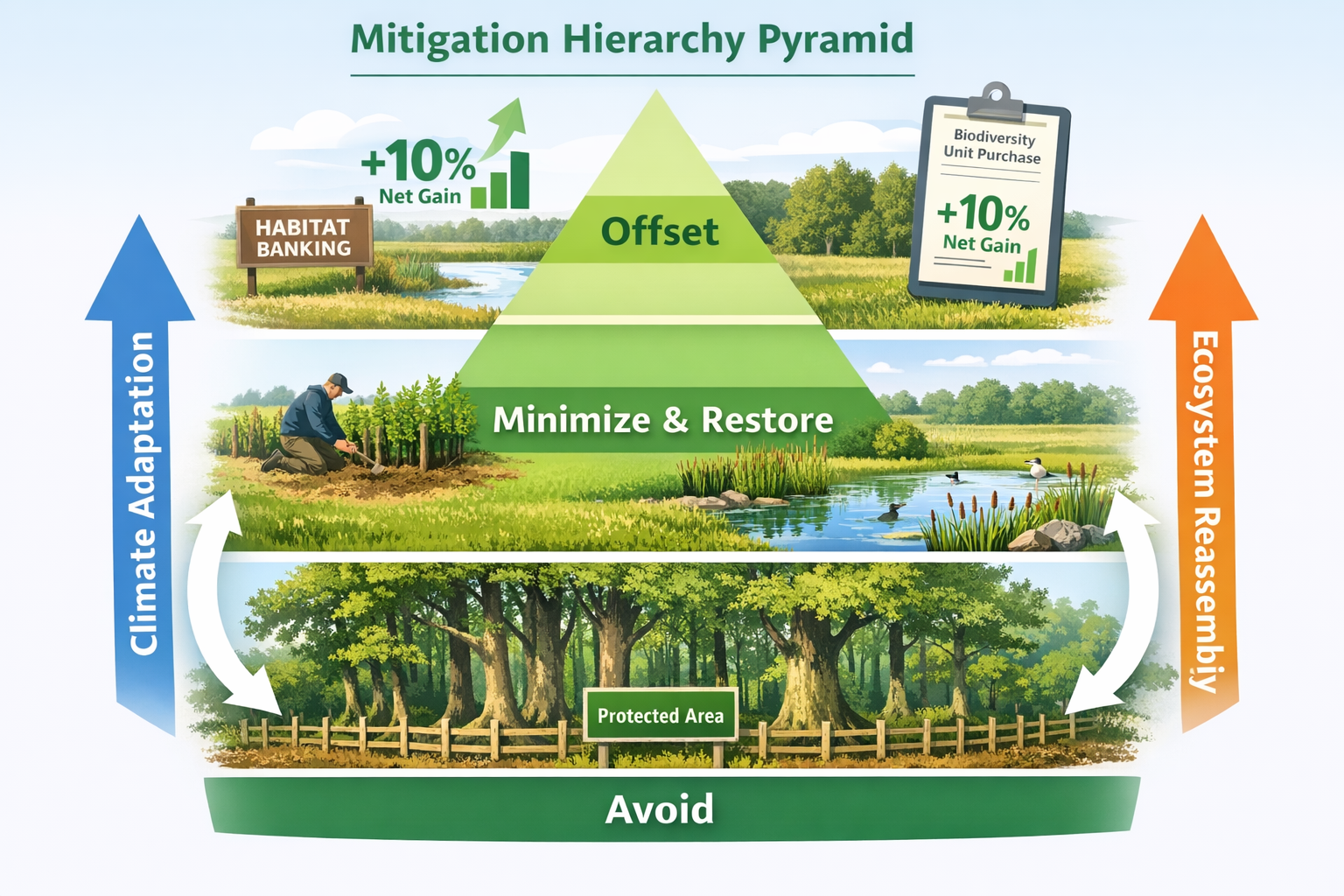
The Landscape Institute emphasizes that the Mitigation Hierarchy must be rigorously enforced, with preference for on-site measures and locations close to the development site[1]. Functioning surveys support this hierarchy by:
Avoidance Evidence
- Quantifying irreplaceable functional roles of existing habitats
- Demonstrating ecosystem services that cannot be recreated
- Identifying critical connectivity corridors
Minimization Guidance
- Measuring spatial extent of impact zones
- Identifying low-impact construction methods
- Optimizing site layout to preserve functioning areas
Restoration Targets
- Setting process-based goals (not just structural targets)
- Defining measurable functioning thresholds for success
- Establishing monitoring protocols aligned with functioning metrics
Offset Justification
- Demonstrating on-site constraints to achieving 10% gain
- Quantifying off-site functional equivalence
- Supporting biodiversity unit purchases with functioning data
Landscape-Scale Considerations
While the BNG metric operates at site level, ecosystem functioning often depends on landscape-scale processes. Research highlights that metric limitations become apparent when restoring natural processes across thousands of hectares[2]. Ecologists must consider:
Cross-Boundary Processes
- Pollinator source populations from surrounding areas
- Hydrological connectivity to watershed features
- Nutrient inputs from upstream sources
- Seed dispersal from regional species pools
Cumulative Functioning Effects
- How multiple small sites contribute to landscape-level services
- Threshold effects in habitat network functionality
- Synergistic benefits of coordinated enhancement efforts
This landscape perspective is particularly relevant for off-site BNG delivery decisions and habitat banking strategies.
Practical Implementation: Case Study Approaches
Brownfield Redevelopment Scenario
With proposed exemptions for residential brownfield developments up to 2.5 hectares[1], understanding baseline functioning on brownfield sites becomes critical for projects just above this threshold.
Functioning Survey Priorities:
- Soil contamination effects on microbial communities
- Spontaneous vegetation productivity and resilience
- Invertebrate functional diversity (decomposers, pollinators, predators)
- Hydrological function (often severely altered on brownfield sites)
Key Finding Applications:
- Demonstrating high conservation value of brownfield habitats (avoiding exemption threshold gaming)
- Identifying remediation needs before habitat creation
- Setting realistic timelines for soil function recovery
- Justifying translocation of valuable spontaneous communities
Nationally Significant Infrastructure Projects
With BNG becoming mandatory for NSIPs in May 2026[1], large-scale linear infrastructure presents unique functioning survey challenges.
Linear Infrastructure Considerations:
- Barrier effects on pollinator movement and gene flow
- Hydrological fragmentation and altered water flow
- Edge effects extending into adjacent habitats
- Noise and light pollution impacts on functioning
Survey Design Adaptations:
- Stratified sampling along infrastructure corridor
- Paired impact/control site comparisons
- Focus on connectivity metrics and movement ecology
- Long-term monitoring frameworks for adaptive management
Overcoming Implementation Challenges
Capacity and Resource Constraints
The rollout of BNG requirements has created anticipated bottlenecks around local authority capacity and availability of qualified ecologists[3]. Functioning surveys add complexity to already stretched resources.
Practical Solutions:
- Tiered assessment approach: Full functioning surveys for major projects, rapid assessment protocols for smaller developments
- Shared baseline data: Regional functioning databases to reduce redundant sampling
- Technology integration: Remote sensing for some functioning proxies (productivity via NDVI, hydrological modeling)
- Training programs: Upskilling existing ecologists in functioning assessment methods
Metric Integration Challenges
The DEFRA Statutory Metric does not explicitly incorporate functioning metrics, creating a translation challenge. Ecologists must bridge the gap between process-based measurements and habitat condition scores.
Bridging Strategies:
- Use functioning data to justify condition score selections
- Include functioning results in supporting documentation for BNG reports
- Develop site-specific success criteria based on functioning thresholds
- Create monitoring frameworks that track both metric units and functioning indicators
Cost-Benefit Considerations
Functioning surveys represent additional upfront costs. However, they deliver value by:
- Reducing long-term risk: Early identification of design flaws prevents costly failures
- Supporting planning approval: Stronger evidence base for challenging applications
- Optimizing interventions: Targeted actions address actual limiting factors
- Enabling adaptive management: Functioning monitoring allows course correction
For small development projects, simplified functioning assessments focusing on 2-3 key processes may provide adequate evidence without excessive cost burden.
Future Directions and Emerging Practices
Technology-Enhanced Functioning Assessment
Emerging technologies are making functioning surveys more efficient and comprehensive:
Environmental DNA (eDNA)
- Rapid assessment of soil microbial functioning communities
- Detection of key functional groups (mycorrhizal fungi, nitrogen-fixing bacteria)
- Monitoring colonization of created habitats
Remote Sensing Advances
- Hyperspectral imaging for vegetation stress and productivity
- LiDAR for structural complexity metrics
- Thermal imaging for evapotranspiration and water stress
Automated Sensor Networks
- Continuous soil moisture and temperature monitoring
- Real-time pollinator activity tracking
- Acoustic monitoring of ecosystem activity patterns
Integration with Sustainable Farming Initiatives
For rural developments, functioning surveys can align with Sustainable Farming Incentive (SFI) objectives, creating synergies between BNG requirements and agricultural support schemes.
Shared Objectives:
- Soil health improvement
- Pollinator support
- Water quality protection
- Carbon sequestration
This alignment enables coordinated landscape-scale approaches that benefit both development projects and agricultural sustainability.
Standardization and Guidance Development
The rapid evolution of BNG implementation creates opportunities for standardization:
- Industry guidance on functioning survey protocols for common habitat types
- Regional reference databases for functioning benchmarks
- Training and certification programs for functioning assessment specialists
- Integration of functioning metrics into future metric revisions
Professional bodies and government agencies are actively developing these resources to support consistent, high-quality implementation across the sector.
Conclusion
Ecosystem Functioning Surveys for BNG Resilience: Ecologist Guide to Human Impact Assessments in 2026 represents a critical evolution in how development projects demonstrate genuine biodiversity improvement. As BNG mandates expand to major infrastructure projects and climate change drives ecosystem reassembly, the ability to quantify and project ecosystem functioning becomes essential for compliance, risk management, and ecological outcomes.
The SERC functioning research protocols provide ecologists with validated methods to assess how human disturbances affect the processes that sustain biodiversity—nutrient cycling, pollination, water filtration, and productivity. These measurements strengthen biodiversity impact assessments by moving beyond species inventories to evaluate actual ecosystem resilience and service delivery.
Actionable Next Steps for Ecologists
- Upskill in functioning assessment methods: Invest in training on soil function, pollination networks, and hydrological assessment techniques
- Integrate functioning surveys into baseline assessments: Begin incorporating key functioning metrics into standard survey protocols
- Develop site-specific functioning targets: Translate DEFRA metric requirements into measurable process-based goals
- Establish monitoring frameworks: Design long-term monitoring that tracks both biodiversity units and functioning indicators
- Build regional reference databases: Contribute to shared knowledge of functioning benchmarks for common habitat types
For Developers and Planners
- Commission functioning surveys early in project design to identify constraints and opportunities
- Use functioning data to optimize mitigation hierarchy implementation and reduce offset requirements
- Include functioning metrics in monitoring and adaptive management plans
- Consider landscape-scale functioning when evaluating off-site delivery options
The transition to functioning-based assessment represents a maturation of BNG implementation—moving from compliance-focused habitat creation to genuine ecosystem resilience. By adopting these approaches in 2026, ecologists position themselves at the forefront of evidence-based conservation practice while delivering better outcomes for both development and nature.
For comprehensive support with BNG compliance and ecosystem functioning assessments, Biodiversity Surveyors offers specialized expertise in translating ecological science into practical development solutions.
References
[1] Li Responds To Government Changes To Bng And Updated Nppf – https://landscapeinstitute.org/news/li-responds-to-government-changes-to-bng-and-updated-nppf/
[2] Challenges Of Biodiversity Net Gain At Landscape Scale – https://www.landuse.co.uk/thoughts/challenges-of-biodiversity-net-gain-at-landscape-scale/
[3] Uk Biodiversity Net Gain The Requirements The Context And What Businesses Need To Know – https://www.aoshearman.com/en/insights/sustainability-outlook-2026/uk-biodiversity-net-gain-the-requirements-the-context-and-what-businesses-need-to-know
[4] Usgs Powell Center Releases New Guidance For Managing Ecosystems Amid Rising Climatic Novelty – https://mavensnotebook.com/2026/03/14/usgs-powell-center-releases-new-guidance-for-managing-ecosystems-amid-rising-climatic-novelty/