

Biodiversity Net Gain (BNG) sites face a critical challenge that most developers overlook: 87% of habitat creation projects fail to account for ongoing human pressures that compromise long-term ecological recovery. As England's mandatory BNG legislation enters its third year of enforcement, ecology surveyors must now quantify not just baseline biodiversity, but also the resilience capacity of sites subjected to continuous anthropogenic stressors—from urban noise pollution to recreational trampling.
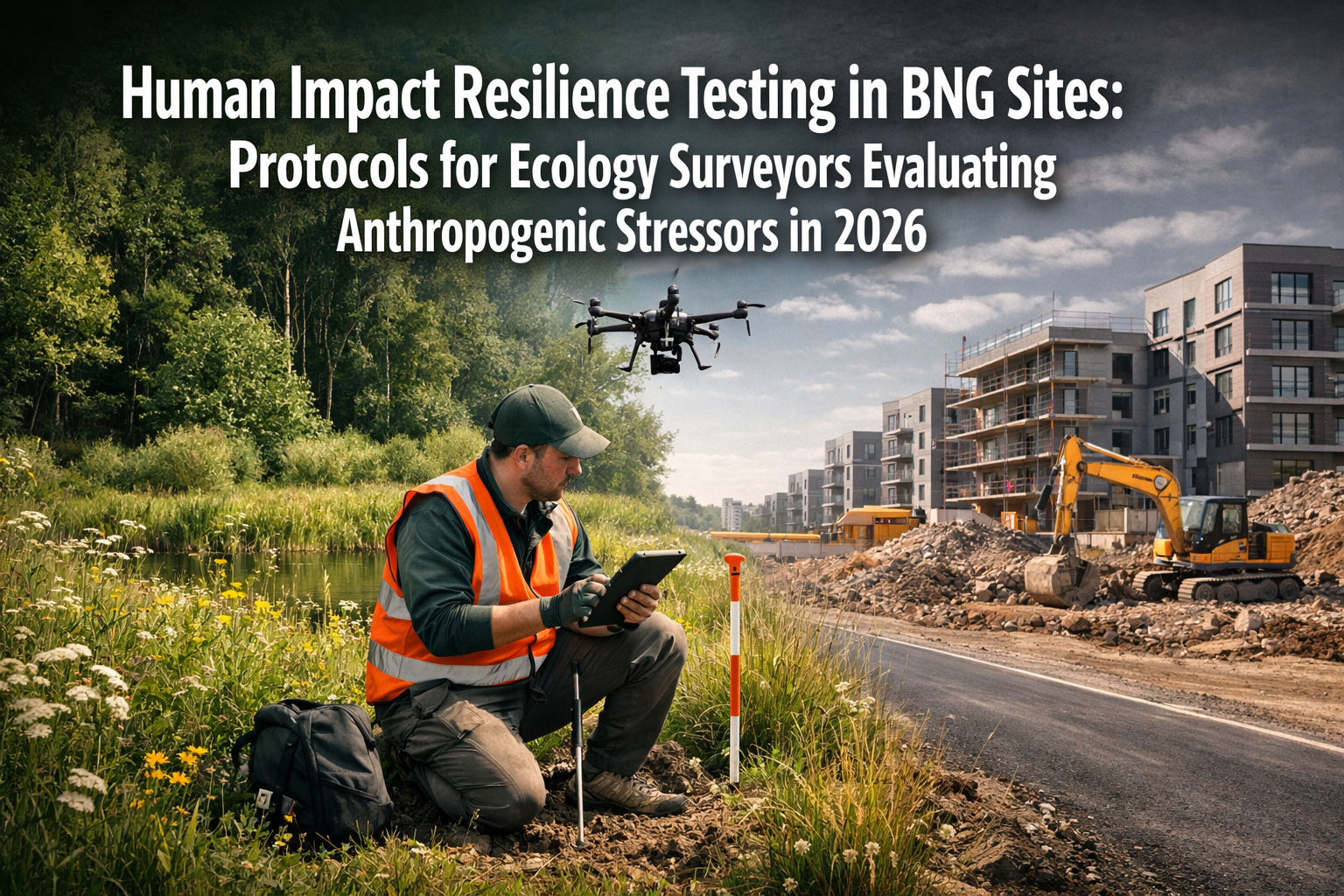
Human Impact Resilience Testing in BNG Sites: Protocols for Ecology Surveyors Evaluating Anthropogenic Stressors in 2026 represents a paradigm shift in how professionals assess and validate biodiversity net gain delivery. This comprehensive framework integrates established ecological resilience science with practical field protocols, enabling surveyors to predict whether a BNG site can actually maintain its promised biodiversity uplift over the mandatory 30-year management period[1][2].
Key Takeaways
- Resilience testing protocols combine stressor modeling with recovery potential assessments to predict long-term BNG site viability beyond initial habitat creation
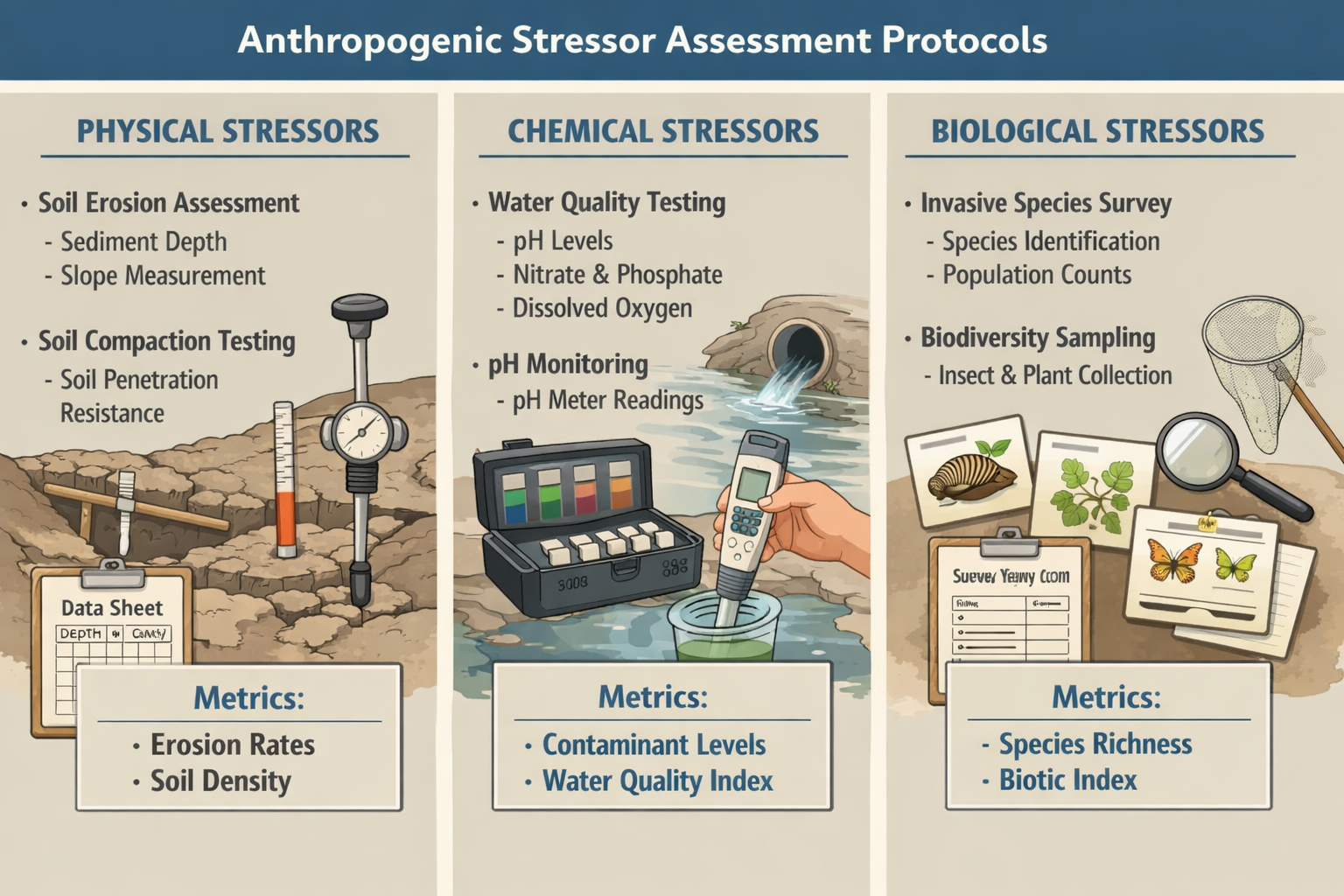
- Anthropogenic stressor categories include physical (soil compaction, erosion), chemical (pollution, nutrient loading), and biological (invasive species, disease) pressures that compromise biodiversity outcomes
- Quantitative metrics derived from Frontiers and SERC frameworks enable surveyors to calculate resilience scores that inform site selection and management strategies
- Urban-adjacent BNG sites require enhanced monitoring protocols due to elevated human pressures including noise, light pollution, and recreational disturbance
- Recovery trajectory modeling helps predict whether sites can achieve and maintain the required 10% biodiversity increase over three decades[1][2]
Understanding Human Impact Resilience Testing in BNG Sites: Protocols for Ecology Surveyors Evaluating Anthropogenic Stressors in 2026
The BNG Context and Resilience Imperative
The UK's BNG framework mandates that qualifying developments demonstrate a measurable 10% increase in biodiversity value, with outcomes legally secured for at least 30 years[1][2]. However, this requirement assumes that created or enhanced habitats will remain viable throughout that period—an assumption increasingly challenged by ongoing human pressures.
Developers must use DEFRA's statutory biodiversity metric to assess baseline conditions before development[2], but the standard metric doesn't adequately capture a site's capacity to withstand continuous anthropogenic stressors. This gap has led to numerous BNG projects that meet initial targets but experience rapid degradation within 5-10 years due to unaccounted human impacts.
Human Impact Resilience Testing addresses this deficiency by evaluating:
- 🔍 Stressor exposure levels – quantifying the intensity and frequency of anthropogenic pressures
- 📊 Ecological sensitivity – assessing how target habitats and species respond to specific stressors
- 🔄 Recovery capacity – determining whether ecosystems can regenerate after disturbance events
- ⏱️ Temporal dynamics – modeling how stressor impacts compound or diminish over decades
Why Traditional BNG Assessments Fall Short
Standard biodiversity impact assessments typically focus on habitat type, area, and condition at a single point in time. This snapshot approach fails to account for:
- Cumulative stress effects – multiple low-level stressors that individually seem manageable but collectively overwhelm ecosystem resilience
- Edge effects – increased vulnerability at boundaries between BNG sites and developed areas
- Behavioral changes – how wildlife populations adapt (or fail to adapt) to ongoing human presence
- Management feasibility – whether proposed interventions can realistically be maintained for 30 years given site constraints
Research frameworks from ecological resilience science, particularly those developed by the Smithsonian Environmental Research Center (SERC) and published in Frontiers in Ecology journals, provide the theoretical foundation for quantifying these dynamics. These frameworks emphasize functional resilience – the capacity of ecosystems to maintain essential processes despite perturbation.
Core Protocols for Human Impact Resilience Testing in BNG Sites
Phase 1: Anthropogenic Stressor Identification and Mapping
Ecology surveyors must systematically identify all human pressures affecting a potential BNG site. This process extends beyond the site boundary to include stressors originating from adjacent land uses.
Physical Stressors:
- Soil compaction from foot traffic, vehicle access, or construction activities
- Erosion caused by altered hydrology or vegetation removal
- Habitat fragmentation limiting species movement and genetic exchange
- Microclimate alteration from nearby buildings creating heat islands or wind tunnels
Chemical Stressors:
- Air pollution including nitrogen deposition and particulate matter
- Water contamination from runoff containing pesticides, heavy metals, or nutrients
- Light pollution disrupting nocturnal species behavior and plant phenology
- Noise pollution affecting breeding success and foraging efficiency
Biological Stressors:
- Invasive species pressure from nearby populations or propagule sources
- Disease vectors concentrated in human-dominated landscapes
- Predator-prey imbalances caused by synanthropic species (foxes, crows, rats)
- Competitive exclusion by disturbance-tolerant generalist species
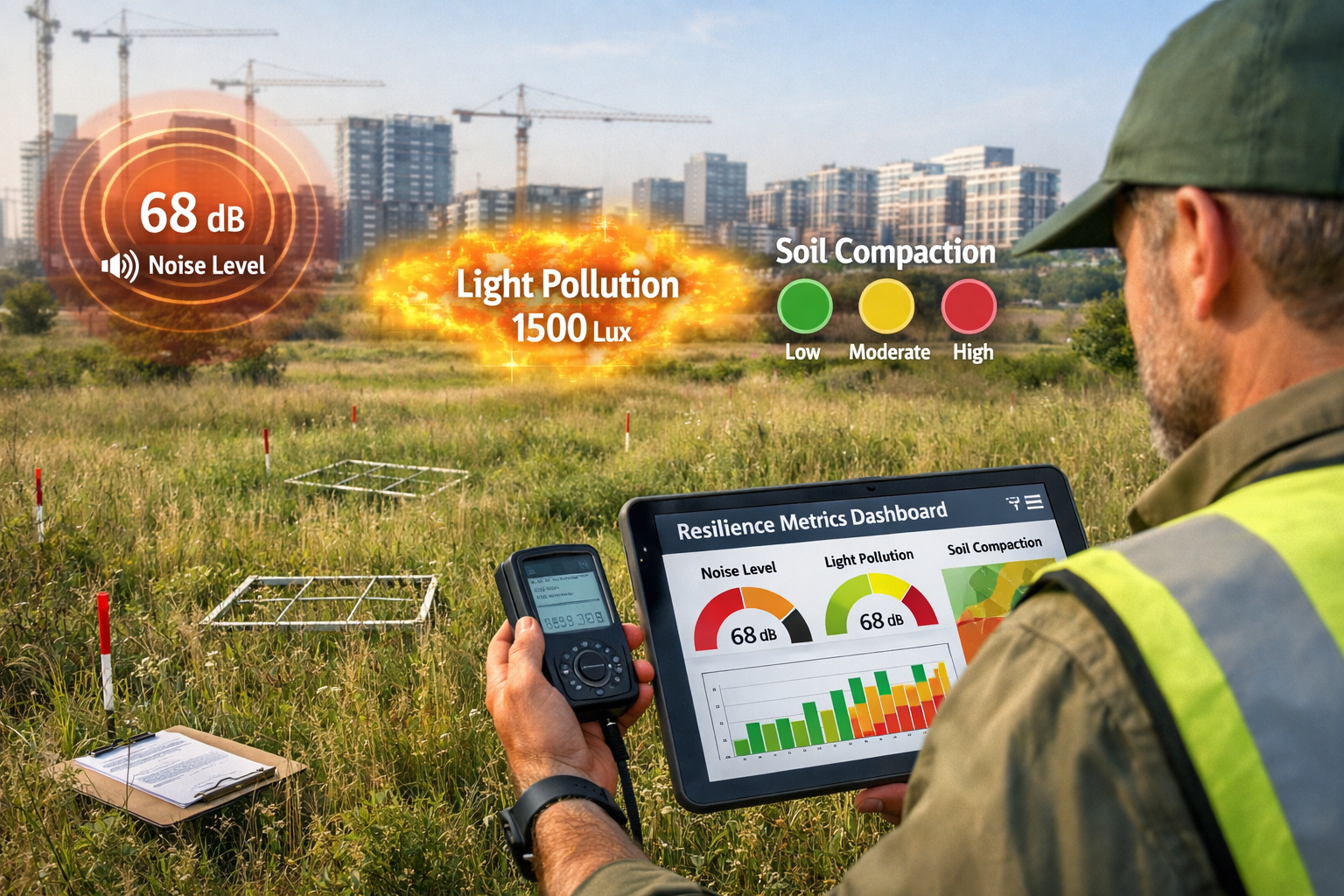
Surveyors should create stressor intensity maps using GIS software, overlaying:
- Proximity gradients to urban infrastructure
- Traffic volume data for noise and pollution modeling
- Recreational use patterns from trail counters or observational surveys
- Historical disturbance records from aerial imagery analysis
Phase 2: Quantifying Stressor Intensity and Frequency
Each identified stressor requires quantitative measurement to enable resilience modeling. The following protocols provide standardized approaches:
Noise Pollution Assessment:
- Deploy acoustic monitoring equipment at multiple locations for 72-hour periods
- Record decibel levels (dB) at 5-minute intervals
- Calculate mean, maximum, and frequency distribution of noise events
- Compare against species-specific tolerance thresholds (e.g., breeding bird sensitivity)
Soil Compaction Measurement:
- Use penetrometers to measure soil resistance at 20cm depth intervals
- Establish transects perpendicular to access points (high to low disturbance gradients)
- Document bulk density through core sampling
- Assess infiltration rates to determine hydrological impacts
Light Pollution Quantification:
- Measure illuminance (lux) using calibrated light meters during new moon periods
- Map light spill from adjacent developments using hemispherical photography
- Calculate sky glow intensity affecting nocturnal species
- Document photoperiod disruption potential for plant communities
Recreational Pressure Indicators:
- Install trail counters at access points for visitor frequency data
- Map informal paths indicating off-trail trampling
- Assess vegetation damage using condition scoring systems
- Document litter and disturbance evidence
| Stressor Type | Measurement Method | Critical Threshold | Monitoring Frequency |
|---|---|---|---|
| Noise | Acoustic logger (dB) | >50 dB during breeding season | Quarterly |
| Soil Compaction | Penetrometer (MPa) | >2.5 MPa in root zone | Annual |
| Light Pollution | Lux meter | >0.5 lux at ground level | Bi-annual |
| Foot Traffic | Trail counter | >50 visitors/day in sensitive areas | Continuous |
| Water Quality | Chemical analysis | Site-specific nutrient thresholds | Monthly |
Phase 3: Resilience Capacity Assessment
This critical phase determines whether a site can maintain ecological function despite identified stressors. The assessment integrates three components:
1. Functional Diversity Analysis
Higher functional diversity generally correlates with greater resilience. Surveyors should:
- Document species functional traits (growth forms, reproductive strategies, stress tolerance)
- Calculate functional dispersion indices
- Identify functional redundancy within communities
- Assess whether key functional groups are represented
2. Recovery Trajectory Modeling
Using historical data or reference sites, model how quickly habitats recover from disturbance:
- Establish recovery baselines from similar disturbed sites
- Document regeneration rates for target vegetation communities
- Assess seed bank viability and propagule availability
- Model succession pathways under different stressor scenarios
3. Threshold Identification
Determine tipping points beyond which ecosystems shift to alternative stable states:
- Review literature for species-specific tolerance limits
- Conduct experimental manipulations where feasible
- Identify early warning indicators of degradation
- Establish monitoring triggers for management intervention
When evaluating BNG site options, sites with higher resilience scores should receive preference, even if initial biodiversity value appears lower. A moderately diverse but highly resilient site will likely deliver better long-term outcomes than a species-rich but vulnerable location.
Advanced Methodologies for Evaluating Anthropogenic Stressors in 2026
Integrating Remote Sensing and Ground-Truthing
Modern surveying protocols combine satellite imagery, drone surveys, and traditional field methods to create comprehensive stressor profiles:
Drone-Based Assessment:
- Multispectral imaging to detect vegetation stress before visible symptoms appear
- Thermal imaging to identify microclimate variations and heat stress zones
- High-resolution mapping of trampling damage and erosion features
- Temporal comparisons to track habitat condition changes
Satellite Data Integration:
- Landsat or Sentinel imagery for landscape-scale stressor mapping
- NDVI (Normalized Difference Vegetation Index) trends indicating habitat degradation
- Land use change detection around BNG sites
- Climate data layers for temperature and precipitation stress modeling
Ground-Truthing Requirements:
- Validate remote sensing interpretations with field observations
- Collect voucher specimens for vegetation condition assessment
- Document microtopographic features affecting stressor distribution
- Establish permanent monitoring plots for long-term tracking
Species-Specific Vulnerability Assessments
Different taxa exhibit varying sensitivity to anthropogenic stressors. Surveyors should prioritize species that:
🦋 Indicator Species – taxa whose presence/absence signals ecosystem health
🐦 Protected Species – legally designated species requiring specific conservation measures
🌿 Foundation Species – organisms that create habitat structure for other species
🔗 Keystone Species – species whose removal would dramatically alter ecosystem function
For each priority species, document:
- Behavioral responses to stressor exposure (avoidance, habituation, population decline)
- Physiological tolerance limits based on published research
- Reproductive success metrics in disturbed versus undisturbed conditions
- Dispersal capacity and metapopulation dynamics
This species-level detail enables more accurate prediction of whether biodiversity targets can be achieved and maintained over the 30-year BNG commitment period[1][2].
Calculating Resilience Scores
The culmination of resilience testing is a quantitative score that integrates multiple assessment components. One practical framework uses a 0-100 scale:
Resilience Score = (Stressor Tolerance × 0.4) + (Recovery Capacity × 0.3) + (Functional Diversity × 0.2) + (Management Feasibility × 0.1)
Where:
- Stressor Tolerance (0-100): Inverse of cumulative stressor intensity relative to species/habitat thresholds
- Recovery Capacity (0-100): Rate of regeneration following disturbance based on reference trajectories
- Functional Diversity (0-100): Normalized functional dispersion index
- Management Feasibility (0-100): Assessment of access, resources, and long-term viability of interventions
Interpretation Guidelines:
- 80-100: Excellent resilience – site highly likely to maintain biodiversity gains for 30+ years
- 60-79: Good resilience – appropriate for BNG with standard management protocols
- 40-59: Moderate resilience – requires enhanced monitoring and adaptive management
- 20-39: Poor resilience – significant risk of biodiversity decline; consider alternative sites
- 0-19: Very poor resilience – unsuitable for BNG unless major stressor mitigation implemented
This scoring system provides developers and planners with clear, defensible metrics for BNG site selection and helps ensure that investments deliver genuine, lasting ecological benefits[4][5].
Urban-Adjacent BNG Sites: Special Considerations
Sites located near urban areas face particularly intense and diverse anthropogenic pressures. These locations often represent the most available land for off-site BNG delivery, yet they require enhanced assessment protocols.
Edge Effect Quantification
Urban-rural boundaries create steep gradients in stressor intensity. Surveyors should:
- Establish transects from urban edge into BNG site at 50m intervals
- Measure stressor decay rates (noise, light, pollution) with distance
- Document edge-associated species (invasives, synanthropic animals)
- Calculate effective habitat area after accounting for edge degradation
- Model whether site is large enough to contain core habitat zones
Research indicates that edge effects can penetrate 100-300m into habitats, meaning small urban-adjacent sites may consist entirely of edge habitat with compromised resilience.
Recreational Pressure Management
Urban proximity typically correlates with high recreational use. Assessment protocols include:
Visitor Impact Surveys:
- Trail counters providing hourly, daily, and seasonal use patterns
- Observational studies documenting off-trail activity
- Dog walking frequency and off-leash behavior
- Mountain biking or other high-impact activities
- Seasonal peaks (school holidays, weekends)
Zoning Strategies:
- Designate sacrifice zones accepting high disturbance
- Create buffer areas between access points and sensitive habitats
- Design trail networks that channel use away from priority areas
- Install barriers (fencing, vegetation screens) where appropriate
Engagement Approaches:
- Interpretive signage explaining BNG objectives
- Community stewardship programs
- Ranger patrols during sensitive periods (breeding seasons)
- Participatory monitoring involving local residents
Successful urban-adjacent BNG sites typically incorporate recreational access as part of the design, rather than treating human presence as purely negative. When properly managed, these sites can deliver both biodiversity gains and community benefits[4].
Pollution Mitigation Requirements
Urban-adjacent sites often require active interventions to reduce chemical stressor impacts:
- Buffer strips capturing runoff from roads and developments
- Bioswales and rain gardens filtering pollutants before water enters habitats
- Soil remediation addressing legacy contamination
- Air quality monitoring to detect exceedance of critical loads
- Adaptive planting using pollution-tolerant native species in exposed zones
These interventions add costs but significantly improve long-term resilience. When creating biodiversity plans, developers should budget for enhanced management in urban-adjacent locations.
Reporting and Documentation Standards
Resilience Testing Report Components
A comprehensive Human Impact Resilience Testing report should include:
Executive Summary:
- Overall resilience score and interpretation
- Key stressors identified and their intensity levels
- Critical vulnerabilities requiring mitigation
- Recommendations for site suitability and management
Methodology Section:
- Detailed protocols for each stressor assessment
- Equipment specifications and calibration records
- Survey dates, weather conditions, and personnel
- Statistical approaches for data analysis
Results and Analysis:
- Stressor intensity maps with supporting data tables
- Species vulnerability assessments with literature citations
- Recovery trajectory modeling with confidence intervals
- Resilience score calculation showing component values
Management Recommendations:
- Stressor mitigation strategies prioritized by impact potential
- Monitoring protocols for long-term tracking
- Trigger points for adaptive management interventions
- Cost estimates for recommended actions
Appendices:
- Raw data from field surveys
- Species lists with abundance/distribution information
- Photographic documentation of site conditions
- GIS layers and spatial analysis files
Integration with Statutory BNG Requirements
Resilience testing complements rather than replaces standard BNG assessments. The workflow typically proceeds as:
- Baseline biodiversity assessment using DEFRA's statutory metric[2]
- Human impact resilience testing following protocols outlined here
- Site selection and design informed by both assessments
- Management plan development incorporating resilience-based monitoring
- Legal agreement securing 30-year commitments with adaptive provisions
This integrated approach ensures that BNG reports provide complete information for decision-makers and increase the likelihood of successful long-term outcomes[1][2].
Practical Implementation: Case Study Applications
Scenario 1: Grassland Creation Adjacent to Housing Development
Site Context: 5-hectare field designated for species-rich grassland creation, bordering new residential estate with 200 homes.
Key Stressors Identified:
- Recreational pressure (dog walking, informal paths)
- Nutrient enrichment from garden waste dumping
- Invasive species pressure (garden escapees)
- Light pollution from street lighting
Resilience Assessment Results:
- Stressor Tolerance: 55/100 (moderate nutrient loading, high trampling risk)
- Recovery Capacity: 70/100 (good seed sources, appropriate soils)
- Functional Diversity: 65/100 (planned species mix includes stress-tolerant taxa)
- Management Feasibility: 75/100 (accessible, local volunteer group interested)
- Overall Resilience Score: 64/100 (Good)
Recommendations:
- Install low fencing with designated access points
- Create 10m buffer zone with robust species tolerating disturbance
- Implement community engagement program
- Quarterly monitoring of nutrient levels and invasive species
- Adaptive management triggers if >30% cover by ruderals
Scenario 2: Wetland Enhancement in Industrial Area
Site Context: 2-hectare wetland restoration on former industrial land, surrounded by active warehouses and logistics facilities.
Key Stressors Identified:
- Heavy metal contamination in soils
- Noise pollution from loading operations (70-85 dB peaks)
- Light pollution (24-hour facility operations)
- Hydrological instability from impermeable surfaces
Resilience Assessment Results:
- Stressor Tolerance: 35/100 (contamination and noise exceed thresholds)
- Recovery Capacity: 45/100 (limited natural colonization potential)
- Functional Diversity: 50/100 (pollution-tolerant species pool is narrow)
- Management Feasibility: 40/100 (difficult access, no local stewardship capacity)
- Overall Resilience Score: 41/100 (Moderate-Poor)
Recommendations:
- Soil remediation required before habitat creation
- Acoustic barriers along warehouse boundaries
- Focus on pollution-tolerant native species
- Enhanced monitoring (monthly) for first 5 years
- Consider alternative site with lower stressor burden
- If proceeding, secure additional funding for intensive management
These scenarios illustrate how resilience testing provides actionable intelligence for developers navigating BNG requirements, enabling informed decisions about site suitability and necessary interventions.
Future Directions and Emerging Technologies
Automated Monitoring Systems
Advances in sensor technology and machine learning are transforming stressor monitoring:
- Acoustic monitoring with AI-powered species identification and noise classification
- Camera trap networks with automated image analysis for visitor counting and wildlife activity
- IoT soil sensors providing continuous data on moisture, temperature, and compaction
- Water quality sensors with real-time alerts for pollution events
- Drone swarms conducting regular multispectral surveys with minimal disturbance
These technologies reduce monitoring costs while increasing data quality and temporal resolution, enabling more sophisticated resilience modeling.
Predictive Modeling Integration
Next-generation resilience assessments will incorporate:
- Climate change projections showing how stressor impacts may intensify
- Land use change scenarios modeling future development pressures
- Population dynamics models predicting species responses to combined stressors
- Ecosystem service valuation quantifying co-benefits of resilient BNG sites
This predictive capacity helps ensure that sites selected today will remain viable as conditions evolve over the 30-year BNG commitment period[1][2].
Standardization and Certification
As resilience testing becomes mainstream, expect:
- Professional competency frameworks for certified resilience assessors
- Quality assurance schemes validating assessment methodologies
- Data standards enabling comparison across sites and regions
- Public registers of resilience scores for transparency
These developments will increase confidence in BNG delivery and support the broader adoption of nature-based solutions for biodiversity recovery[5].
Conclusion
Human Impact Resilience Testing in BNG Sites: Protocols for Ecology Surveyors Evaluating Anthropogenic Stressors in 2026 represents a critical evolution in biodiversity assessment practice. By quantifying how sites respond to ongoing human pressures, surveyors provide essential information that determines whether BNG investments deliver genuine, lasting ecological benefits or merely create habitats destined for rapid degradation.
The protocols outlined here—from systematic stressor identification through quantitative resilience scoring—enable evidence-based decision-making throughout the BNG process. Sites with high resilience scores offer greater certainty of achieving and maintaining the mandatory 10% biodiversity increase over 30 years[1][2], while low-scoring sites signal the need for enhanced mitigation or alternative locations.
Actionable Next Steps for Ecology Surveyors:
- Develop competency in stressor assessment techniques through specialized training and literature review of resilience frameworks
- Invest in equipment for quantitative monitoring (acoustic loggers, penetrometers, light meters, water quality kits)
- Establish reference databases of stressor thresholds and recovery trajectories for common habitat types in your region
- Integrate resilience testing into standard BNG assessment workflows, positioning it as essential rather than optional
- Collaborate with researchers to validate protocols and contribute to the growing evidence base
- Communicate findings clearly to developers and planners, emphasizing long-term value of resilience-informed site selection
- Advocate for policy integration of resilience requirements into BNG guidance and approval processes
As the UK's BNG framework matures, the distinction between superficial compliance and genuine biodiversity recovery will increasingly depend on resilience-informed assessment. Surveyors who master these protocols will lead the profession in delivering nature recovery at scale, ensuring that today's habitat creation becomes tomorrow's thriving ecosystems.
For additional guidance on implementing BNG strategies or understanding biodiversity unit markets, explore our comprehensive resources designed to support professionals navigating this evolving landscape.
References
[1] Biodiversity Net Gain Nature – https://www.intelligentliving.co/biodiversity-net-gain-nature/
[2] Uk Biodiversity Net Gain The Requirements The Context And What Businesses Need To Know – https://www.aoshearman.com/en/insights/sustainability-outlook-2026/uk-biodiversity-net-gain-the-requirements-the-context-and-what-businesses-need-to-know
[3] Business Action For Biodiversity Via Science Based Targets For Nature – https://sciencebasedtargetsnetwork.org/wp-content/uploads/2026/01/Business-action-for-biodiversity-via-science-based-targets-for-nature.pdf
[4] How Biodiversity Net Gain Helps People And Places Thrive – https://naturalengland.blog.gov.uk/2026/03/09/how-biodiversity-net-gain-helps-people-and-places-thrive/
[5] What Is Biodiversity Net Gain Bng Why Is It Important For Authorities And Landowners – https://www.aidash.com/what-is-biodiversity-net-gain-bng-why-is-it-important-for-authorities-and-landowners/