

{"cover":"Professional landscape format (1536×1024) hero image with bold text overlay 'Blue Carbon Mangrove Surveys for Dual BNG-Carbon Credits' in extra large 72pt white sans-serif font with dark gradient shadow, centered in upper third. Background shows aerial view of lush mangrove forest meeting turquoise coastal waters with ecologist in field vest conducting survey work using tablet and measuring equipment among prop roots. Split composition showing mangrove ecosystem on left and digital carbon credit certification dashboard on right. Color scheme: deep teal, emerald green, gold accents. High contrast, National Geographic editorial quality, professional environmental finance aesthetic with subtle overlay of BNG metric icons and carbon sequestration data visualizations","content":["Landscape format (1536×1024) detailed illustration showing cross-section view of mangrove ecosystem layers with labeled survey zones: above-ground biomass measurement with diameter tape around trunk, sediment core sampling equipment extracting soil layers showing carbon-rich deposits, underwater root system with faunal survey nets capturing crabs and fish, scientific measurement tools including GPS units and data loggers. Split-screen composition with field survey methodology on left and corresponding BNG metric calculation spreadsheet on right showing habitat distinctiveness scores and carbon tonnage. Professional scientific illustration style with technical annotations, measurement scales, and protocol reference numbers. Color palette: earth tones, ocean blues, scientific diagram clarity","Landscape format (1536×1024) infographic-style visualization showing dual-credit stacking framework with two parallel certification pathways converging. Left pathway displays BNG certification process with UK statutory biodiversity unit calculations, habitat condition assessment matrices, and 10% net gain requirement checkboxes. Right pathway shows international carbon credit standards (Verra VCS, Gold Standard logos) with carbon sequestration verification steps, additionality proofs, and permanence monitoring protocols. Center shows mangrove restoration site connecting both pathways with financial value indicators, revenue stream arrows, and 2026 market price data. Modern financial infographic aesthetic with clean lines, icons, flow charts, and data visualization elements. Color scheme: regulatory blue, finance green, compliance gold","Landscape format (1536×1024) professional photograph of diverse team of ecologists and surveyors conducting integrated mangrove assessment in coastal wetland setting. Foreground shows female ecologist in waders using handheld refractometer to test water salinity while male colleague records sediment depth measurements with graduated probe. Middle ground displays survey equipment station with waterproof field tablets showing digital data entry forms, GPS mapping devices, and portable biomass measurement tools laid on weatherproof case. Background shows extensive mangrove canopy with survey transect markers and drone hovering for canopy cover assessment. Documentary photography style with natural lighting, professional field work composition, authentic environmental survey atmosphere. Subtle overlay of certification badges and 2026 nature finance market indicators in corner"]
Mangrove forests sequester carbon at rates up to four times higher than terrestrial forests, yet fewer than 15% of restoration projects successfully monetize both biodiversity and carbon outcomes simultaneously. As 2026 ushers in unprecedented growth in nature-based finance markets, ecologists and surveyors face a unique opportunity: conducting Blue Carbon Mangrove Surveys for Dual BNG-Carbon Credits that satisfy both UK Biodiversity Net Gain (BNG) requirements and international carbon credit standards. This convergence demands rigorous protocols that integrate biomass assessment, sediment analysis, and faunal surveys into a unified certification framework.
The challenge lies not in measuring mangrove ecosystems—ecologists have refined these methods for decades—but in structuring survey data to meet dual regulatory requirements while navigating complex international finance standards. The 2026 nature finance boom has created substantial demand for projects that can stack biodiversity units with verified carbon credits, yet many practitioners lack clear guidance on survey protocols that satisfy both frameworks simultaneously.
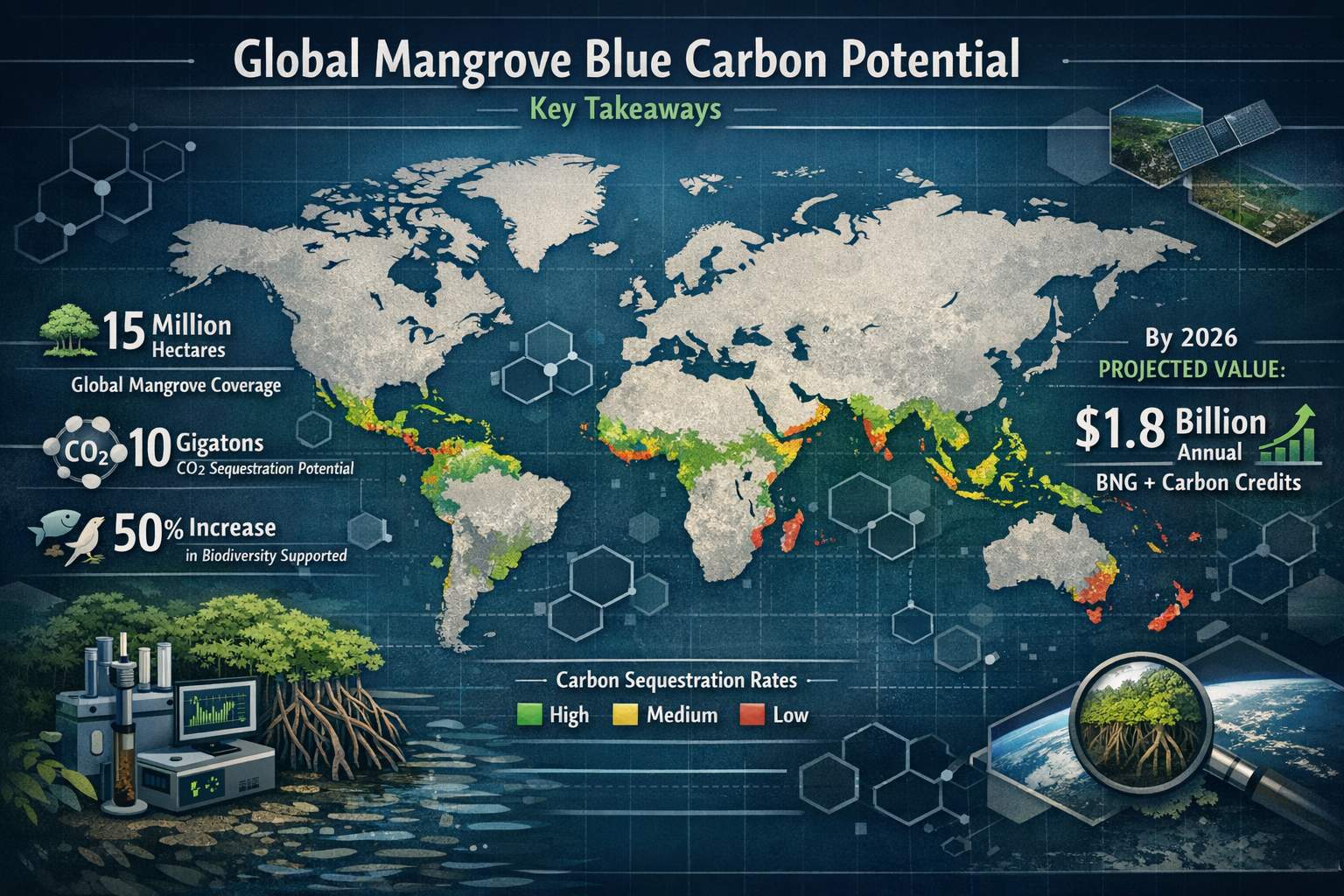
Key Takeaways
- Dual certification requires integrated survey protocols that capture biomass, sediment carbon stocks, and biodiversity metrics in a single field campaign to reduce costs and meet both BNG and carbon credit standards
- Mangrove projects can generate revenue streams from UK statutory biodiversity units (£42,000-£48,000 per unit in 2026) plus international carbon credits (£15-£35 per tonne CO2e)
- Survey timing and methodology must align with Verra VCS and Gold Standard requirements while satisfying UK BNG metric calculations for coastal and intertidal habitats
- Additionality and permanence documentation forms the foundation of carbon credit eligibility, requiring baseline assessments that extend beyond standard BNG habitat condition surveys
- 2026 market conditions favour early movers who establish dual-certification frameworks before regulatory harmonization creates standardized but potentially more restrictive protocols
Understanding Blue Carbon Mangrove Surveys for Dual BNG-Carbon Credits
Blue carbon ecosystems—mangroves, seagrasses, and salt marshes—represent a critical intersection between biodiversity conservation and climate mitigation. These coastal habitats store carbon in both living biomass and underlying sediments, often accumulating organic matter over millennia. For ecologists conducting surveys in 2026, the challenge involves capturing data that satisfies two distinct regulatory frameworks: the UK's Biodiversity Net Gain requirements and international carbon credit standards such as Verra's Verified Carbon Standard (VCS) or the Gold Standard.
The BNG Framework for Coastal Habitats
Under UK legislation, development projects must demonstrate a minimum 10% biodiversity net gain, calculated using the statutory biodiversity metric. For mangrove and coastal wetland projects—whether restoration, creation, or enhancement—this requires detailed habitat condition assessments that evaluate:
- Habitat distinctiveness (coastal and intertidal habitats typically score 6-8 on the distinctiveness scale)
- Habitat condition based on vegetation structure, species composition, and physical characteristics
- Strategic significance related to local nature recovery strategies and marine protected areas
- Temporal multipliers accounting for time-to-target condition (often 15-30 years for mangrove maturation)
The biodiversity metric calculation converts these parameters into tradeable biodiversity units. Coastal habitats command premium values due to their high distinctiveness and strategic importance for climate adaptation.
Carbon Credit Standards for Blue Carbon Projects
Parallel to BNG requirements, carbon credit certification demands quantification of greenhouse gas emission reductions or removals. For mangrove projects, this involves measuring carbon stocks in four pools:
- Above-ground biomass (tree trunks, branches, leaves)
- Below-ground biomass (root systems)
- Soil/sediment carbon (typically the largest carbon pool in mangroves)
- Dead organic matter (leaf litter, fallen wood)
International standards require demonstration of additionality (the project would not have occurred without carbon finance), permanence (carbon storage will persist for the crediting period), and leakage prevention (project activities don't displace emissions elsewhere). These requirements extend significantly beyond standard BNG habitat surveys, necessitating baseline scenarios, financial analysis, and long-term monitoring commitments [1].
The 2026 Nature Finance Landscape
The convergence of biodiversity and carbon markets in 2026 reflects growing recognition that nature-based solutions must address multiple environmental objectives simultaneously. Recent market analysis indicates that dual-certified projects can access premium pricing, with buyers willing to pay 20-40% more for credits that deliver verified biodiversity co-benefits alongside carbon sequestration [2].
This trend aligns with the UN Ocean Decade's Growing Blue Futures programme, which emphasizes integrated approaches to blue carbon conservation that support both climate mitigation and marine biodiversity objectives [4]. For landowners and developers, this creates opportunities to generate substantial returns from coastal restoration projects that might otherwise struggle to achieve financial viability.
Ecologist Survey Protocols for Dual Certification
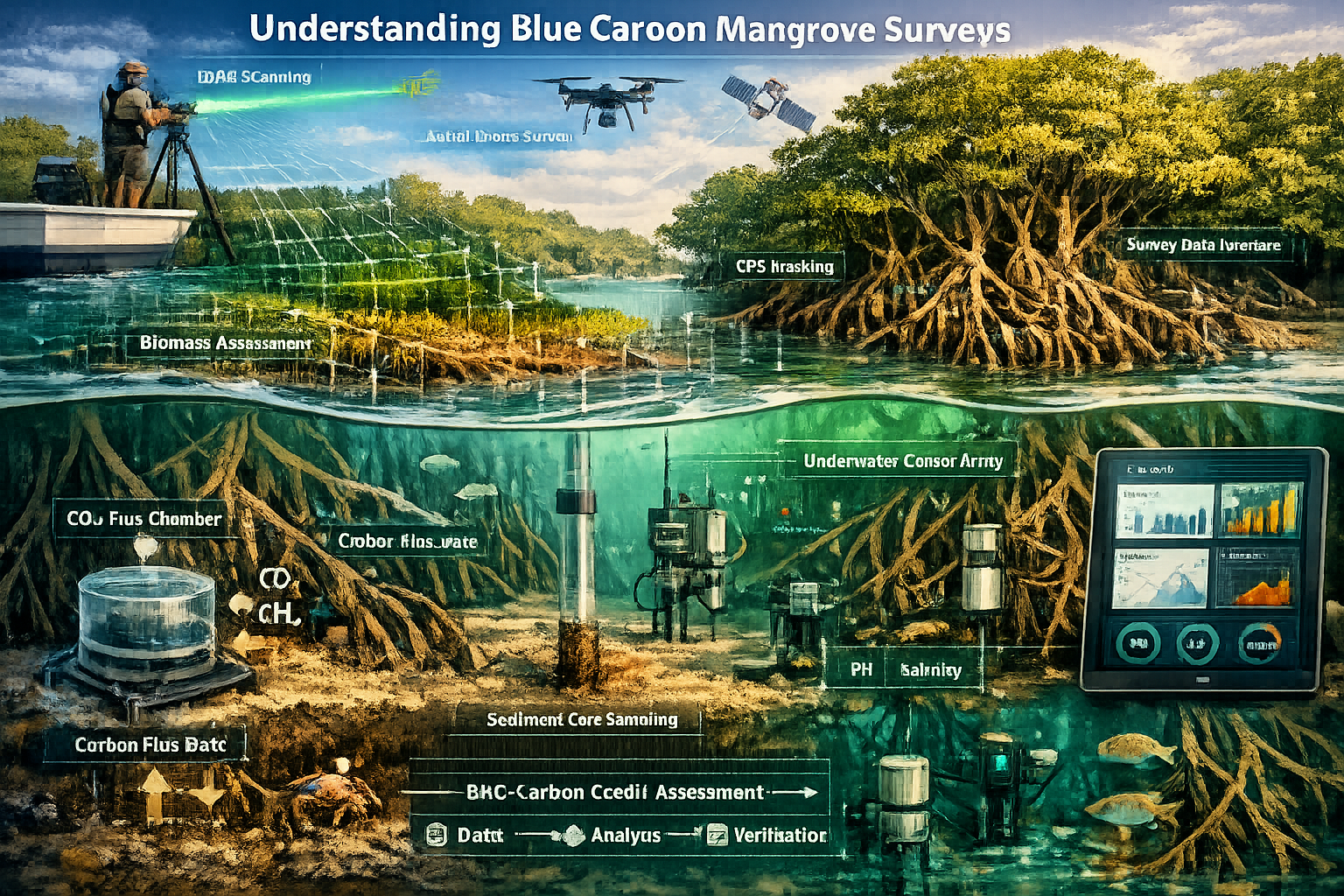
Conducting Blue Carbon Mangrove Surveys for Dual BNG-Carbon Credits requires methodological integration that captures all necessary data points in efficient field campaigns. The following protocols provide step-by-step guidance for ecologists navigating this complex landscape in 2026.
Phase 1: Pre-Survey Planning and Baseline Documentation
Regulatory Alignment Assessment 🔍
Before mobilizing field teams, ecologists must confirm which specific standards the project will target. For UK-based projects seeking international carbon credits, this typically involves:
- Registering with the UK BNG statutory register for biodiversity units
- Selecting carbon credit standard(s)—Verra VCS, Gold Standard, or Plan Vivo
- Reviewing methodology requirements (e.g., VM0033 for tidal wetland restoration)
- Identifying any regional or national co-benefit certification schemes
Site Stratification and Sampling Design
Mangrove ecosystems exhibit significant spatial heterogeneity based on tidal inundation, salinity gradients, and species composition. Effective survey design requires:
- Stratification by habitat zones: High intertidal, mid-intertidal, and low intertidal areas with distinct vegetation assemblages
- Plot allocation: Minimum 0.04-hectare circular plots (11.3m radius) distributed across strata, with density determined by site variability (typically 1 plot per 2-5 hectares)
- Permanent plot marking: GPS coordinates and physical markers enabling repeat measurements for monitoring
- Baseline photography: Fixed-point photography from plot centers in cardinal directions
This stratification serves dual purposes: providing representative samples for carbon stock estimation while capturing habitat condition variation required for BNG metric calculations.
Phase 2: Biomass and Carbon Stock Measurements
Above-Ground Biomass Assessment 🌳
Within each plot, surveyors measure all trees meeting minimum diameter thresholds (typically ≥2.5cm diameter at breast height, or DBH):
- Tree identification: Species-level identification for all individuals
- DBH measurement: Using diameter tape at 1.3m height (or above highest prop root for mangroves)
- Height measurement: Using clinometer or laser rangefinder for representative trees
- Canopy cover: Hemispherical photography or densiometer readings
These measurements feed into allometric equations that convert tree dimensions to biomass. For mangroves, species-specific equations provide greatest accuracy, though generalized tropical mangrove equations (e.g., Komiyama et al., 2005) offer acceptable alternatives when species-specific data are unavailable.
Below-Ground Biomass Estimation
Root biomass typically represents 40-60% of total mangrove biomass but proves challenging to measure directly. Standard protocols employ:
- Root:shoot ratios derived from published literature for the species and region
- Direct excavation of representative trees in a subset of plots (labour-intensive but provides site-specific data)
- Allometric equations that predict root biomass from DBH measurements
For BNG purposes, below-ground biomass contributes to overall habitat condition scoring through indicators of vegetation structure and health.
Sediment Carbon Stock Quantification 📊
Sediment carbon represents the largest and most stable carbon pool in mangrove ecosystems, often containing 50-90% of total ecosystem carbon. Survey protocol requires:
- Core extraction: Using Russian peat auger or similar equipment to extract sediment cores to 1m depth (or to bedrock/impenetrable layer)
- Depth stratification: Dividing cores into 10-20cm sections for analysis
- Bulk density measurement: Weighing known volume of fresh sediment, then oven-drying to determine dry bulk density
- Carbon content analysis: Laboratory analysis using loss-on-ignition or elemental analyzer to determine organic carbon percentage
The multiplication of bulk density, carbon content, and depth yields carbon stock per unit area (typically expressed as tonnes C per hectare). This data directly supports carbon credit quantification while providing evidence of soil condition for BNG assessments.
Phase 3: Biodiversity and Habitat Condition Assessment
Vegetation Structure and Composition 🌿
BNG habitat condition assessments for coastal wetlands evaluate multiple criteria:
- Species richness: Number of native mangrove and associated species
- Age structure: Presence of multiple age classes indicating natural regeneration
- Structural diversity: Variation in tree heights and canopy layers
- Non-native species: Percentage cover of invasive or non-native vegetation
- Physical damage: Evidence of storm damage, disease, or anthropogenic disturbance
Recording these parameters within each plot enables calculation of habitat condition scores that determine biodiversity unit values. High-condition mangrove habitats (scoring 3 on the condition scale) command significantly higher unit values than poor-condition equivalents (scoring 1).
Faunal Surveys for Co-Benefits
While not strictly required for basic BNG or carbon calculations, faunal surveys strengthen both frameworks:
- Bird surveys: Point counts or transects recording mangrove-dependent species
- Fish and crustacean assessments: Seine netting or trap surveys documenting nursery function
- Invertebrate sampling: Quadrat sampling of mudflat fauna
These data support carbon credit co-benefit claims (biodiversity, fisheries support, coastal protection) that can increase credit marketability and pricing. Documentation of threatened or endangered species provides additional value, particularly for projects seeking premium buyers focused on biodiversity outcomes [3].
Phase 4: Additionality and Baseline Scenario Documentation
Financial Additionality Analysis 💰
Carbon credit standards require demonstration that the project would not proceed without carbon finance. This necessitates:
- Investment analysis: Documenting project costs (land acquisition, planting, monitoring) and conventional revenue streams
- Barrier analysis: Identifying institutional, technical, or financial barriers overcome by carbon finance
- Common practice assessment: Demonstrating the project represents non-standard activity in the region
For dual BNG-carbon projects, this analysis becomes complex: biodiversity unit sales may provide partial financing, requiring careful attribution of which revenue stream enables project viability.
Baseline Scenario Establishment
Ecologists must document what would occur in the project area without intervention:
- Historical imagery analysis: Satellite or aerial photographs showing land-use trends
- Threat assessment: Quantifying risks of conversion, degradation, or continued deforestation
- Reference area selection: Identifying comparable sites experiencing baseline conditions
This baseline scenario underpins carbon credit calculations (the difference between project and baseline scenarios) and supports BNG additionality arguments for habitat creation or restoration projects.
Navigating International Finance Standards for Dual-Credit Projects
The 2026 nature finance boom has attracted substantial institutional investment into blue carbon projects, but accessing this capital requires navigation of complex certification pathways. Ecologists conducting Blue Carbon Mangrove Surveys for Dual BNG-Carbon Credits must understand how survey data translates into financial instruments.
Carbon Credit Certification Pathways
Verra VCS Methodology VM0033
The Verified Carbon Standard's tidal wetland restoration methodology provides the most established pathway for mangrove carbon credits. Key requirements include:
- Project eligibility: Restoration, creation, or avoided conversion of tidal wetlands including mangroves
- Baseline determination: Documented evidence that the project area would remain degraded or be converted without intervention
- Monitoring frequency: Biomass measurements every 5 years; sediment carbon every 10 years
- Verification: Third-party validation at project start and verification of carbon credits at 5-year intervals
Survey data collected following the protocols above directly supports VCS validation, though additional documentation of project management, community engagement, and safeguards compliance is required [1].
Gold Standard for the Global Goals
The Gold Standard emphasizes sustainable development co-benefits alongside carbon mitigation. For mangrove projects, this involves:
- Safeguards assessment: Demonstrating no harm to local communities or ecosystems
- Stakeholder consultation: Documented engagement with affected communities
- SDG impact reporting: Quantifying contributions to Sustainable Development Goals (particularly SDG 13: Climate Action, SDG 14: Life Below Water, and SDG 15: Life on Land)
The biodiversity data collected for BNG purposes strengthens Gold Standard applications by providing quantitative evidence of SDG 15 contributions. Projects achieving Gold Standard certification typically command premium prices (15-25% above VCS equivalents) due to verified co-benefits.
BNG Unit Registration and Trading
Statutory Biodiversity Unit Calculation
Survey data feeds into the UK biodiversity metric calculation through several pathways:
- Habitat baseline assessment: Pre-intervention habitat type, distinctiveness, and condition
- Habitat creation/enhancement design: Post-intervention habitat specifications
- Spatial risk multipliers: Based on habitat location relative to strategic areas
- Temporal discounting: Accounting for time required to reach target condition
For mangrove and coastal wetland projects, the calculation typically generates substantial biodiversity unit gains due to high habitat distinctiveness (6-8) and condition improvements (from 1-2 to 2-3 over 15-30 years). A 10-hectare mangrove restoration project might generate 150-300 biodiversity units, depending on baseline conditions and enhancement design [2].
Market Dynamics in 2026 📈
The cost of biodiversity units has stabilized in 2026 following initial market volatility. Current pricing reflects:
- Coastal/intertidal habitat units: £42,000-£48,000 per unit (premium over terrestrial habitats)
- Statutory credits: £48,000 per unit (government backstop for developers unable to secure private units)
- Long-term agreements: 30-year management commitments required for unit validity
Landowners establishing mangrove restoration projects can sell biodiversity units to developers seeking to meet their BNG obligations, creating immediate revenue to support project establishment while carbon credits generate ongoing income over the crediting period.
Stacking Revenue Streams: Financial Modeling
The economic case for dual-certified mangrove projects combines multiple revenue streams:
Biodiversity Unit Sales (Years 1-3)
- Upfront payment for biodiversity units generated by habitat creation/restoration
- Typical revenue: £6.3-£14.4 million for 150-300 units from a 10-hectare project
- Payment structure: Often 30-50% upfront, remainder upon habitat establishment verification
Carbon Credit Sales (Years 5-30+)
- Ongoing issuance of verified carbon credits based on monitored sequestration
- Typical revenue: £15-£35 per tonne CO2e, with mangrove projects sequestering 5-15 tonnes CO2e per hectare per year
- Payment structure: Credits issued and sold following verification events (typically every 5 years)
Co-Benefit Premiums
- Additional value for verified biodiversity, community, or coastal protection benefits
- Typical premium: 15-40% above baseline carbon credit prices
This stacking potential explains the 2026 nature finance boom: projects that successfully navigate dual certification can achieve internal rates of return exceeding 12-18%, making them attractive to institutional investors while delivering genuine environmental outcomes.
Quality Assurance and Verification Requirements
Both BNG and carbon credit frameworks require independent verification of survey data and project outcomes:
BNG Verification
- Competent person sign-off on habitat assessments and metric calculations
- Local planning authority review of biodiversity gain plans
- Monitoring reports at years 1, 3, 5, 10, and 30 demonstrating habitat condition maintenance
Carbon Credit Verification
- Third-party validation of project design document and baseline scenario
- Periodic verification of monitoring reports by accredited auditors
- Permanence monitoring throughout the crediting period (typically 30-100 years)
Ecologists conducting initial surveys must maintain rigorous documentation, including field datasheets, GPS coordinates, photographs, and chain-of-custody records for laboratory samples. This documentation undergoes scrutiny during verification, with any data quality issues potentially delaying credit issuance or reducing credited quantities.
Practical Implementation: Case Study Approach
To illustrate how Blue Carbon Mangrove Surveys for Dual BNG-Carbon Credits function in practice, consider a hypothetical 15-hectare coastal restoration project in southern England:
Project Context: Former agricultural land adjacent to existing salt marsh and mudflat habitats, targeted for managed realignment and mangrove establishment as climate adaptation progresses.
Survey Implementation:
- 8 permanent monitoring plots established across tidal gradient
- 120 tree measurements recorded (DBH, height, species)
- 16 sediment cores extracted to 1m depth
- Habitat condition assessment across 3 habitat zones
- Bird and fish surveys documenting baseline biodiversity
Dual Certification Outcomes:
- BNG: 225 biodiversity units generated (habitat creation from improved grassland to coastal wetland)
- Carbon: 3,750 tonnes CO2e credited over 30-year period (2,250 tonnes from biomass, 1,500 tonnes from sediment accumulation)
Revenue Projection:
- Biodiversity units: £9.45-£10.8 million (at £42,000-£48,000 per unit)
- Carbon credits: £56,250-£131,250 (at £15-£35 per tonne)
- Total: £9.5-£10.9 million over 30 years
This financial model demonstrates why integrated survey protocols matter: the upfront investment in comprehensive data collection (approximately £45,000-£65,000 for professional ecological surveys) unlocks multiple revenue streams that far exceed survey costs while delivering measurable environmental benefits.
Challenges and Future Directions for 2026 and Beyond
Despite the opportunities presented by dual BNG-carbon certification, ecologists and project developers face several challenges in 2026:
Regulatory Harmonization Gaps
BNG and carbon credit standards evolved independently, creating methodological tensions:
- Temporal scales: BNG uses 30-year management agreements; carbon credits often require 100-year permanence commitments
- Additionality definitions: What constitutes "additional" differs between frameworks
- Monitoring intensity: Carbon standards demand more frequent and detailed measurements than typical BNG monitoring
Industry groups are working toward harmonized protocols, but until standardization occurs, projects must satisfy parallel requirements, increasing complexity and cost.
Technical Capacity Constraints
The specialized skills required for dual-certification surveys—combining ecological assessment, carbon accounting, and financial analysis—remain scarce in 2026. Professional development initiatives are expanding, but demand currently exceeds supply of qualified practitioners.
Organizations like Biodiversity Surveyors are addressing this gap by training ecologists in integrated methodologies, but scaling capacity to meet the 2026 nature finance boom remains challenging.
Market Access and Transaction Costs
While dual-certified projects command premium prices, accessing buyers requires navigation of:
- Registry systems: Separate platforms for biodiversity units (UK BNG register) and carbon credits (Verra, Gold Standard registries)
- Brokerage relationships: Intermediaries who connect project developers with credit buyers
- Legal frameworks: Contracts governing long-term management obligations and revenue sharing
Small development projects may find transaction costs prohibitive, though aggregation mechanisms are emerging to pool smaller projects into marketable portfolios.
Climate Change Adaptation Considerations
Mangrove projects face unique permanence risks from sea-level rise, storm intensification, and shifting climate zones. Survey protocols must incorporate:
- Elevation surveys: Precise measurements of tidal inundation patterns and projected sea-level rise impacts
- Species selection: Choosing mangrove species adapted to projected future conditions
- Adaptive management: Flexibility to adjust planting strategies as conditions change
These considerations affect both carbon credit permanence assessments and BNG habitat condition projections, requiring ecologists to integrate climate modeling into survey design.
Conclusion
The convergence of biodiversity and carbon markets in 2026 creates unprecedented opportunities for coastal restoration projects that deliver multiple environmental outcomes. Blue Carbon Mangrove Surveys for Dual BNG-Carbon Credits represent the technical foundation enabling this convergence, translating ecological data into financial instruments that support nature-based solutions at scale.
For ecologists and surveyors, success requires methodological integration that captures biomass, sediment carbon, and biodiversity metrics in unified field campaigns. By following the protocols outlined above—from pre-survey planning through verification—practitioners can navigate the complex landscape of international finance standards while maintaining scientific rigour.
The 2026 nature finance boom rewards early movers who establish dual-certification frameworks before regulatory standardization constrains flexibility. Projects that successfully stack biodiversity units with verified carbon credits can achieve financial returns that make coastal restoration commercially viable, channeling private capital toward urgent conservation priorities.
Actionable Next Steps
For practitioners looking to implement dual BNG-carbon mangrove surveys:
- Assess project eligibility: Evaluate whether your site meets requirements for both BNG habitat creation/enhancement and carbon credit additionality
- Select certification pathways: Choose appropriate carbon standard(s) based on project characteristics and target markets
- Engage qualified surveyors: Partner with ecologists experienced in integrated methodologies—contact specialists who understand both frameworks
- Develop monitoring protocols: Establish permanent plots and baseline documentation that satisfy long-term verification requirements
- Build market relationships: Connect with biodiversity unit buyers and carbon credit brokers to secure off-take agreements
- Plan for adaptive management: Build flexibility into project design to respond to monitoring results and changing conditions
The technical complexity of dual certification should not deter ambition. With proper planning, rigorous survey protocols, and expert guidance, mangrove restoration projects can access the full value of their environmental benefits, demonstrating that conservation and economic viability need not conflict. As 2026 progresses, the projects that successfully navigate this integration will set the standard for nature-based finance in the decades ahead.
References
[1] Blue Carbon What The Rising Tide Of Coastal Conservation Means For The Voluntary Carbon Market – https://calyxglobal.com/research-hub/research/blue-carbon-what-the-rising-tide-of-coastal-conservation-means-for-the-voluntary-carbon-market
[2] 2024unnf Browne – https://www.un.org/oceancapacity/sites/www.un.org.oceancapacity/files/2024unnf_browne.pdf
[3] Cropped 28 January 2026 Ocean Biodiversity Boost Nature And National Security Mangrove Defence – https://www.carbonbrief.org/cropped-28-january-2026-ocean-biodiversity-boost-nature-and-national-security-mangrove-defence/
[4] Growing Blue Futures The Global Ocean Decade Programme For Blue Carbon And Your Path Into Action – https://oceandecade.org/news/growing-blue-futures-the-global-ocean-decade-programme-for-blue-carbon-and-your-path-into-action/