

A single English river could unlock £7.33 in value for every £1 spent fixing it. That is the headline finding behind Rivers 2040, a report that lands at the exact moment ministers are testing a new levy system for nutrient pollution. For anyone working on riverside or floodplain sites, the Rivers 2040 river restoration developers BNG debate is no longer theoretical. It is about to shape what planning officers expect on your desk.
The Wildlife Trusts published Rivers 2040: The Great River Re-set on 14 October 2026, alongside a business-case study on "Re-Naturalising the Trent River." The timing matters. It arrived about a month after the Nature Restoration Levy Regulations 2026 came into force, and weeks before the first draft Environmental Delivery Plan consultation closes. Together, these developments are redrawing the rules for developers, planners and landowners near watercourses.
Key Takeaways
- The Trent restoration business case shows a £7.33 return for every £1 invested, based on 30 years of spending averaging £43 million a year.
- Without action, one in four English properties could face flood risk by 2050, and a 6-billion-litre daily water shortfall is projected by 2055.
- The Norfolk draft Environmental Delivery Plan proposes a £2,675-per-dwelling nutrient levy, criticised by campaigners as "pay-to-pollute."
- BNG duties extend to Nationally Significant Infrastructure Projects from November 2026, widening the scope of watercourse unit requirements.
- Early river condition assessments and nutrient budgets can cut both levy exposure and mitigation costs for riverside schemes.
Why Rivers 2040 Matters for River Restoration Developers BNG Planning
Rivers 2040 is built around the River Trent, a 350-km waterway supporting around six million people. The report's project partners include The Wildlife Trusts, Trent Rivers Trust and Intact Insurance, with input from eight partner Trusts spanning Birmingham & Black Country to Yorkshire. Its central claim is stark: restoring the Trent would cost an average of £43 million a year for 30 years, but generate £7.33 of value for every £1 spent.
The report pairs this economic case with hard risk numbers. Without urgent action, one in four English properties could be at risk of flooding by 2050. A 6-billion-litre daily water shortfall is projected by 2055. Agricultural pollution to rivers needs to fall 75% by 2040 to meet nature-recovery goals.
For developers, this is where the Rivers 2040 river restoration developers BNG connection becomes concrete. The report's policy asks include a nature-first approach to all development and flood-risk management, robust accountability standards for developers, and early engagement with nature-recovery stakeholders at the design stage. It also calls for a shared green vision and biodiversity metric, a national "Room for Rivers Strategy," and nature-based solutions as the default option for water companies and flood planning.
What the Trent Business Case Signals for Site Design
The Trent case study is not just an advocacy document. It is a template other catchments will likely copy. Expect local authorities and water companies in Midlands and Yorkshire catchments to start citing similar return-on-investment figures when negotiating planning conditions, drainage strategies and Section 106 contributions on riverside sites.
Nutrient Neutrality, the Norfolk Levy and the Rivers 2040 River Restoration Developers BNG Link
While Rivers 2040 sets the ambition, the Nature Restoration Levy Regulations 2026 (SI 2026/1020) set the mechanism. Made on 10 September 2026 and in force from 11 September 2026, the regulations create a new route for developers to discharge nutrient neutrality obligations by paying into a central fund rather than buying bespoke mitigation credits.
The first test case is Norfolk. Its draft Environmental Delivery Plan addresses nutrient pollution affecting the Broads Special Area of Conservation, the Broadland Ramsar site and the River Wensum SAC. The proposal: a levy of £2,675 per new dwelling, before indexation, intended to unlock up to 15,780 homes currently stalled by nutrient neutrality constraints. Consultation on the draft closes 27 October 2026.
"Every £1 invested in restoring the Trent returns £7.33 in value", the Rivers 2040 report's core economic finding.
Reaction has been sharp. A Jones Day commentary published in October 2026 reports that environmental campaigners have labelled the Norfolk plan a regressive "pay-to-pollute" approach, raising concerns about delayed mitigation delivery and a levy rate set too low to fund real nutrient reduction. The Wildlife Trusts said on 6 October 2026 that the Norfolk EDP represents the first real test of the Planning and Infrastructure Act's new delivery mechanism, and how it performs will likely shape confidence in levy-based approaches elsewhere.
Table: Rivers 2040 and Levy Policy at a Glance
| Development | Date | Relevance to developers |
|---|---|---|
| Rivers 2040 report published | 14 October 2026 | Sets nature-first expectations for river catchments |
| Nature Restoration Levy Regulations in force | 11 September 2026 | Creates national nutrient levy mechanism |
| Norfolk draft EDP consultation closes | 27 October 2026 | Tests £2,675/dwelling levy model |
| BNG extends to NSIPs | November 2026 | Widens watercourse unit obligations |
| Flood Performance Certificate pilots | Winter 2026 | New flood disclosure standard for homes |
For developers in nutrient-sensitive catchments, the practical question is whether to pay the levy, rely on bespoke mitigation, or pursue on-site nature-based solutions that reduce both nutrient load and flood risk simultaneously. Rivers 2040's advocates argue the third option delivers better long-term value, echoing the Trent's £7.33 return figure.
Practical Steps: Surveys and Metrics for Rivers 2040 River Restoration Developers BNG Compliance
The statutory biodiversity metric already treats watercourses as a distinct unit type, separate from habitats like grassland or woodland. Rivers and streams are assessed using the River Condition Assessment, a MoRPh-based survey method that scores channel modification, bank condition and in-stream habitat quality. Any site with a watercourse, culvert or floodplain edge should commission this assessment early, alongside standard UKHab habitat mapping.
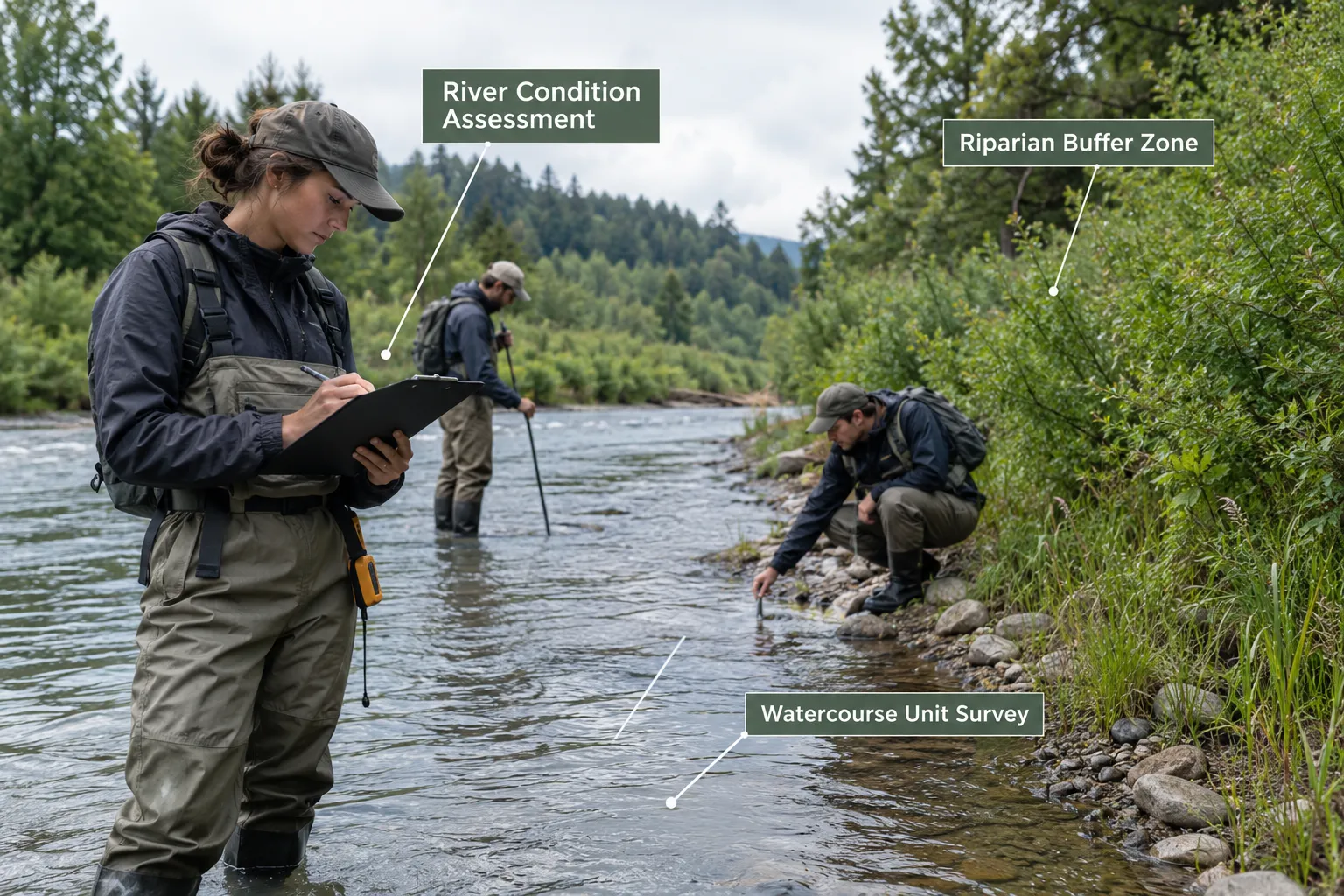
Developers working in catchments affected by protected habitats sites, such as the Broads, Wensum or similar designated waters, also need a nutrient budget calculation to confirm whether nutrient neutrality applies. This determines exposure to the new levy or the scale of bespoke mitigation required.
Recommended survey and design sequence for riverside or floodplain sites:
- Desk-based catchment screening, identify protected sites, nutrient neutrality zones and flood risk designations.
- River Condition Assessment, generate baseline watercourse unit scores using MoRPh methodology.
- UKHab survey, establish baseline habitat units across the wider site for mandatory BNG calculations.
- Nutrient budget modelling, quantify phosphate or nitrogen loading and mitigation needs.
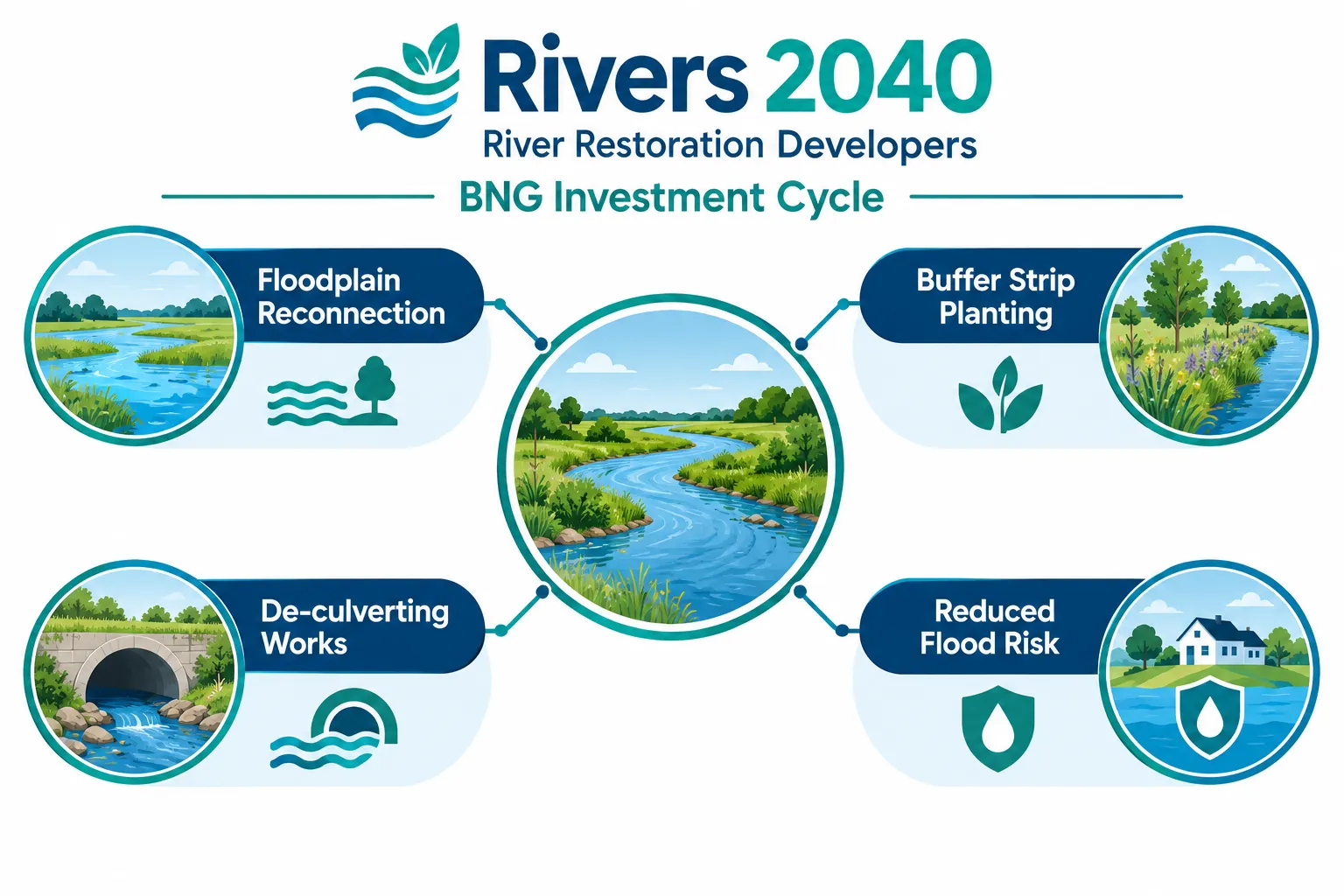
- Nature-based design options, assess riparian buffer strips, floodplain reconnection and de-culverting as unit-generating interventions.
- BNG metric integration, combine watercourse, habitat and hedgerow units into a single 10% net gain package.
Buffer strips, floodplain reconnection and de-culverting are not just compliance tools. They can generate tradeable watercourse units under the biodiversity metric while simultaneously reducing flood risk on and around the site, directly reflecting the Rivers 2040 logic that nature-based intervention pays for itself over time.
Wider Policy Context Developers Should Track
Several parallel changes reinforce the Rivers 2040 direction. From November 2026, mandatory biodiversity net gain requirements extend to Nationally Significant Infrastructure Projects, meaning major transport, energy and water schemes will face the same 10% net gain duty already applied to smaller developments. This significantly widens demand for watercourse units and river-based habitat creation.
Separately, Propertymark confirmed on 13 October 2026 that pilots of standardised Flood Performance Certificates for homes begin this winter, with a wider rollout planned for 2027. These certificates will give buyers and lenders a consistent flood-risk rating, likely increasing scrutiny on riverside and floodplain developments at the point of sale, not just at planning stage.
Rivers 2040's call for regional water authorities led by elected mayors, floodplain reconnection funding and a national "Room for Rivers Strategy" suggests catchment-scale planning will become more formalised. Developers who engage early with Rivers Trusts, Wildlife Trusts and catchment partnerships may find smoother routes through planning than those who treat river issues as a late-stage mitigation problem.
Frequently Asked Questions
What is the Rivers 2040 report?
It is a Wildlife Trusts publication from 14 October 2026 presenting a 30-year business case for restoring the River Trent, alongside national policy recommendations for river and flood management.
How does the £7.33 return figure work?
The report estimates that restoring the Trent, at an average cost of £43 million a year over 30 years, would generate £7.33 in economic, social and environmental value for every £1 spent.
Does Rivers 2040 change BNG requirements directly?
Not directly, but it reinforces the case for nature-based design choices, such as buffer strips and floodplain reconnection, which already generate watercourse units under the existing biodiversity metric.
What is the Norfolk Environmental Delivery Plan?
A draft plan addressing nutrient pollution in the Broads SAC, Broadland Ramsar site and River Wensum SAC, proposing a £2,675-per-dwelling levy to unlock up to 15,780 homes. Consultation closes 27 October 2026.
Why do campaigners call the Norfolk levy "pay-to-pollute"?
Campaigners, as reported in Jones Day's October 2026 commentary, argue the levy is set too low and risks delaying real mitigation, effectively letting development proceed before pollution reduction catches up.
Which surveys should developers commission near rivers now?
A River Condition Assessment, UKHab habitat survey, and nutrient budget modelling, feeding into an integrated BNG metric calculation that includes watercourse units.
Conclusion
Rivers 2040 and the new nutrient levy framework together mark a turning point for anyone developing near English rivers. The Rivers 2040 river restoration developers BNG agenda is pushing planning authorities toward nature-first expectations, while the Norfolk levy test shows government is simultaneously trying to unblock housing delivery. Developers who commission River Condition Assessments, nutrient budgets and UKHab surveys early, and design in buffer strips or floodplain reconnection from the outset, are best placed to meet both BNG and nutrient neutrality duties efficiently. The next practical step is simple: before finalising any riverside or floodplain masterplan, commission a full watercourse and nutrient baseline survey, and speak with an ecological consultant about how nature-based design could reduce both levy exposure and long-term flood liability.